
Inclusive adult products should make room for different bodies, identities and preferences. For LGBTQ+ adults, that can mean finding a comfortable shape, a harness with a useful adjustment range, or product information that does not assume a person's gender or their partner's anatomy. A welcoming shopping experience combines respectful language with practical details you can check.
No design works for everyone. Gender-neutral packaging does not establish a product's suitability, and a person's identity does not tell you which products they want. This guide looks at inclusive design, common product categories and the questions that help you choose on your own terms.
Why Inclusive Design Matters
Categories such as “for him” and “for her” can make shopping unnecessarily restrictive. Someone looking for a particular function should be able to find it without first choosing a gendered label that does not describe them. Clear information about intended use, dimensions and controls is more useful than assumptions about who a customer is.
The experience of a product is personal, too. Some people prefer abstract shapes or neutral language; others prefer realistic designs or specific anatomical terms. Colour, appearance and the words used to describe a body can matter, but those preferences cannot be predicted from an LGBTQ+ identity. Ask what a person likes rather than deciding for them.
For someone who experiences discomfort around a body part or its description, being able to choose different language, shapes or activities may be important. A retailer should respect those choices without promising that a purchase will resolve dysphoria or produce a particular emotional response. No one needs to buy a product, participate in sexual activity or explain their identity to belong.

Features That Make a Product Easier to Evaluate
Design without Gender Assumptions
A useful listing explains what a product does and how it is intended to be used. An abstract shape can be appealing, but it is not automatically more inclusive than a realistic one. Nor are bright colours, pink packaging or muted finishes a reliable measure of quality. The important questions are whether the design suits your preferences and whether its purpose is clearly described.
Specific Functions and Limits
“Versatile,” “unisex” and “for all bodies” are broad marketing descriptions. Look for the actual permitted uses, attachment requirements and limitations. A product intended for external contact should not be treated as insertable simply because its shape appears suitable. A suction device, a wand and an anal product have different design requirements; they are not interchangeable.
If a device offers multiple functions, check how each works and whether you can control them separately. More settings do not necessarily make it easier to use. Our guide to vibrator types explains common shapes and the specifications worth comparing.
Clear Materials and Care Information
A responsible product description identifies the contact materials, cleaning method and permitted water exposure. Words such as “body-safe” or “medical-grade” should not replace that information or be treated as proof of a particular certification. A material name alone does not establish the formulation, finish or quality of a finished product.
Read the material comparison guide for broader context, then follow the instructions for the exact item. Check the compatibility of any lubricant, barrier or accessory separately. Good materials do not eliminate every risk or remove the need for cleaning and inspection.
Accessibility and Fit
Look beyond appearance to weight, grip, button size, adjustment range and how easily the product can be stopped. Consider whether you can reach its controls and manage its charging connection. For a wearable or harness, compare actual measurements rather than relying on a size label. If assistance is needed, it should fit the person's preferences and boundaries.
Accessibility also includes understandable instructions and customer support that answers questions respectfully. A retailer should be able to explain dimensions and functions without requiring unrelated personal details.
Product Categories for Different Needs
External and Other Gender-Neutral Designs
Bullets, wands and other external devices may appeal to people of different genders. Their suitability still depends on the intended contact area, dimensions, controls and individual comfort. A gender-neutral description does not mean every person will enjoy the product or that it can be used on any body part.
Anal products likewise should be evaluated by their specific design and intended use, rather than by the customer's gender or orientation. Our butt-plug selection guide covers the practical distinctions. Restraints and other specialised accessories have their own safety requirements and should not be treated as universally suitable additions to a purchase.
Products for Partners
Couples and other partners come with different combinations of bodies, preferences and boundaries. A “couples” label cannot establish whether a device will fit or whether everyone involved wants to use it. Discuss the intended use, who will control it and how either person can pause or stop before making a choice.
Harness-compatible products, shared-contact designs and remote-controlled devices each raise different questions. Confirm compatibility between components; do not assume two items work together because they are sold in the same category. For connected devices, check pairing permissions, privacy information and how the person using the device can take back control. Our guide to communication around couples' toys offers a starting point.
Sharing also requires its own care routine. NHS inform advises cleaning shared toys and using a new condom each time. Whether a particular product can be adequately covered and cleaned still matters. See our safer-sharing guide before deciding to share one.
Gender-Affirming Accessories
Some retailers offer products connected with gender expression as well as sexual wellness. These categories serve different purposes, and none is a requirement for being transgender or non-binary. A person may find a product meaningful, prefer a different option or want none of them.
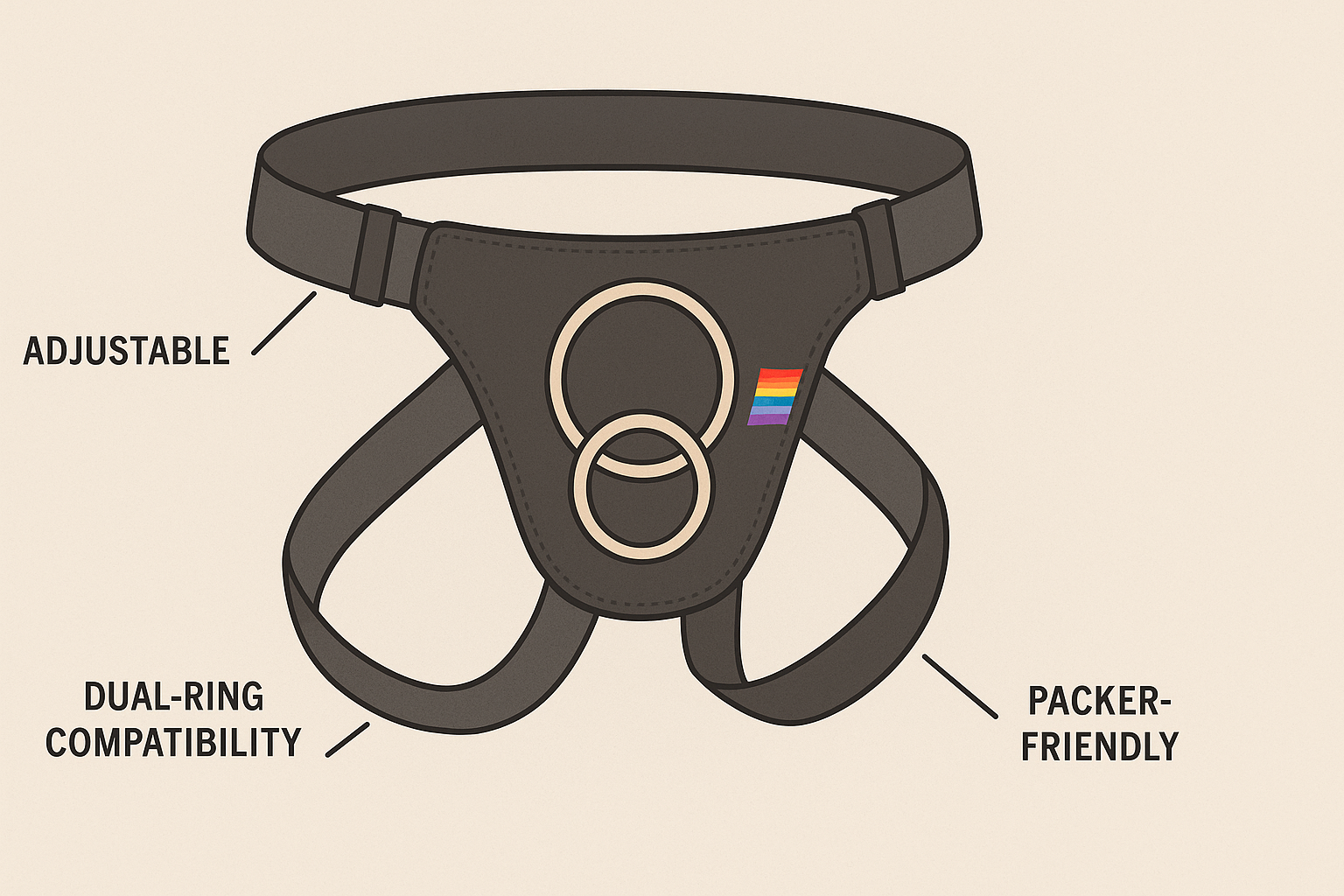
- Packers and packing garments: a packer is a prosthetic worn to create a particular appearance under clothing. A compatible garment or harness may hold it in place. A product made for packing is not automatically suitable for penetration; check the stated purpose of both the prosthetic and its support.
- Stand-to-pee devices: these are designed to assist with urinating while standing. Their intended use, fit and cleaning instructions differ from those of pleasure products. Do not assume a device has additional functions unless the manufacturer explicitly describes them.
- Tucking garments: these are clothing or support products intended to create a particular silhouette. Choosing them involves their own fit and comfort considerations. Follow the maker's guidance and seek qualified advice if you have questions about symptoms or suitability.
- Adjustable harnesses: designs vary in strap layout, openings, padding and attachment systems. Look for measurements, adjustment ranges and documented compatibility with the exact accessory. A second opening or a “trans-friendly” label does not guarantee comfortable fit for every body.
- Strokers and pumps: dimensions and intended contact areas vary. A gender-inclusive label does not permit using a device on an unspecified body part. Read its limitations and seek individual advice where a health condition, treatment or surgery affects the decision.
- Dilators and postoperative aids: these may be part of clinician-directed care. They should not be selected as interchangeable substitutes for consumer toys. UCSF's vaginoplasty aftercare guidance explains that dilation instructions can vary; follow your own surgical team's device and care recommendations.
These are general categories, not a list of products necessarily available from OMIREA. Our current catalogue and each product's own description determine what we sell and the uses we support. A shop can clarify a specification; it cannot replace personalised medical advice.
What a Welcoming Shopping Experience Looks Like
Inclusive language works best alongside useful information. Look for descriptions that separate anatomy from identity, recognise different relationships and avoid assuming pronouns or roles. Product education should answer practical questions without telling someone which experience they ought to want.
Representation can matter to customers, but a photograph or a Pride-themed package is only one part of the picture. Consider whether the brand offers clear measurements, responsive support, accessible instructions and an understandable returns policy. A product can look welcoming and still leave important questions unanswered.
If community ownership, product testing or charitable support influences your decision, check the company's current statements. Look for the named organisation, the nature of the commitment and any dates or limitations. Do not assume that a rainbow logo proves a donation, that an owner's identity guarantees expertise in every customer's needs, or that every marketing claim has been independently tested.
Privacy deserves the same practical approach. Review what the shop says about packaging, billing, account information and delivery messages. Our privacy and delivery guide explains useful questions to ask. Confirm current details before ordering if a particular privacy requirement is important to you.
A Practical Checklist before You Choose
- Start with your preferences. Decide which shapes, words and functions feel comfortable, and which you want to leave out. You do not need to justify those choices.
- Confirm intended use. Read the exact product's instructions. Ignore suggestions that an item can be used in any way simply because it is described as inclusive.
- Compare measurements and controls. Check dimensions, adjustment ranges, weight and how to stop the device. Our sizing guide explains how to read product measurements.
- Check the whole setup. Confirm materials, cleaning, charging and accessory compatibility. A harness, attachment, lubricant and barrier may each have separate requirements.
- Agree on boundaries with a partner. Make room for different preferences, including using separate products or deciding against a purchase. Consent remains specific and can change.
- Read purchase and privacy details. Review the selected option, included accessories, total cost, delivery information and returns conditions before paying.
- Ask about missing information. A clear answer about a product specification is more useful than an assurance that it works for everyone. For medical or postoperative questions, consult the relevant clinician.

Choose on Your Own Terms
Inclusive adult products should widen the choices available to LGBTQ+ adults while keeping information clear and expectations realistic. Respectful language, considered design and accurate specifications all matter. So does the freedom to say that something is not right for you.
If you decide to explore, take your time and compare the details that matter to your body and circumstances. Browse our current collection for current product descriptions, or return to the Journal for more guidance. Your identity does not prescribe a shopping list, and a purchase is never a condition of comfort, belonging or self-expression.
This guide is general information for adults aged 18 and over. It does not diagnose a condition, promise a health outcome or replace advice from a qualified healthcare professional.