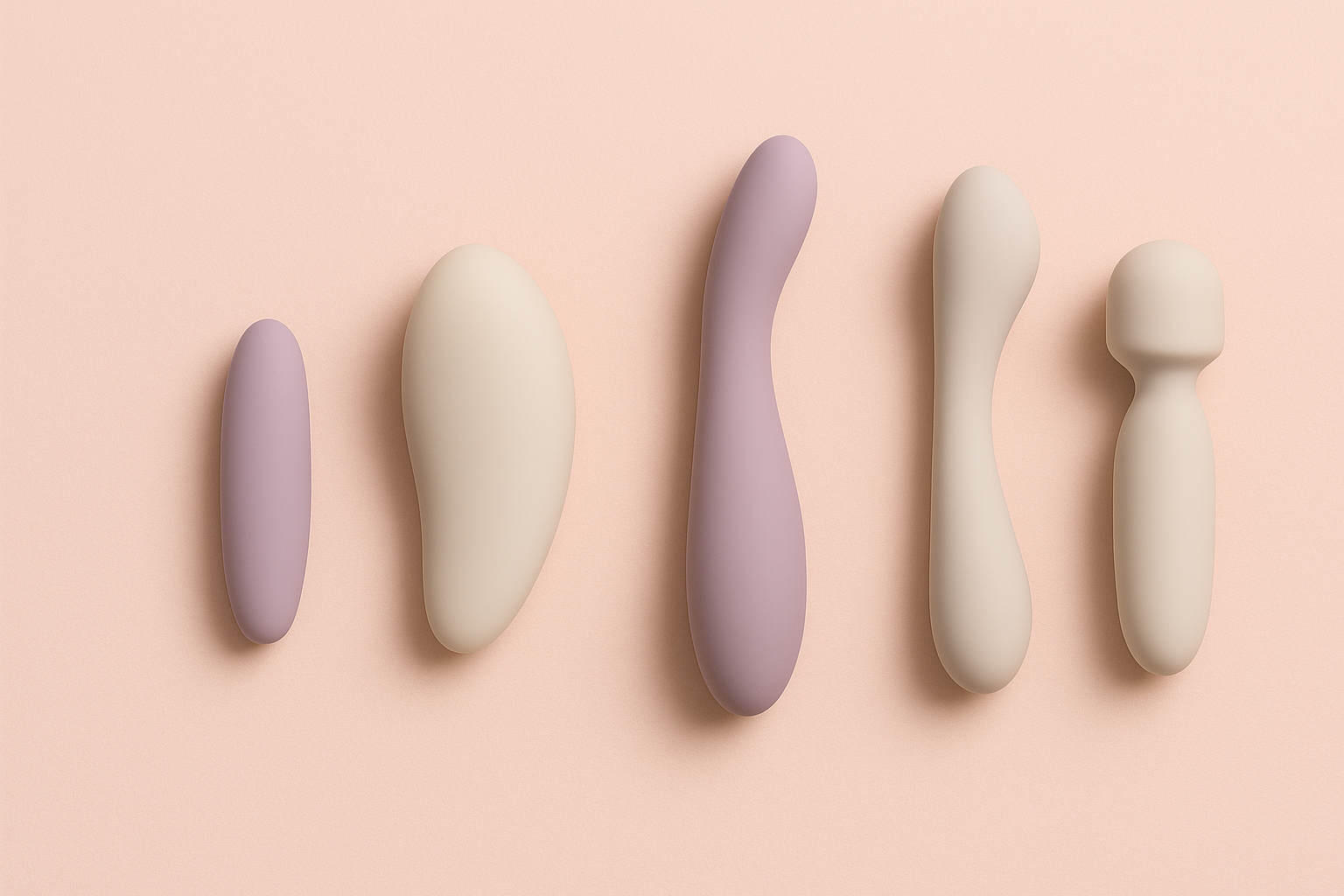
Vibrator names can describe a shape, an intended use, or a combination of features. Understanding those differences makes a product listing easier to read. This guide compares five common categories for adults, with an emphasis on dimensions, controls and practical details rather than promises about a particular experience.
Start with Shape and Intended Use
A category name is a starting point, not a complete specification. Two products described as a bullet or a wand can differ substantially in size, weight, power supply and controls. Some categories overlap: a bullet, for example, is commonly an external vibrator with a compact cylindrical shape.
Before choosing, check the manufacturer’s stated intended use. Do not assume a device can be used internally simply because it is small or has a rounded shape. Our first-vibrator guide covers the broader questions to consider before a first purchase.
External Clitoral Vibrators
This category describes products intended for external use. Designs may have a narrow contact surface, a broader rounded surface or a compact curved body. Some use vibration; others use a different mechanism, such as air pulses. Read the listing to understand which mechanism a particular device uses.
Compare the contact shape, grip, button placement and adjustable settings. The smallest product is not necessarily the easiest to hold, and a larger number of modes does not tell you how manageable the controls will be. Look for instructions that explain how to change a setting and stop the device.
Bullet Vibrators
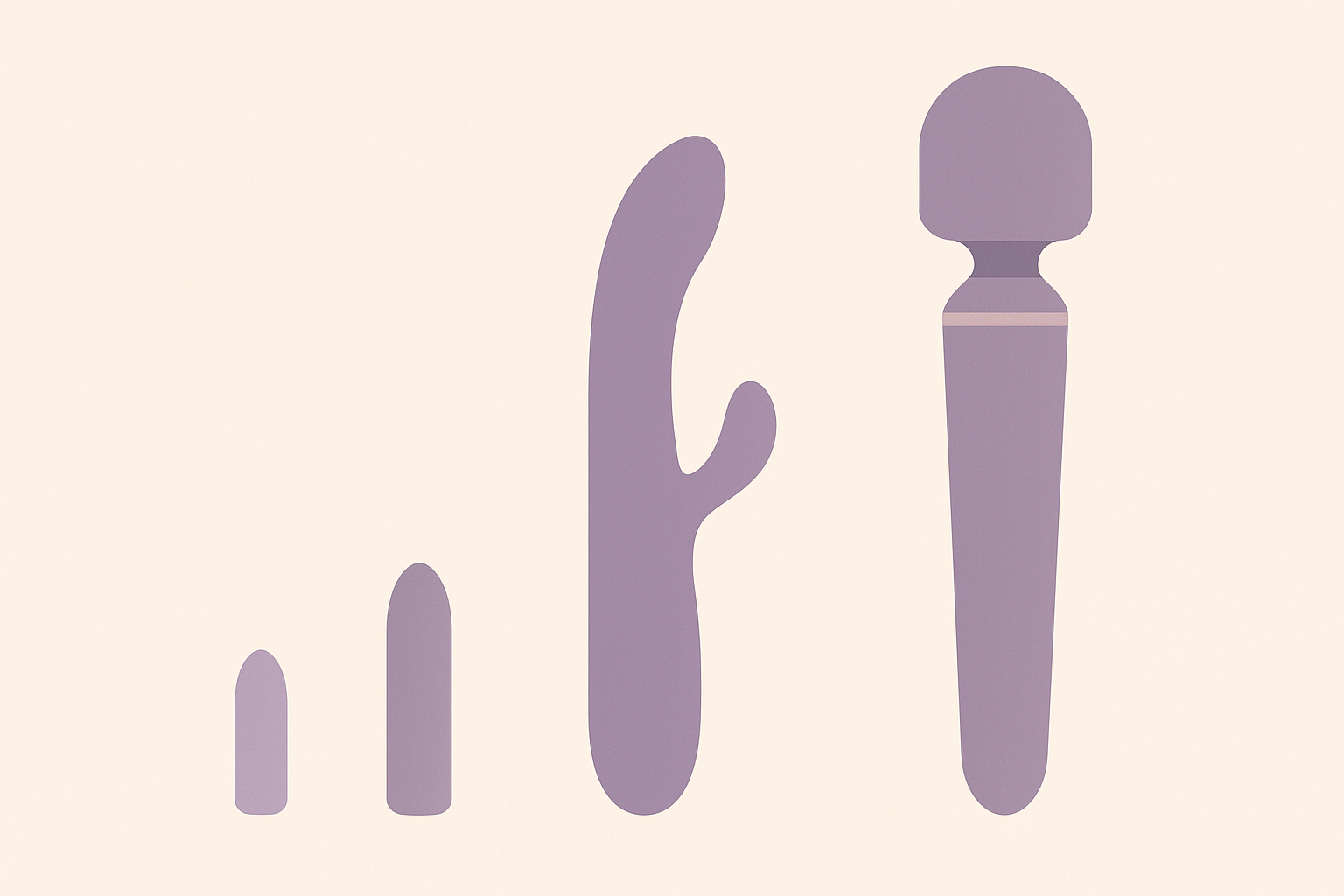
Bullet vibrators usually have a small cylindrical body. Many are designed for external use and have relatively simple controls, although size and control layouts vary. Their compact appearance makes it especially important to check dimensions rather than estimate from photographs.
Look at the power source, how the battery compartment or charging connection works, and whether the controls are easy to reach. A travel lock or storage pouch should only be assumed when the listing explicitly includes it. A compact device should not be treated as suitable for insertion unless its instructions specifically allow that use.
Curved Insertable Vibrators
Products marketed as G-spot vibrators commonly have a curved or angled tip and are designed for vaginal use. The label describes a design category; it does not guarantee a particular result or fit. Compare the curve, width and grip as well as overall length.
Distinguish total length from insertable length, and check which measurement refers to the widest part. Illustrations and size names do not replace a dimension chart. If a listing does not explain its measurements clearly, ask for clarification before choosing.
Rabbit and Dual-Arm Vibrators
Rabbit-style designs combine an insertable section with a smaller external arm. The shape and spacing of those sections are important parts of the design. A photograph alone may not show their flexibility or how their controls operate.
Check whether the functions have separate controls, what each button does, and whether the product has one or multiple motors. Do not assume all dual-arm devices work the same way. More functions can also mean more settings to learn, so choose a control layout you understand.
Wand Vibrators
Wands usually have a rounded head and a handle, with both full-size and smaller versions available. They are commonly designed for external use. A similar silhouette does not establish the same weight, vibration range or intended use across different models.
Compare handle length, head size, weight and power supply. A mains-powered model needs a suitable outlet; a rechargeable model has its own charging requirements. Treat noise and runtime descriptions as model-specific claims rather than guarantees for every setting or environment. Do not assume additional massage or therapeutic uses unless the manufacturer specifies them.
Compare the Details That Matter to You
- Intended use: confirm the product’s purpose before comparing extra features.
- Measurements: use the listed dimensions and a ruler, not image proportions or labels such as “mini.”
- Controls: check button placement, adjustable settings and how to stop the device.
- Material and care: read the exact listing and supplied instructions. A material name alone does not establish its full formulation or a certification.
- Power and water exposure: confirm charging requirements and the stated limits. Do not assume a rechargeable device is waterproof.
- Purchase details: check the selected option, included accessories, current price and returns conditions.
For care, cleaning and compatible accessories, follow the instructions for the specific model. If an important detail is missing, clarify it before use rather than applying advice from a different product.
Make a Shortlist, Then Read the Product Page
Start with the category and features that match your priorities, then compare individual listings. You do not need a device with the most functions. A clear description, understandable controls and the right practical details are a better basis for a considered choice.
Browse our current product collection to see what is available. Not every category in this guide is necessarily stocked. Before ordering, confirm the product, selected option, quantity and final total, and review our shipping information.