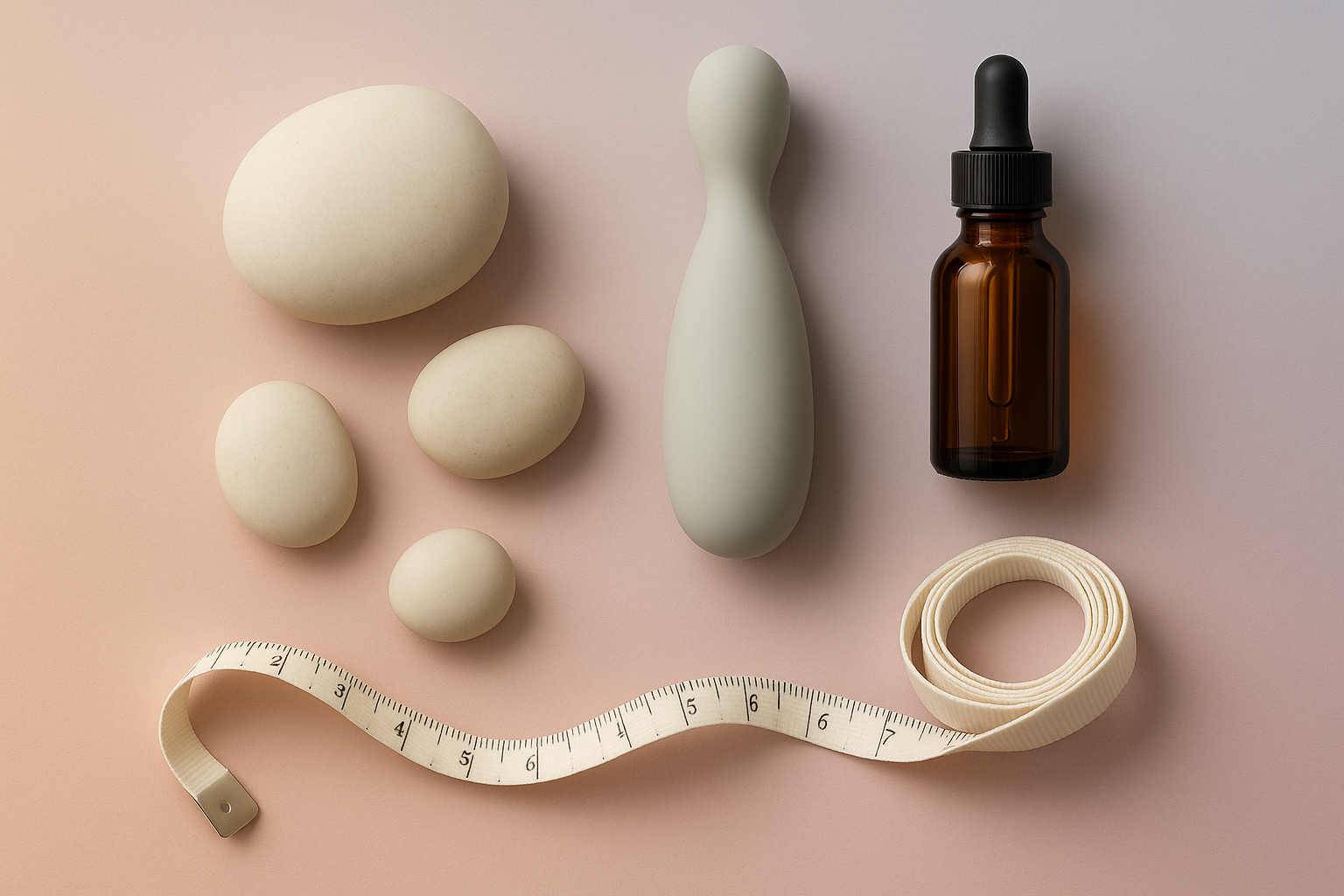
A product photograph can make a compact device look substantial or a large one look deceptively small. Clear measurements are a better starting point. When comparing dildos and vibrators, separate overall size from intended use, then look at width, shape, flexibility and how you will hold the item. There is no single measurement that guarantees a comfortable fit for every adult.
Start with the Product's Intended Use
Before comparing numbers, establish what the manufacturer designed the product to do. An external vibrator, an insertable vibrator and a non-powered dildo have different design requirements. A small rounded device is not automatically suitable for insertion, and a product described as slim is not automatically suitable for every use.
For anal use, choose a product explicitly intended for that purpose with a suitable wide external base designed to reduce the risk of it slipping entirely inside. Do not treat a narrow shape, suction cup or ordinary handle as proof that a different product is appropriate. Check the actual design and instructions.
If the category names are unfamiliar, our vibrator types guide explains the main shapes. Once you know which category you are comparing, the measurements become much more useful.
Separate Total Length from Insertable Length
Total length is the end-to-end measurement of the whole product. It may include a handle, base, controls or another section that is not intended for insertion. Insertable length refers to the section the manufacturer identifies for internal use. Do not assume the two figures are interchangeable.
For example, a listing might describe a product as 18 cm long overall and identify a 12 cm insertable section. Those numbers describe different parts of the same design. This is a measurement example, not a recommended size or a suggested depth of use. The product instructions and your comfort remain important.
Look for a labeled dimension diagram. If only a single length is given, ask what it measures. Curved designs may also be measured in different ways, so clarify whether the listed length follows the curve or is measured in a straight line.
Understand Width and Circumference
Width measures across a product. Circumference, sometimes called girth, measures around it. For a circular cross-section, circumference is approximately 3.14 times the diameter. A circular section with a 3 cm diameter therefore has a circumference of about 9.4 cm. These figures explain the relationship between measurements; they do not establish a suitable fit.
That calculation does not describe every shape. An oval, flattened or irregular cross-section needs more information than one diameter. Check where the widest point is, whether a raised feature adds to the width, and whether the dimensions include textured areas. A narrow tip can lead into a substantially wider section.
Use a ruler and paper to visualize the stated dimensions on a tabletop. Keep units consistent: one inch equals 2.54 cm. A drawing can help you compare scale, but it cannot reproduce the flexibility or feel of the finished item. Household objects used for visual comparison should not be used as substitutes for purpose-made adult products.
Read Shape and Firmness Alongside Size
Two products with the same maximum width can have different profiles. One may be straight and uniform; another may have a pronounced curve, ridges or a wider head. A flexible outer section may also behave differently from a rigid one. Do not reduce the choice to a single number or assume that the same listed size will feel identical across designs.
Ask whether the product is flexible, where it bends and whether it contains a rigid powered housing. Review the widest point, any change in width and the available grip. If you already have a product that suits you, its documented measurements can be a useful comparison, while remembering that a different shape or material can change the experience.
Size Questions for External Vibrators
For an external vibrator, handling is a central consideration. Compare overall length, weight, contact-surface size and button position. A very small device may be easy to store but offer less space to hold; a larger handle may be easier to reach but heavier to support. Neither arrangement is automatically better.
Check whether you can understand the controls from the manual, including how to turn the device off and change settings. Product size does not reliably establish vibration strength, noise level or battery life. Treat those as separate specifications to verify for each model.
Size Questions for Insertable and Dual-Arm Designs
With an insertable device, check the stated insertable length and maximum width along with the handle and base. For a dual-arm or rabbit-style design, also compare the spacing, length and flexibility of the external arm. An overall length measurement does not explain how those two sections are positioned.
Labels such as “beginner,” “mini” and “medium” are not standardized measurements. Read the dimensions even when the name sounds familiar. There is no requirement to move toward a larger product or to choose a particular size because of your experience. Choose only within what you are comfortable considering, and stop if use is uncomfortable or painful.
Persistent or recurring pain deserves advice from a qualified healthcare professional. A shopping guide cannot diagnose it or prescribe a training routine. If you are considering a product for a medical concern, discuss that purpose with your clinician rather than treating a general size recommendation as treatment.
Remember Storage, Care and Returns
Measure the space where you intend to store the item, including its pouch or case and any charging accessories. Check whether the listed dimensions refer to the product or its packaging. Travel and storage convenience are worth considering, but they should not override intended use or care requirements.
Before purchasing, review the return conditions, particularly any rules about opened packaging. Check cleaning and lubricant compatibility in the product instructions, and use our care guide to organize a product-specific routine.
A Clearer Way to Compare
- Confirm the intended use and appropriate design features.
- Record total length, insertable length where relevant, and the widest point.
- Compare shape, flexibility, weight and grip.
- Review controls, care, storage and purchase terms separately.
- Clarify any missing measurement before ordering.
The aim is a considered choice you understand. For a broader introduction to materials, controls and buying questions, read our first-vibrator guide.