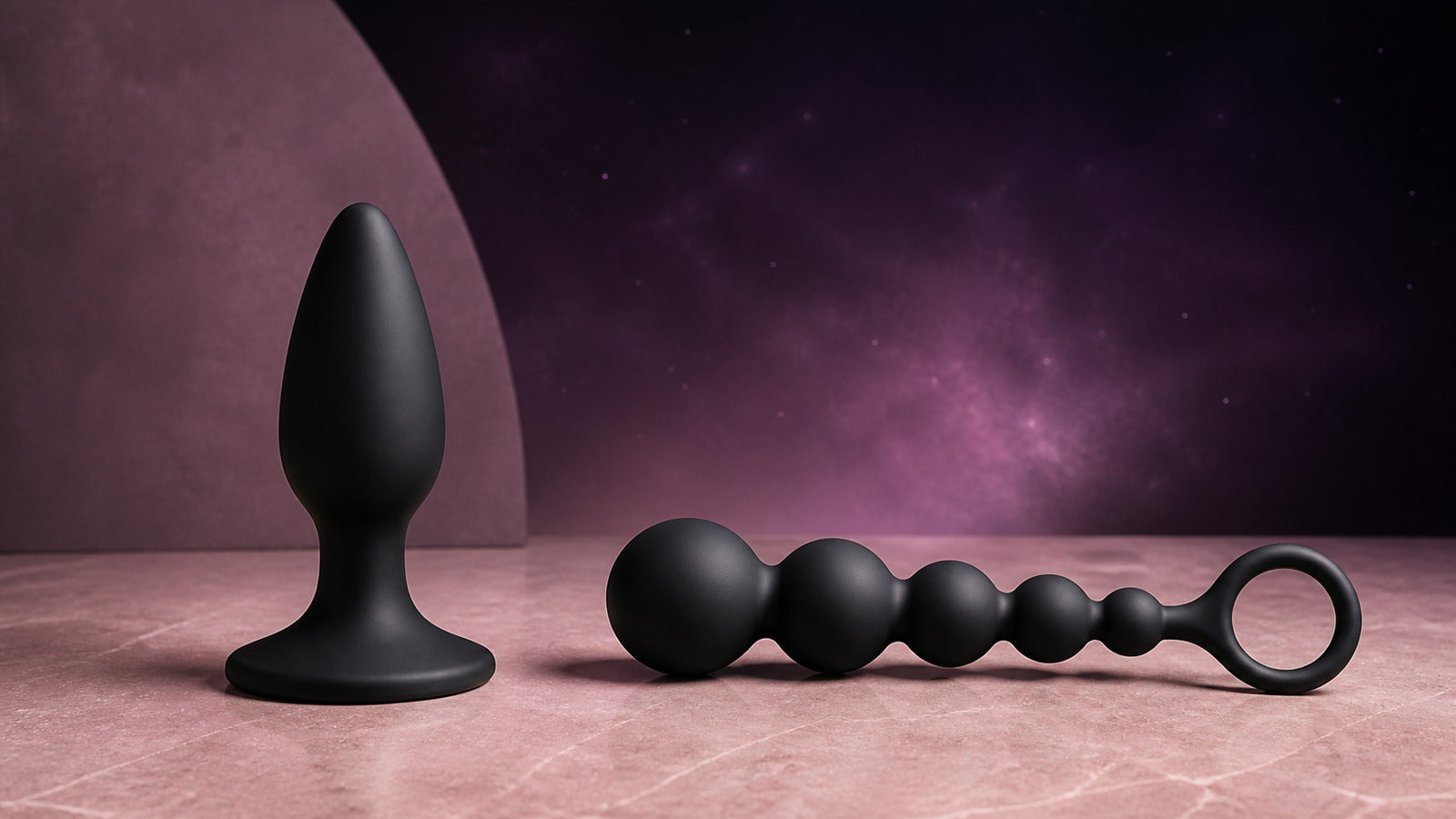
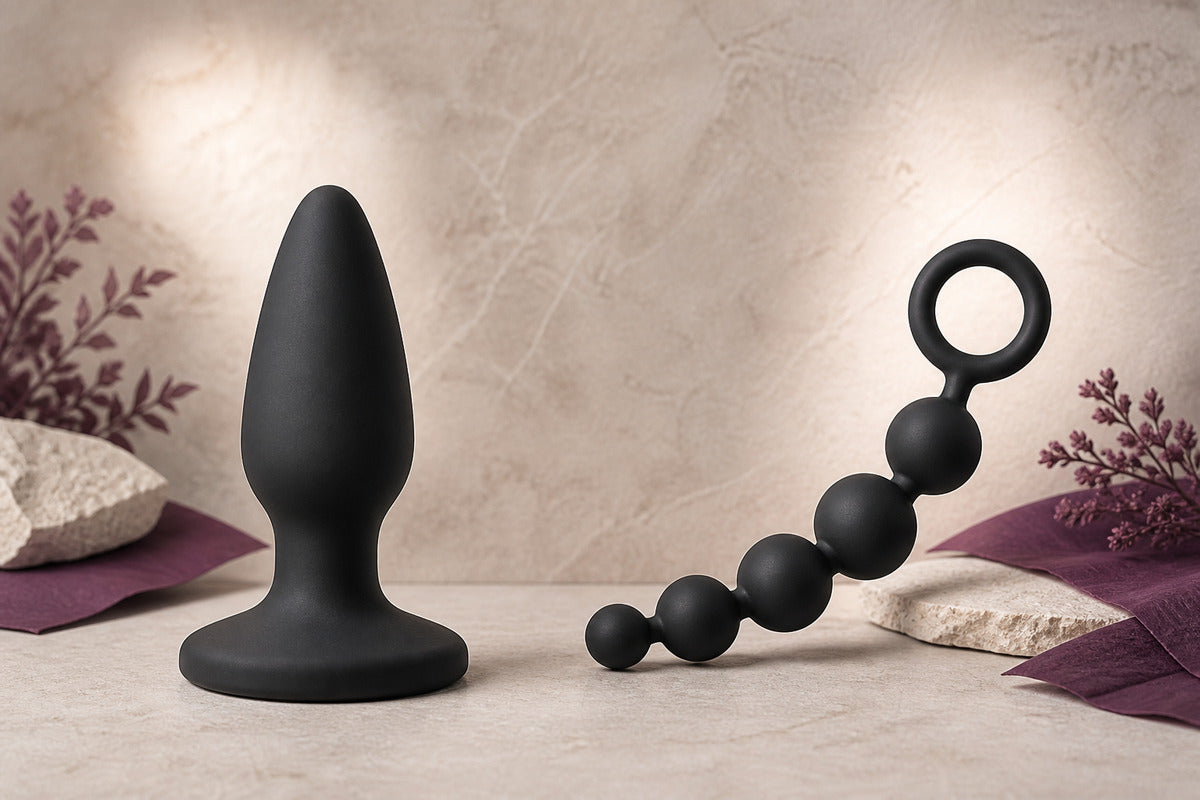
Anal beads and butt plugs are different product designs. Beads have a connected series of rounded sections; a plug usually has one tapered body, a narrower neck and a broad base. Understanding those shapes helps you compare dimensions, construction and care. Neither category is automatically suitable for everyone, and a category name cannot establish whether a particular item meets your needs.
Start with Shape and Measurements
A bead design may have equally sized sections or a graduated sequence. Look for the diameter of every section, especially the largest, along with the spacing, connecting-shaft construction and flexibility. These details affect the overall shape and the areas that need inspection and cleaning.
For a plug, compare the widest body diameter, taper, neck dimensions and base footprint. A smooth silhouette in a photograph can hide substantial differences in geometry. Our plug-selection guide explains the questions to ask about each measurement.
For either design, distinguish total length from the manufacturer's stated insertable length. Diameter measures across a section; circumference measures around it. Request a labeled diagram when the listing is unclear. Labels such as “small” or “beginner” are not standardized dimensions, and there is no universal size recommendation for every person.
Check Intended Use and External Safety Features
Only consider products explicitly intended for the relevant body area. A similar-looking shape, added condom or optional attachment cannot establish that purpose. Read the instructions for the exact model before deciding whether it is appropriate.
University of Rochester health guidance emphasizes a wide base for anal products because items without one can become stuck. A sufficiently wide external base helps reduce that risk; it does not guarantee prevention. Follow the purpose-specific instructions for the base or retrieval feature, including what must remain outside the body.
Do not assume a decorative ring, narrow handle or flexible loop offers equivalent protection. Ask the manufacturer to explain the design and its limits if anything is unclear. Avoid improvising a retrieval feature. Our safety and product-selection guide covers the broader questions to resolve before use.
Evaluate the Complete Construction
Identify all contact materials, coatings, joins and removable parts. A silicone surface can surround a rigid core or electronics; a soft appearance does not tell you the material or firmness. Compare the finished product's documentation rather than relying on color, price or packaging.
Check the connecting sections on beads and the body, neck and base on a plug for damage. Cracks, tears, rough edges, loose components or an unexplained change in surface condition are reasons to put the item aside. A barrier cannot repair damaged construction.
Claims such as “body-safe,” “medical-grade” or compliance with a safety standard need evidence tied to the exact model. Ask for the relevant specification or documentation. A general claim about a collection should not substitute for information about the item you receive.
Separate Controls from Shape
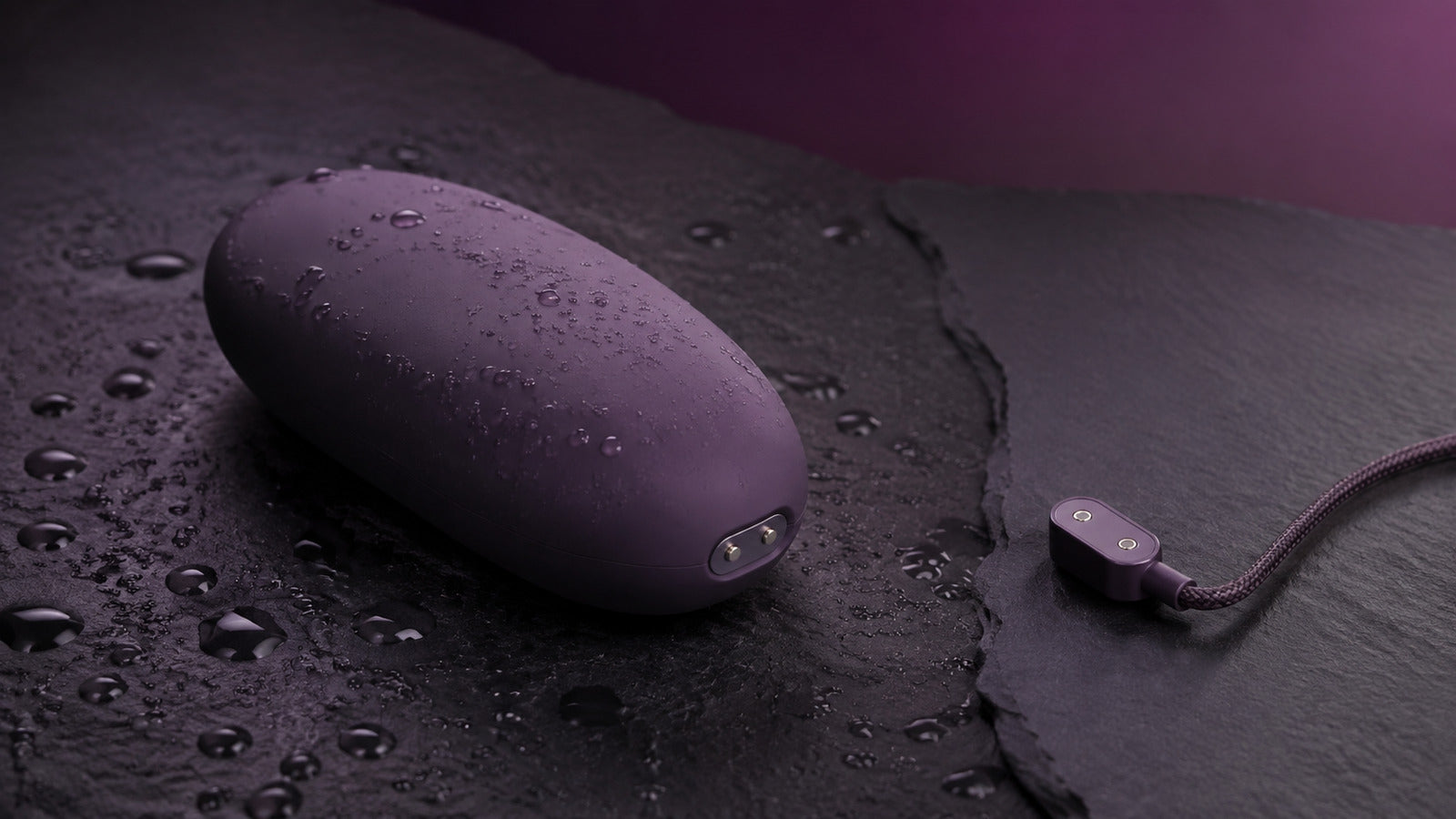
Either design may include a motor or remote control. These features introduce operating and maintenance questions without resolving missing dimensions or uncertain construction.
- Find a clear, immediate way for the person using the device to stop it.
- Check whether operation depends on a remote, phone, connection or account.
- Confirm the specified cable, power requirements and charging instructions.
- Read separate water-exposure limits for the device and each accessory.
If another person is involved, agree on boundaries and control beforehand. Anyone can decline or stop. Consent to one product or occasion does not automatically extend to another.
Read Compatibility Labels Together
The product, lubricant and any barrier each have their own requirements. Check all three. A formula compatible with a barrier can still conflict with the device's surface or coating. Our lubricant compatibility guide explains how to compare those instructions.
NHS guidance advises against oil-based lubricant with latex condoms. Other barrier materials may have different requirements. If the labels conflict or leave a gap, ask the manufacturer rather than guessing.
Compare the Cleaning Workload
Beads have spaces between sections that need attention. Plugs may have textures, seams or decorative details. Simpler shapes can be easier to inspect, but the permitted cleaning method depends on the complete construction.
Follow the exact instructions for cleaner, washing, drying and storage. Do not assume a washable surface permits immersion, boiling, alcohol or dishwasher cleaning. Keep charging equipment dry and follow the drying instructions before reconnecting power.
Sharing adds infection-control questions. NHS sexual-health guidance advises washing toys after use and changing to a fresh condom between people or body openings. Coverage and compatibility still need checking. If reliable cleaning or coverage is uncertain, choose separate items. See our sharing and hygiene guide for more detail.
Know When to Pause
Stop if there is pain, bleeding or concerning discomfort. Seek qualified medical advice for symptoms or questions following injury or surgery. NHS advice recommends assessment for bleeding or severe or persistent anal pain; heavy or continuous bleeding needs emergency care.
If an object becomes stuck, go to an emergency department. Healthdirect advises medically trained removal to avoid further damage. Do not attempt improvised extraction.
A useful comparison ends with clear answers about intended use, measurements, external features, materials, controls and care. Missing information is a reason to pause, and deciding against either category is a valid choice.