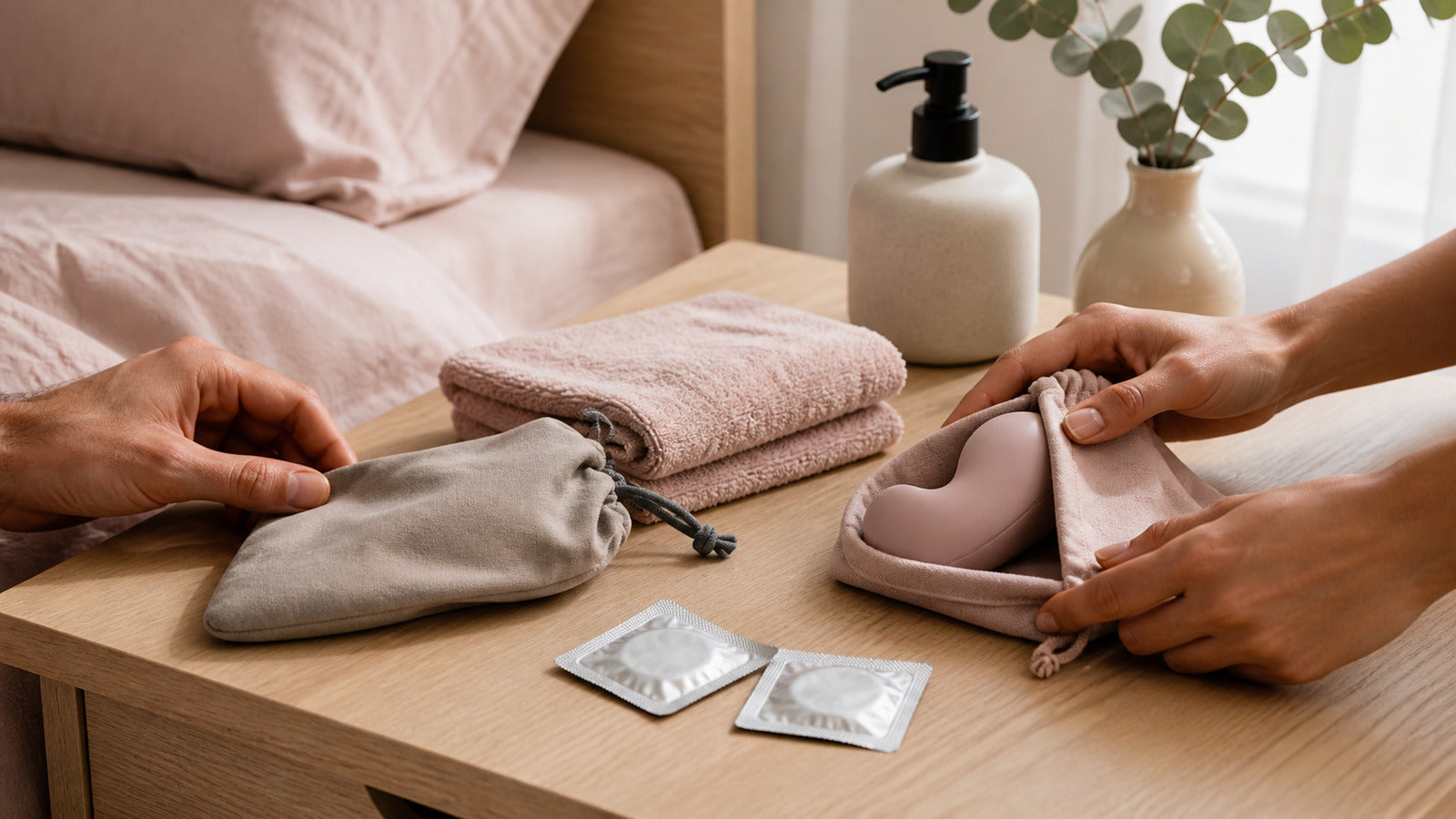
Some adult products can be shared with precautions, but sharing always needs a plan for cleaning, barriers and consent. A quick wipe or a new condom alone does not make an unsuitable product ready for another person. If you cannot confirm the material, care method and a suitable barrier, keep the item for one person's use or choose separate products.
Understand What Sharing Changes
A shared product can transfer bodily fluids and microorganisms between people or different body areas. The CDC explains that condoms help prevent HIV and certain other sexually transmitted infections when sharing sex toys, while providing less protection against infections transmitted through uncovered skin, sores or cuts. Risk reduction is not the same as eliminating risk.
A repeatable routine matters more than whether an item looks clean. Talk about the exact product and intended use before deciding to share. Either person can prefer separate items, and there is no need to compromise that boundary.
Identify the Product Before Choosing a Care Method
Find the instructions for the exact model, including its contact materials, construction and accessories. A silicone exterior can surround electronics, seams and charging contacts that affect cleaning. The water-exposure limits for the main device may differ from those for a remote, cable or removable part.
Check that the product is intended for the body area involved. A condom does not change its intended purpose, dimensions, retrieval features or other design limits. If the manual does not support the proposed use, choose a suitable product rather than trying to make the existing one work.
If the material or cleaning method is unknown, pause sharing while you ask the manufacturer. Do not rely on a soft feel, a familiar shape or a “body-safe” label to establish how the finished product can be cleaned.
Check the Barrier, Product and Lubricant Together
A barrier needs to be compatible with both the product and the lubricant. Read each set of instructions rather than assuming that compatibility with one means compatibility with the others. The CDC warns that oil-based lubricants can weaken external latex condoms and cause breakage. Confirm the requirements for the specific barrier you choose, including any relevant allergies.
Use a suitable new condom that is within its expiry date and has intact packaging. Follow the package directions. It needs to cover the surfaces that will contact the body and remain secure. If the item's shape, texture, moving parts or size prevent reliable coverage, use separate products instead.
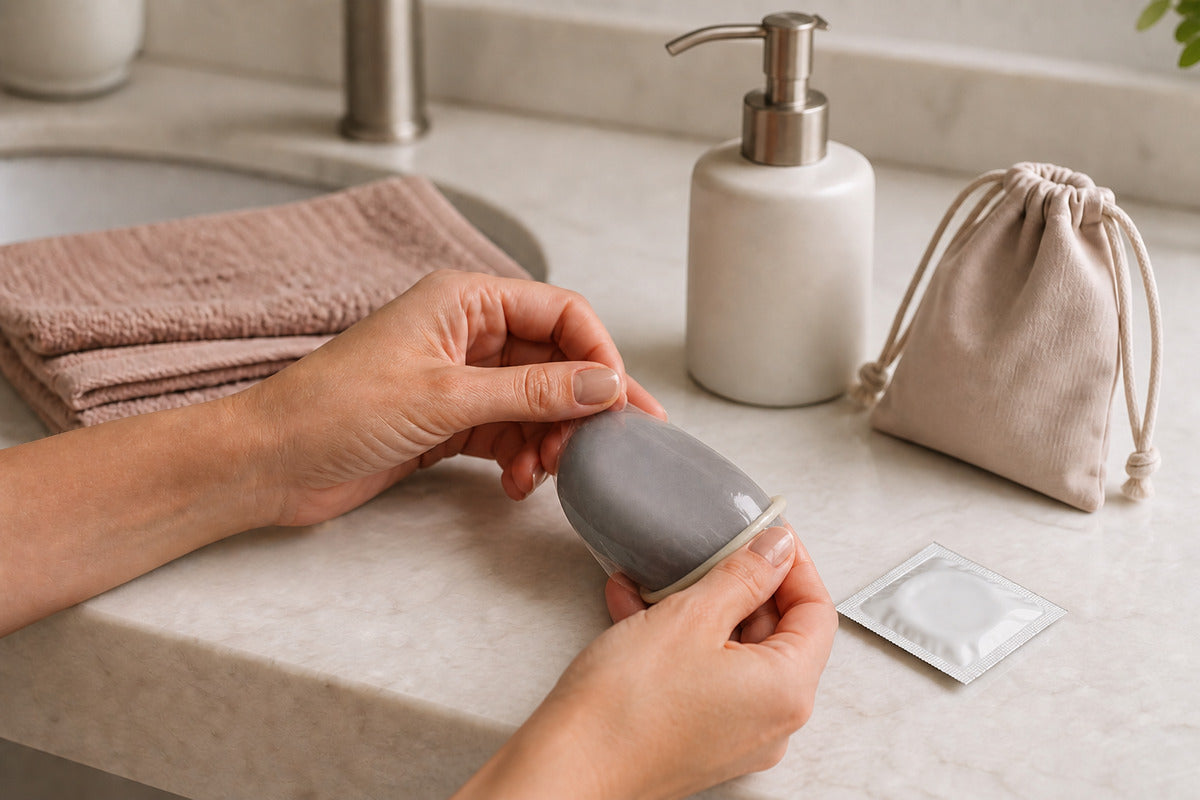
Change and Clean Between Each Person or Body Area
NHS sexual-health guidance advises using a new condom for each partner and when changing between different body openings, and washing toys after use. Build those changes into the plan before starting.
- Stop before the change. Remove and discard the used condom. Do not carry it over to another person or body area.
- Clean the product. Use the manufacturer's approved method, including the directions for any separate parts. Remove cleaner residue as instructed.
- Check the condition. Look for damage, residue or anything that makes you uncertain about continuing.
- Apply a fresh compatible condom. Check coverage and fit again before a new use.
Keep enough supplies nearby so a change does not depend on improvising. Stop if the barrier slips, tears or leaves a contact surface uncovered. A barrier can fail or pick up residue during removal, so it does not replace cleaning between handoffs.
Keep Cleaning Within the Manufacturer's Limits
Cleaning instructions should specify what the item tolerates: wiping, rinsing or immersion, along with the permitted cleaner and drying method. Do not boil it, put it in a dishwasher or apply alcohol, bleach or another disinfectant unless the exact product's instructions expressly permit that treatment.
A routine wash should not be described as sterilization, and a cleaning product is not a guarantee that every infection risk has been removed. If reliable cleaning between uses is not practical, do not share the item. Our cleaning and storage guide explains how to organize care around the finished product.
At the end, clean as directed, dry fully and inspect before storage. Keep clean items in separate suitable pouches or containers. Do not return a damp device to a closed pouch or reconnect charging equipment while the device or its contacts are wet.
Know When to Put the Product Aside
Stop using an item if its surface is cracked, torn, peeling or rough, or if it develops an unexplained sticky surface or other deterioration. Do not treat a condom as a repair for damaged material. Ask the manufacturer about an unexpected change and replace an item that is damaged.
Pause sharing if someone has pain, sores, bleeding, irritation or a possible infection. A barrier should not be used to work around an unresolved health concern. Ask a qualified clinician or sexual-health service for advice about symptoms or a possible exposure. The NHS notes that many STIs have no symptoms, so appearance alone cannot establish infection status.
Include Consent in the Routine
Agree on the product, boundaries, barrier and cleaning plan together. Decide who will handle each step, and how anyone can pause or stop immediately. Agreement to one use is not agreement to every product, body area or future occasion.
For shopping, look for clear materials, accessible care instructions and a design you can inspect. Review the individual listing in our collection rather than relying on a category name. If sharing cannot be managed confidently, separate products are a reasonable choice.
This guide provides general safer-use information. It cannot assess an individual exposure, diagnose an infection or guarantee that a particular product is suitable to share. Bring those questions to a qualified healthcare professional and the product's manufacturer as appropriate.