Choosing between these two Pulse models starts with a practical question: do you want a separate wireless controller and USB charging, or a wired controller and replaceable AAA batteries? PL5K92 and PL8V64 share the vibrating-egg name, but their layouts, power arrangements and listed settings differ substantially.
The Pulse PL5K92 is a two-piece set whose egg and wireless controller both vibrate. The Pulse PL8V64 has two differently shaped heads connected to a wired handheld controller. This guide compares their documented features so you can build a shortlist around the setup you actually prefer.
The main differences at a glance
| Detail | Pulse PL5K92 | Pulse PL8V64 |
|---|---|---|
| Control connection | Separate wireless controller | Wired, two-button handheld controller |
| Physical layout | Egg unit and controller; both are listed as vibrating | Longer capsule-shaped head and shorter oval head |
| Listed settings | 7 vibration modes | 20 vibration modes |
| Power | USB rechargeable | 2 replaceable AAA batteries |
| Connection distance | Wireless range not specified in the reviewed information | Approximately 80 cm cable |
| Construction information | Silicone and ABS listed | Material not specified in the reviewed information |
| Listed colours | Pink, Purple and Rose Red | Purple |
These are published specifications, rather than results from a hands-on test. The mode counts give you a useful inventory of settings, but they do not provide a shared measurement of strength or establish which product will feel more comfortable.
PL5K92: a wireless set with a vibrating controller
PL5K92 separates the handheld controller from the egg unit without a connecting control cable. Its listing also makes an unusual detail explicit: the controller itself vibrates. When comparing the two models, count this as a documented function of PL5K92 rather than assuming that every handheld controller is a passive remote.
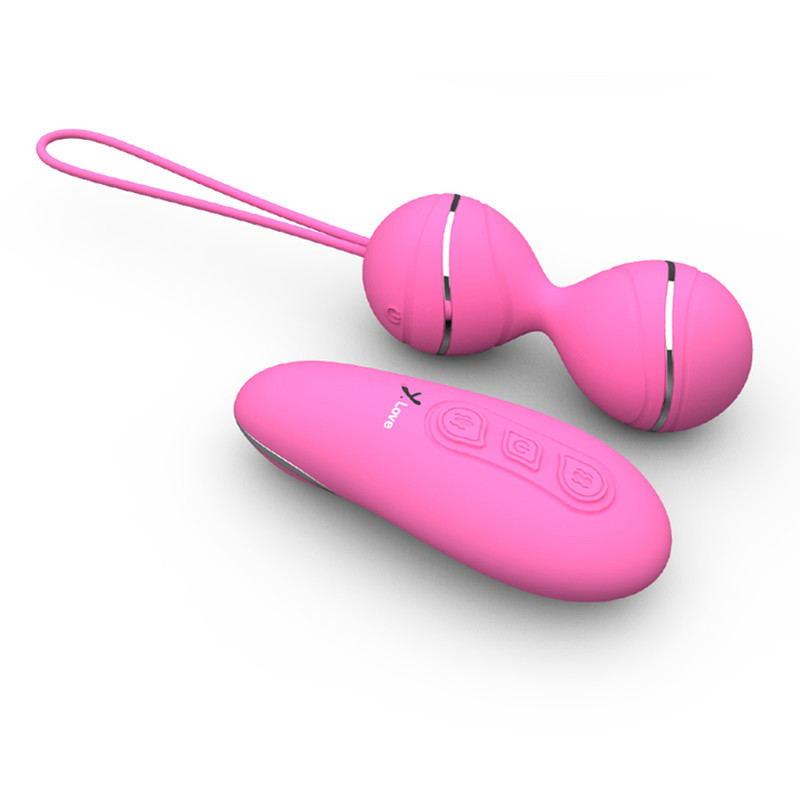
The egg is listed at approximately 85 × 35 × 35 mm, with the controller at 89.5 × 38 × 27 mm. Those measurements are useful for judging overall proportions and storage space. They are supplier-stated component dimensions, not an insertable-length measurement or a guarantee of fit.
Silicone and ABS construction, seven vibration modes and USB charging are documented. If you prefer rechargeable equipment and a controller without a physical lead to the egg, PL5K92 is the closer match on those criteria. Pink, Purple and Rose Red are the listed colour choices; check the exact selection on the product page before ordering.
Before choosing it for its wireless feature, ask about the supported range, pairing procedure and behavior if the connection is lost. The reviewed information does not establish smartphone, Bluetooth or internet control. It also does not explain whether every vibrating component can be adjusted independently.
PL8V64: two heads with a wired controller
PL8V64 takes a different approach. A longer capsule-shaped head and a shorter oval head connect to one handheld controller through an approximately 80 cm cable arrangement. The controller has two buttons, and the listing specifies twenty vibration modes. Purple is the listed colour.
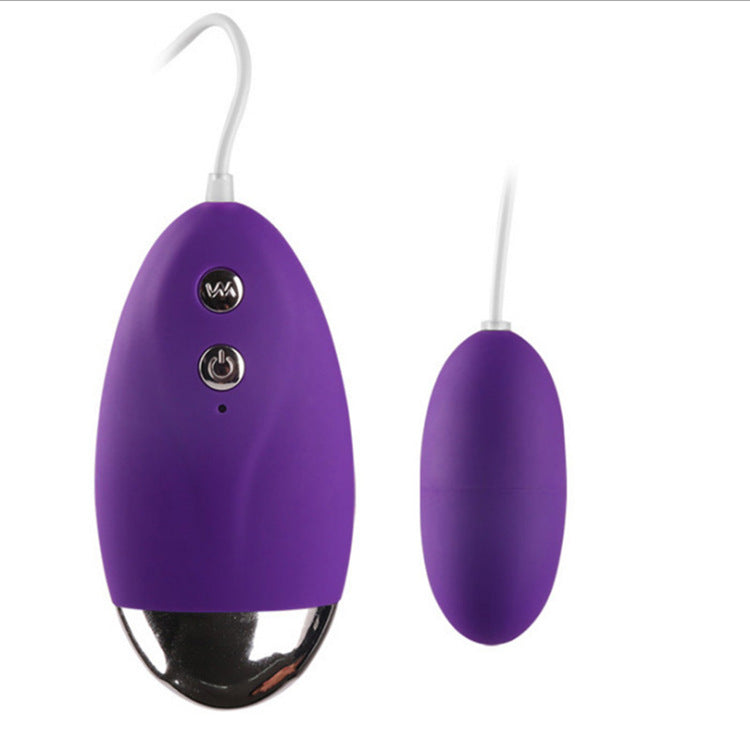
A wired layout makes cable placement part of the buying decision. Think about where you would keep the controller within reach and whether you prefer storing a connected set. The approximate cable length describes the product lead; it does not establish the distance available between every component or make the cable a handle.
Power comes from two replaceable AAA batteries. That may suit a preference for replacing batteries rather than charging this device. Confirm whether batteries are included, how the compartment opens and which battery specifications the manual requires. The reviewed information does not provide runtime, so a battery type alone cannot tell you how long the set will operate.
Two heads and two buttons do not establish independent head adjustment. If separate settings for each head are essential, get that confirmed before purchase. Material composition and a named water-resistance rating are also unspecified in the information used for this comparison.
How much should seven versus twenty modes matter?
Start by deciding what you want to change while operating the controls: a pattern, an intensity level or an individual component. A total mode count leaves those questions open. Twenty listed modes may interest someone who wants more settings to explore, while seven may be enough for someone whose priority is the wireless layout.
Neither count establishes the lowest available intensity, the size of each adjustment or how many button presses it takes to return to a preferred setting. Ask whether the controls cycle through a fixed sequence, whether settings can be reduced directly, and how the product switches off. A clear control sequence is more useful than choosing by the larger number alone.
Three checks that can settle your choice
- Choose your preferred connection. Shortlist PL5K92 for its separate wireless controller; shortlist PL8V64 if you prefer its physically connected, two-head layout. Confirm any control behavior that matters to you.
- Choose your power routine. PL5K92 documents USB charging; PL8V64 documents two AAA batteries. Compare the required accessories and preparation for each, rather than assuming a runtime advantage.
- Resolve the missing details. Request the exact operating instructions, component-specific cleaning directions and permitted water exposure. For PL8V64, ask for material information. For PL5K92, confirm wireless range and how its two vibrating components are controlled.
If dimensions are your deciding factor, our guide to comparing product sizes explains the difference between overall measurements and other fit information. For a broader explanation of wireless and app connections, see remote and app-controlled products.
The practical shortlist
Choose PL5K92 as your starting point for wireless control, USB rechargeability and a listed vibrating controller. Choose PL8V64 as your starting point for a wired dual-head design, replaceable AAA power and twenty listed modes. Check the open questions against your own requirements before making the final choice.
Sources and scope
Prepared October 8, 2026, from OMIREA’s published product information and original product photographs. This is a specification-based buying comparison; performance, wireless range and runtime were not independently tested. Check each product page for current purchase options and accompanying instructions.