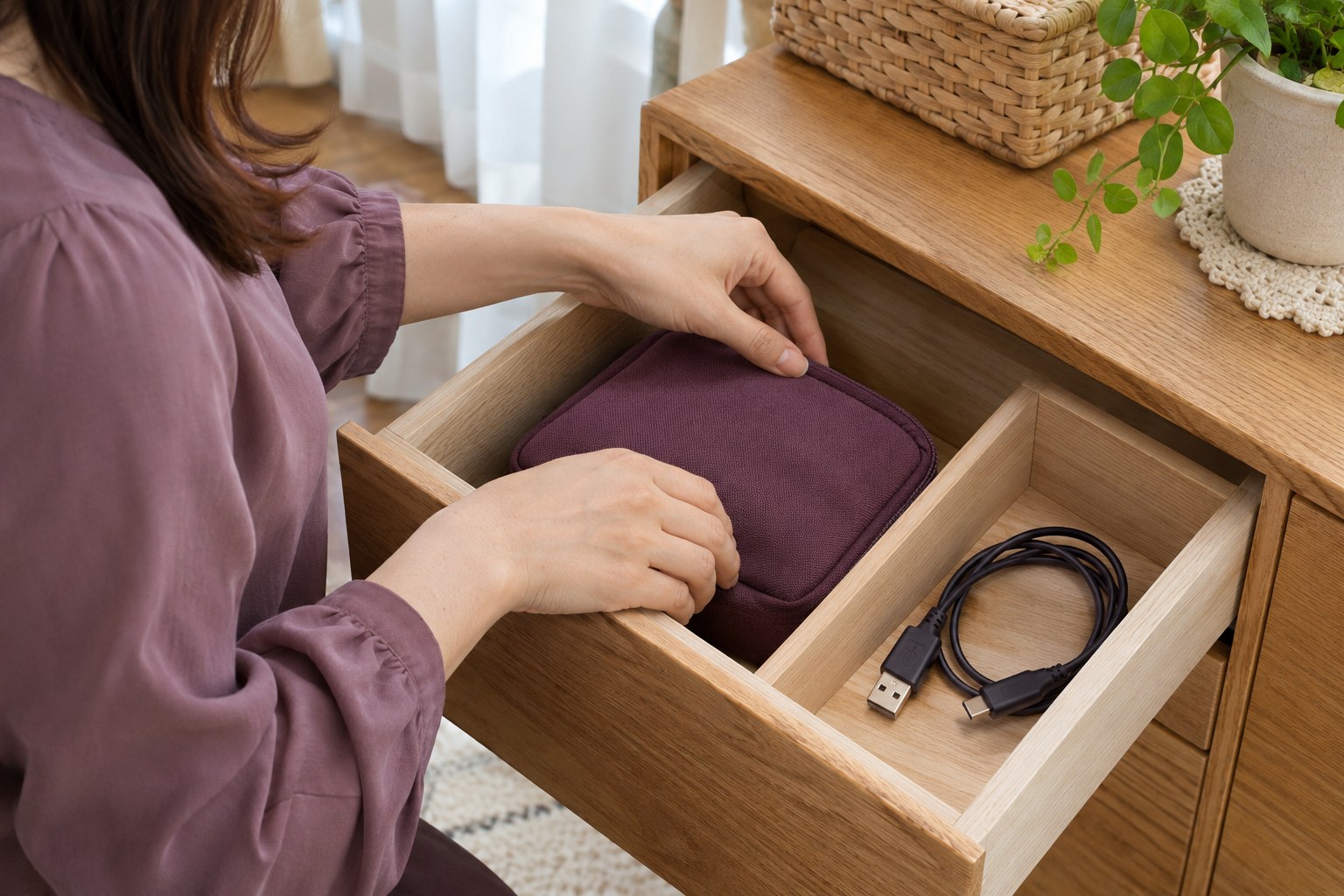
If your vibrator will stay in a drawer for weeks or months, clean and dry it as directed, switch it off, and check its exact storage instructions. A sealed rechargeable model may need maintenance charging during the break. A model with user-replaceable batteries needs a different routine. There is no reliable charging interval that applies to every vibrator.
You do not need to use a toy regularly to justify keeping it. The practical aim is to put it away with enough information that you are not guessing about its battery, cable or condition when you want it again.
Start With the Power System, Not the Shape
A small device is not necessarily rechargeable. For example, the OMIREA Whisper WS6H38 uses one AA battery, while the WS4K82 is USB rechargeable. Those documented power differences matter for storage; they do not establish the rechargeable model’s battery chemistry or maintenance schedule.
Read the supplied manual for your exact model and version. Only open a compartment designed for user battery replacement. Do not open a sealed casing to remove a battery for storage.
For Rechargeable Models, Find the Maintenance Instruction
Some makers specify a long-storage interval. The Lovense Mission guide, for example, says to recharge that model at least once every six months. This is a model-specific example, not a schedule for every Lovense device or an OMIREA product.
Also check whether the instructions specify how much to charge before storage. Do not turn an internet battery tip into “charge halfway for half the usual time.” Charging time is not a dependable percentage meter, and a light may only distinguish charging from full.
If the manual does not answer the question, ask the manufacturer: “I will not use this model for several months. What charge level should I leave it at, when should I check or recharge it, and which indicator should I use?” Save that answer with the model name. A generic listing that only says “USB rechargeable” is not enough.
Make a private note of the last charge date, the manufacturer’s next-check interval and the matching cable. That creates a reminder from actual instructions rather than imposing a new weekly charging habit. Unplug after the instructed charge; leaving a device connected throughout storage is not a substitute for maintenance.
Keep Removable Batteries Separate
For devices with user-removable cells, Energizer recommends switching off and removing batteries when the device will not be used for an extended period. Follow the device’s opening instructions, and keep the cells protected from contact with keys, coins and other metal objects.
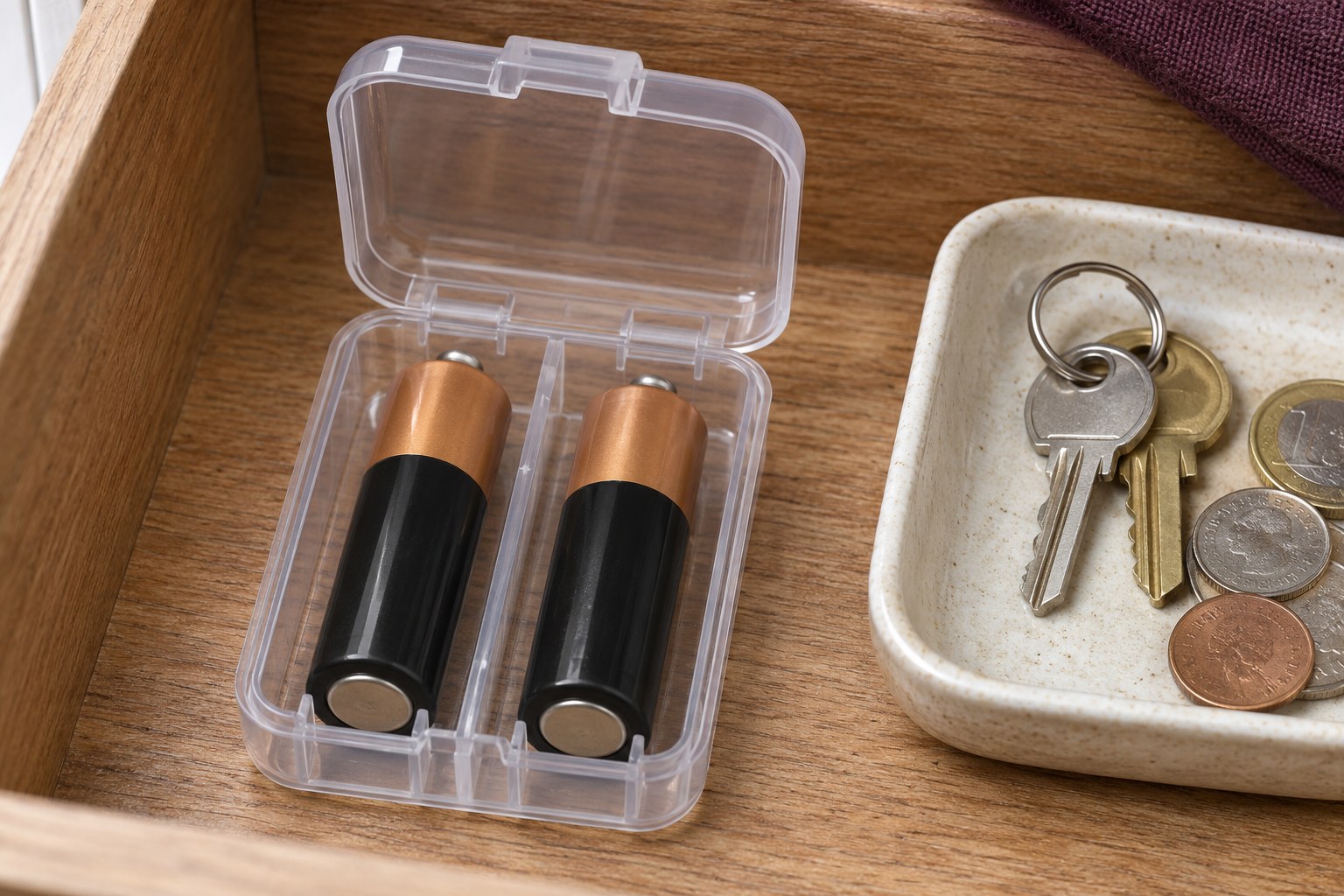
Keep the correct size and type recorded so you can replace them properly later. Do not recharge a disposable battery. A spare rechargeable AA also needs its own compatible charger and storage instructions; it does not inherit the routine of a sealed USB-powered toy.
Choose a Storage Spot and a Charging Spot
A pouch can keep a dry device separate from other items, but it is not a place to charge it. Keep its own cable identifiable and disconnected. Avoid crushing the cable under other drawer contents or assuming a similar-looking lead is interchangeable.
For devices confirmed to use lithium-ion batteries, Health Canada’s safety guidance advises dry, room-temperature storage out of children’s reach and away from extreme heat or cold. It advises charging where you can see the device, away from soft surfaces that trap heat, following the manufacturer’s instructions.
Surface care is a separate question. Our cleaning and storage guide explains how to keep cleaning within the product’s water and material limits. A dry-looking exterior does not tell you the battery’s condition.
When You Take It Out Again
Before connecting power, look for swelling, a changed casing shape, leakage, damaged wires or other visible damage. Do not charge or use a damaged device. Contact the manufacturer about safe handling or replacement rather than trying to revive it by prolonged charging or opening the casing.
If it looks intact, use the correct cable and the model’s normal charging procedure in a suitable visible location. If the expected charging signal does not appear, stop and ask for model-specific support rather than repeatedly extending the charge or testing unrelated cables. The absence of a light does not identify whether the battery, lead or connection has failed.
Finally, follow the pre-use cleaning instructions and confirm how to switch the device off. If you are buying a replacement, ask for the storage instructions before purchasing, especially if you expect occasional use. Clear care information is more useful than a vague promise of a long-lasting battery.
Still deciding which power format fits your routine? Our rechargeable versus battery-operated vibrator guide compares those buying choices without treating one as right for everyone.