Sex toys can generally be used during a pregnancy without complications, unless your doctor or midwife has advised otherwise. Tommy’s pregnancy guidance specifically addresses toys and recommends clarifying whether advice to avoid sex includes them. That is different from declaring every vibrator or setting suitable for every pregnancy.
If you have been given restrictions, have new symptoms or are unsure whether your pregnancy has complications, ask your maternity team before using a device. This article provides general information, not individual clearance or a pregnancy-approved product list.
The Vagina and the Womb Are Different Spaces
A common worry is whether an inserted toy can reach the baby. NCT explains that a penis or sex toy does not pass beyond the cervix to the baby. The vagina is below the cervix; the pregnancy is in the uterus, also called the womb.
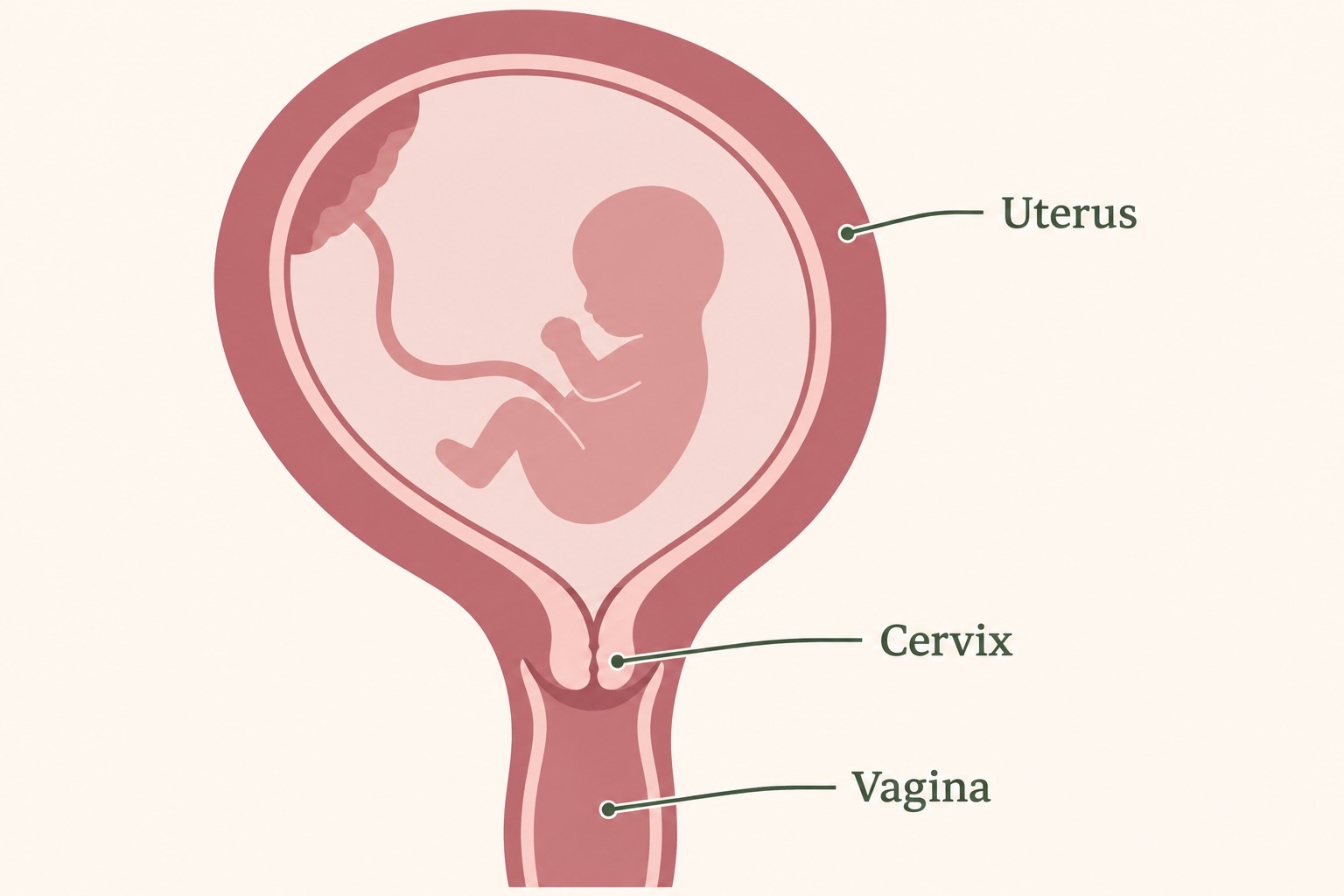
That separation explains the anatomy, not permission to ignore a restriction. It cannot tell you whether penetration is appropriate in your circumstances, whether a particular shape is comfortable, or whether new symptoms need assessment.
Clarify What a Restriction Includes
“Avoid sex” can leave practical questions unanswered. Before assuming that an external vibrator is an exception, ask what your clinician intends you to avoid. Do not translate a general instruction into a device recommendation yourself.
- Does the advice cover vaginal penetration, external stimulation, orgasm, or a combination?
- Does it apply until a review, until a symptom resolves, or for another specified period?
- What should I do if bleeding, pain, fluid leakage or other concerning symptoms occur?
Describe the activity plainly, without needing to bring an intimate photograph: “I mean a vibrator used externally, without insertion. Does the restriction include that, and does it include orgasm?” A clear answer is more useful than a seller’s “gentle” or “pregnancy-safe” label.
There are medical reasons for restrictions. Ireland’s HSE guidance discusses bleeding and a low-lying placenta, and says not to have sex if there is vaginal bleeding or the waters have broken. These examples are not a complete screening checklist. Your own care team should interpret your history and current symptoms.
Check the Device Without Turning It Into a Medical Claim
If there is no individual restriction and you want to use a product, check the exact model’s intended use, controls and cleaning directions. A material label, small size or long mode list cannot establish pregnancy suitability. Neither can a review written by someone with a different pregnancy.
Make sure you understand how to stop the device and what happens when it starts again. Our control guide explains why the first pattern is not always the lowest intensity. These are ordinary usability checks, not a safe-setting prescription for pregnancy.
Keep cleaning within the model’s instructions, including its water limits and any removable parts. NCT recommends cleaning toys before and after use. Our cleaning and storage guide helps separate those product-care questions. Pregnancy is not a reason to improvise stronger cleaners or an unapproved heat treatment.
Comfort and Wanting to Participate Are Separate Checks
Pregnancy can change desire and sensitivity. HSE notes that increased sensation can be uncomfortable for some women. Something you previously liked may no longer suit you, and that does not require you to find a stronger setting or a different product.
You can stop, wait or choose nonsexual closeness instead. If a partner is involved, describe what is welcome today rather than treating a previous preference as an ongoing agreement. A reassuring medical answer does not create an obligation to use a toy.
Stop and Get Advice About Symptoms
Do not assume bleeding is harmless because it followed sexual activity. NHS guidance on bleeding in pregnancy advises urgent medical advice even for spotting or light bleeding. Contact your maternity team or the appropriate urgent-care service where you live.
Bleeding with severe abdominal pain, shoulder pain, faintness or dizziness, or heavy bleeding soaking a pad, needs immediate emergency help. Stop sexual activity and seek assessment if you think your waters have broken. Persistent pain or other worrying symptoms also need clinical advice rather than further device troubleshooting.
The useful decision is not “Which toy is safe for all pregnancies?” It is whether the activity fits your current medical advice, wishes and comfort, with a clear plan for symptoms. After birth, reconsider the question in the context of recovery rather than carrying pregnancy advice forward unchanged.
For that later stage, read our postpartum recovery and intimacy guide. You do not need to buy anything to make either conversation worthwhile.