
After birth, recovery, body confidence and intimacy may all feel different. There is no requirement to return quickly to a previous routine or to feel a particular way about your body. The starting point is your recovery, your wishes and any advice from the team caring for you. Adult products are optional and should never be presented as a shortcut to healing.
Give Recovery Its Own Timeline
The NHS guidance on sex after birth notes that there is no universal date for resuming sex. Soreness, tiredness and hormonal changes affecting dryness can all be relevant. Follow any individual restrictions from your maternity team, particularly after tears, complications or surgery, and raise questions about healing directly with them.
A routine appointment is an opportunity to discuss recovery, not a deadline to become interested in sex. Physical readiness and wanting to participate are separate considerations. You can need more time even when an examination is reassuring, and you can ask for help with symptoms at any stage.
Comparisons with friends or online stories rarely capture the full context. Someone else's recovery cannot tell you what is appropriate for your body. Avoid product advice that assumes everyone should begin the same activity at the same number of weeks.
Body Confidence Does Not Need to Be Performed
You may feel proud, unsettled, neutral or several things at once about physical changes. There is no need to force a positive interpretation before you deserve comfort and care. Nor do you have to demonstrate confidence by choosing particular clothes, resuming intimacy or buying something.
Consider what would make the day easier: clothing that feels comfortable, uninterrupted time to wash, help with a meal or someone taking over a practical task. Ask for support in concrete terms where possible. A small, manageable request can be more useful than another ambitious self-care plan.
Partners can support recovery by listening and sharing responsibilities without treating affection as a route to sex. Agree on what kind of closeness is welcome today, and keep checking rather than assuming that yesterday's answer still applies.

Bring Pelvic Symptoms Into the Conversation
Leakage, heaviness, persistent pain or difficulty with bladder and bowel control are worth mentioning to a healthcare professional. King's College Hospital's postnatal guidance recommends seeking help for pain that does not resolve, continence difficulties and painful intercourse.
Do not assume those concerns mean you need stronger muscles or a weighted trainer. The right response depends on assessment. Our pelvic floor health guide explains why relaxation, coordination and individual advice matter alongside strength.
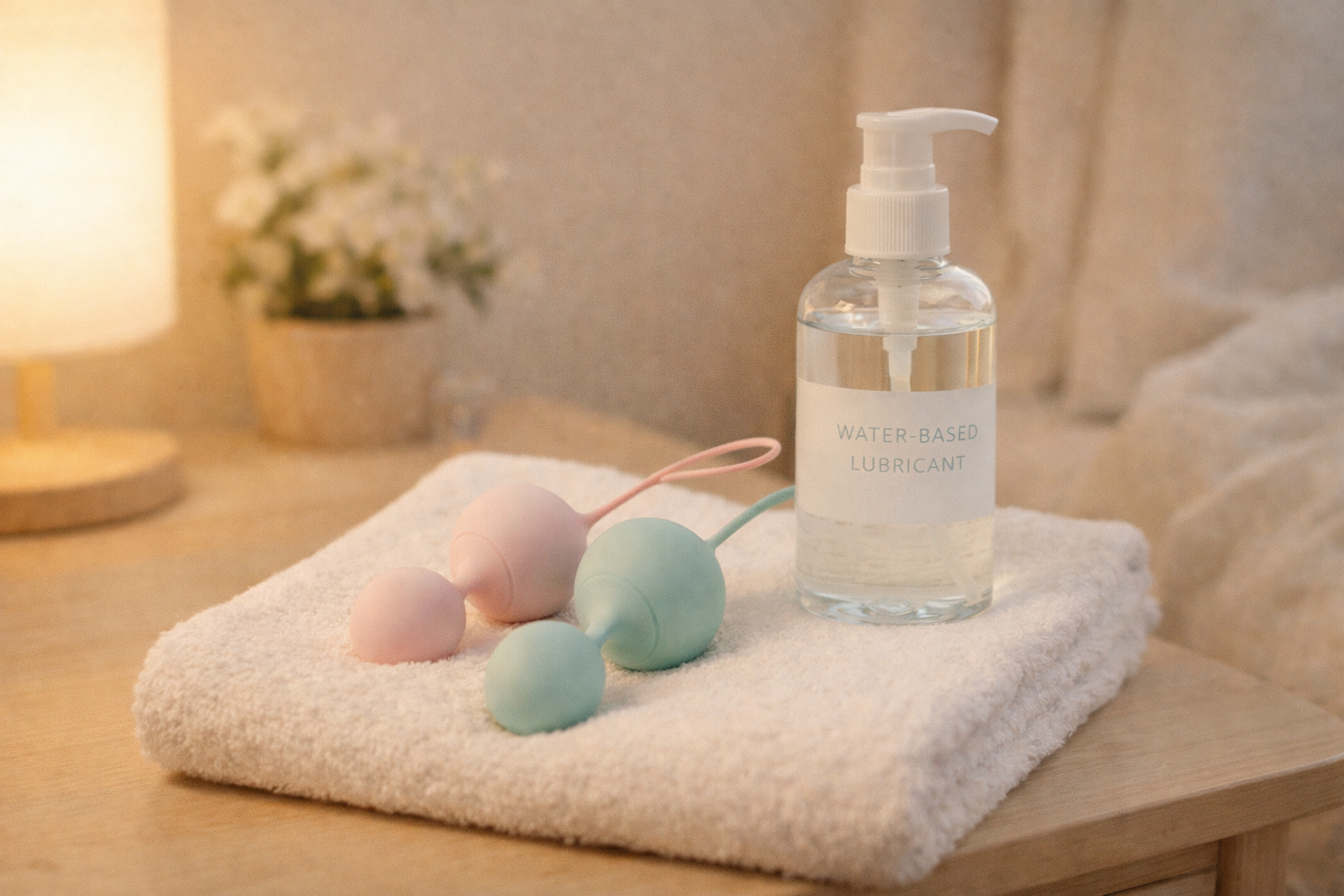
If exercises have been recommended, ask for a plan you understand and a clear review point. A vibrator or set of Kegel balls should not be described as a substitute for pelvic-health physiotherapy, a way to repair tissue or a guaranteed treatment for pain or leakage.
Keep Products Separate from Recovery Goals
If you are interested in an adult product, first consider whether there are unresolved symptoms or healing questions to discuss with your clinician. An external-use label does not automatically establish that a device is appropriate during recovery. General shopping guidance cannot replace personal advice.
Once an item is suitable for your circumstances, practical information still matters: intended use, dimensions, controls, the ability to turn it off easily and instructions for cleaning and charging. Read the exact product documentation rather than relying on a description such as gentle, beginner-friendly or postpartum-safe.
Our first-vibrator guide covers those checks. The care guide explains product-specific cleaning and storage. Neither guide is a postpartum treatment plan. You can choose to wait or decide that a purchase is not useful.
Comfort and Consent Remain Essential
Stop anything that hurts rather than trying to build tolerance through repeated discomfort. Tell your clinician about persistent dryness or pain, including symptoms that occur outside intimacy. Avoid treating a change in sexual response as evidence that you are failing to recover.
Contraception is a separate health consideration. The NHS advises that pregnancy can occur from three weeks after birth, including during breastfeeding and before periods return. If pregnancy is not wanted, discuss suitable contraception with your maternity team or a sexual-health service before resuming activities that could lead to pregnancy.
Look After Emotional Health Too
Low mood, persistent anxiety or feeling unable to cope deserve support. The NHS recommends speaking with a GP, midwife or health visitor if you think you may have postnatal depression, even if you have only some of the signs. Symptoms that persist or worsen should not be dismissed as something you must manage alone.
A purchase, an intimate experience or a carefully planned routine is not treatment for a mental-health condition. You can ask for professional help and practical support at the same time.
Know Which Symptoms Need Prompt Care
Follow your discharge instructions about warning signs. ACOG's postpartum guidance advises urgent medical attention for symptoms such as chest pain, difficulty breathing or severe lower-abdominal pain. Contact your maternity clinician immediately for fever or heavy bleeding; if you cannot reach them, seek emergency care. Do not wait for a routine appointment when symptoms are severe or rapidly worsening.
Recovery deserves time, appropriate care and respect for your boundaries. Intimacy can be reconsidered when you want it, with questions addressed and without a deadline or a promise that a product will make the process easier.
This article provides general information. Your maternity or primary-care team can advise on healing, symptoms, contraception and what is appropriate for your circumstances.