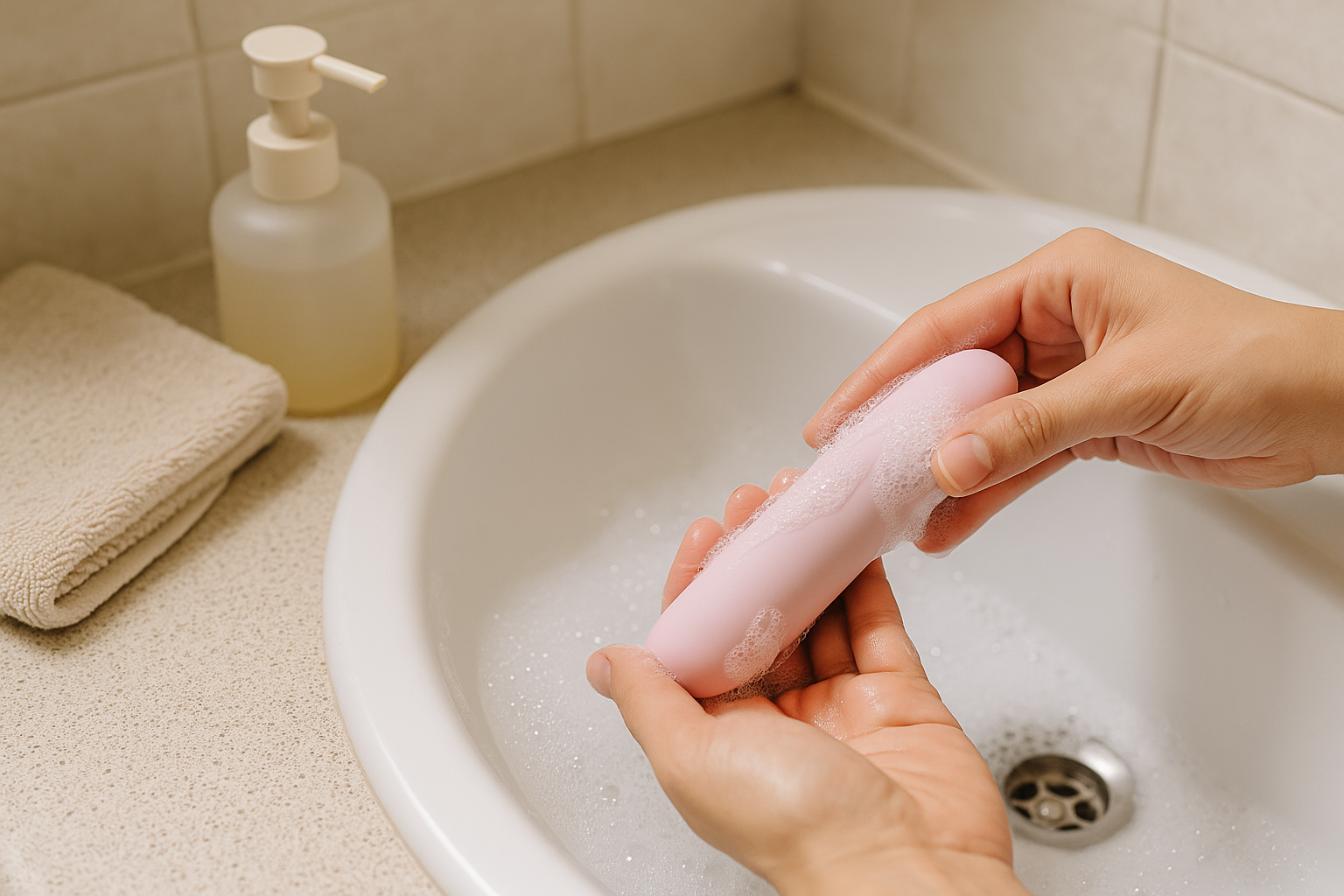
Caring for an adult product starts with knowing how that particular item is made. The material, water-exposure limits, power source and removable parts all affect the cleaning method. A simple routine can help you keep track of those details: read the instructions, clean as directed, let everything dry, inspect the condition and store it carefully.
Start with the Instructions for Your Model
Before the first clean, find the product manual or care information and keep it somewhere easy to check. Look for the exact model and any instructions for attachments, remotes or charging accessories. Two devices with similar shapes can have different seals, coatings and electrical parts.
Check what is actually permitted: wiping with a damp cloth, rinsing under water or immersion. A material label such as silicone or ABS does not answer that question. Neither does a photograph of a product beside a bath or sink. If a listing uses a broad phrase such as “waterproof” without explaining the limits, ask for clarification before putting the item in water.
Our first-vibrator guide explains the practical details to review before buying. Care requirements are worth including in that decision, alongside dimensions, controls and power.
Build a Simple Cleaning Routine
Clean the product after each use using the method in its instructions. Follow any before-use cleaning directions too, and check for dust or residue after storage. Set aside enough time to finish drying it rather than putting it away while damp.
- Prepare: turn off a powered device and disconnect it from charging equipment. Check whether any user-removable parts have separate care instructions. Keep electrical accessories away from the cleaning area.
- Clean as directed: where the manufacturer permits washing, use the specified cleaner or mild soap and warm water. Clean the accessible surfaces gently, including seams and textured areas. For a product that permits wiping only, follow that method rather than treating it as washable.
- Remove residue: follow the instructions for rinsing or wiping away the cleaner. Do not assume a spray can be left on simply because it is sold as a toy cleaner.
- Dry fully: use the recommended drying method, with a clean, lint-free cloth if permitted. Check recesses and detachable parts before reassembly, storage or charging.
- Inspect: look over the surface and accessible parts for changes or damage before putting the item away.
If the directions are missing or contradictory, pause and ask the manufacturer. A cleaning routine should be repeatable without guessing about water, temperature or chemical compatibility.
Material and Construction Both Matter
It can be useful to recognize material names, but they are only part of the care picture. A device may combine a soft outer layer, hard plastic controls, seams, adhesives and a sealed battery. Care instructions need to account for the complete product.
- Silicone: check the instructions for the finished item, including any coatings, joints or electronics. Do not assume every silicone product can be boiled or treated with the same cleaner.
- Hard plastic: look for the permitted surface-cleaning method and pay attention to openings and battery compartments. A plastic casing alone does not establish water resistance.
- Glass or metal: verify the actual material and the manufacturer's care limits. Check for chips, cracks, rough edges or other damage before use.
- Soft blends, TPE, TPR or unspecified materials: ask for clear care and compatibility information rather than borrowing instructions from a different product. If you cannot establish how an item should be cleaned, do not improvise.
A routine wash should not be described as sterilization. Avoid boiling, dishwashers, alcohol, bleach or other strong treatments unless the exact product instructions explicitly permit the method. This guide does not provide a universal disinfecting procedure.
Give Powered Devices Separate Attention
A rechargeable device, a replaceable-battery model and a non-powered item can have very different care requirements. Keep the charger, cable and remote separate in your mind from the main device; permission to rinse one part does not apply automatically to every accessory.
Follow the manual for opening a battery compartment, removing replaceable batteries and checking that covers are closed correctly. Do not open a sealed rechargeable housing or attempt to remove its built-in battery as part of routine cleaning.
Before charging again, make sure the device and charging contacts are dry and follow the specified charging instructions. For longer storage, use the manufacturer's guidance on battery removal or charging intervals. There is no single schedule that fits every battery or product.
Plan for Sharing and Changes in Use
Sharing a sex toy can pass infections between people. NHS sexual-health guidance recommends cleaning shared toys and using a fresh condom for each person or different body opening. Clean it between users, and use a new, suitable condom for each person where the product is designed to accommodate one. Change the condom between different body areas too. Check compatibility with the device and any lubricant, and continue to follow its cleaning instructions.
Do not move a product from anal to vaginal use without cleaning it or changing its condom first. If you are unsure how to manage a particular product or have an infection-related concern, a sexual-health clinician can give advice suited to the situation. Cleaning is one part of safer use and cannot make every situation risk-free.
Store Only When Everything Is Dry
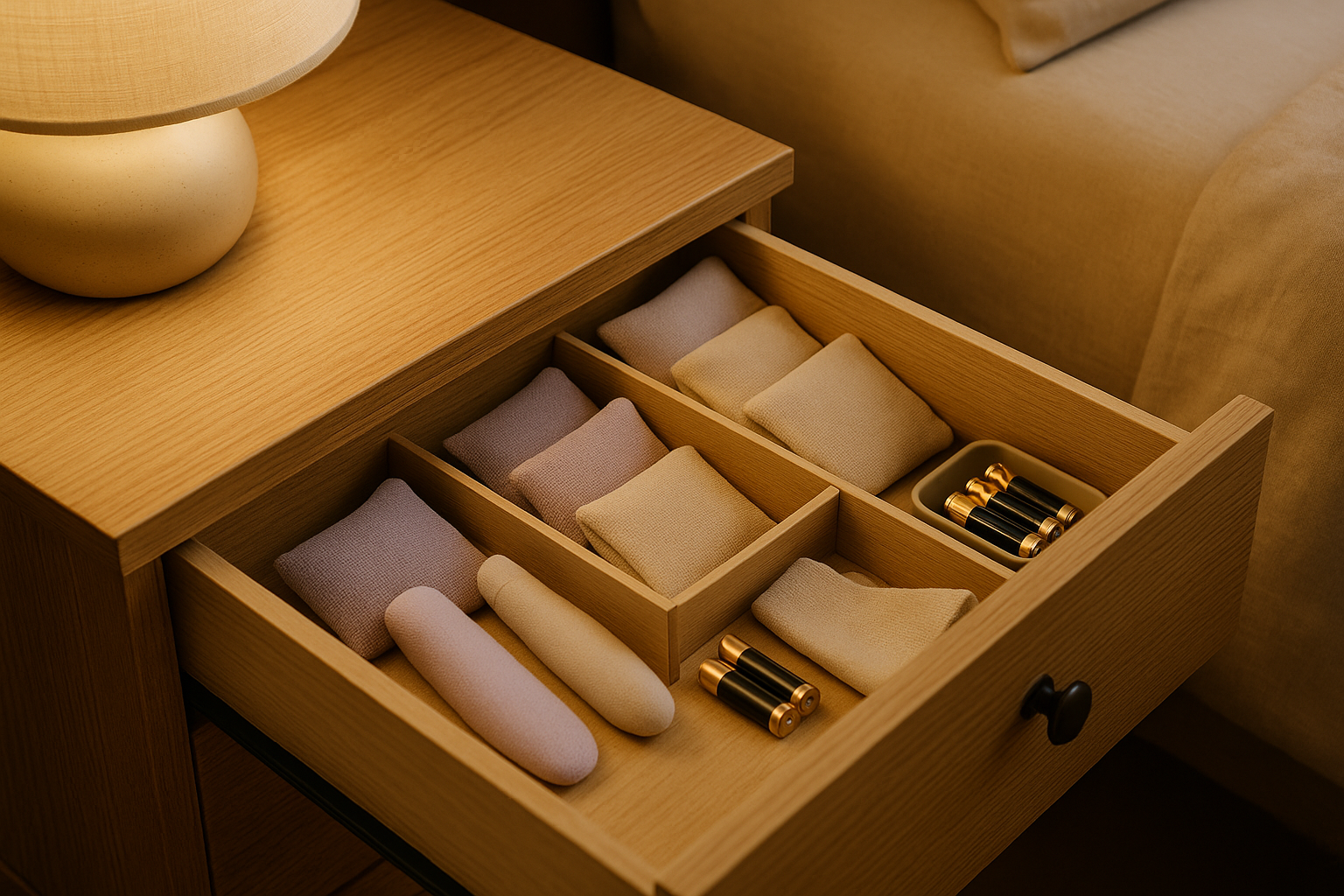
Choose a clean, dry place away from direct sunlight and excess heat. If a storage pouch came with the item, check its care instructions as well. A pouch that has picked up dust or residue needs attention before it becomes the next clean storage space.
Store items separately when the manufacturer recommends it, and avoid squeezing them against sharp objects or under heavy items. Keep the correct cable, manual and model information easy to identify. A simple label on a pouch can help if several devices use similar-looking accessories.
Review the condition again when taking something out of storage. A clean-looking surface does not tell you whether a seal, cable or battery has remained in good condition.
Know When to Stop Using an Item
Stop using a product if you notice cracks, tears, chips, peeling, exposed components or a changed surface that remains sticky after the recommended cleaning. Persistent odor or an unexpected change in color also deserves attention. Those signs do not identify a cause on their own, so avoid trying increasingly harsh cleaners to make them disappear.
Contact the manufacturer about the condition, repair options or replacement guidance. Do not use glue, tape or an improvised coating to cover a damaged contact surface. Follow the product's disposal instructions and local guidance for electronic devices and batteries if it needs to be retired.
Make Care Part of the Purchase
Clear care information is a useful shopping criterion. Before choosing an item from our current collection, look for the material, intended use, water-exposure limits and instructions for every included accessory. If you are comparing designs, our guide to vibrator types can help you understand the categories without assuming that every model has the same features.
The best routine is one you can follow accurately for the item you own. Keep its instructions, give drying and storage the same attention as cleaning, and ask when an important detail is unclear.