“Smooth” does not always mean “without ridges.” In vibrator descriptions, it can refer to the surface finish, one part of the device, or its overall contour. A product described as smooth silicone can still have a ribbed shape. Before choosing between smooth and textured designs, identify what the adjective describes—and which details remain unknown.
For an adult woman comparing products online, this is more useful than treating smooth and textured as two clearly separated categories. Neither label, by itself, tells you how firm a device is, how strong its motor is, or whether you will prefer it.
Read the Words Around “Smooth”
There are real examples of this overlap. In Satisfyer’s official product descriptions, Ribbed Petal has ribbed details and a smooth tip. Here the wording identifies different parts of one design. Dipping Delight is described as having a firm body covered with smooth silicone, while the same description also mentions ribbed detailing. Here “smooth” is not a promise that the entire shape is free of raised features.
These examples illustrate how the word can be used, not a standardized industry definition. Read the full sentence: smooth tip, smooth surface and smooth shaft do not necessarily make the same claim. If the wording does not tell you which part it describes, ask rather than deciding that the photo or description must be wrong.
A Smooth Surface Can Have a Raised Profile
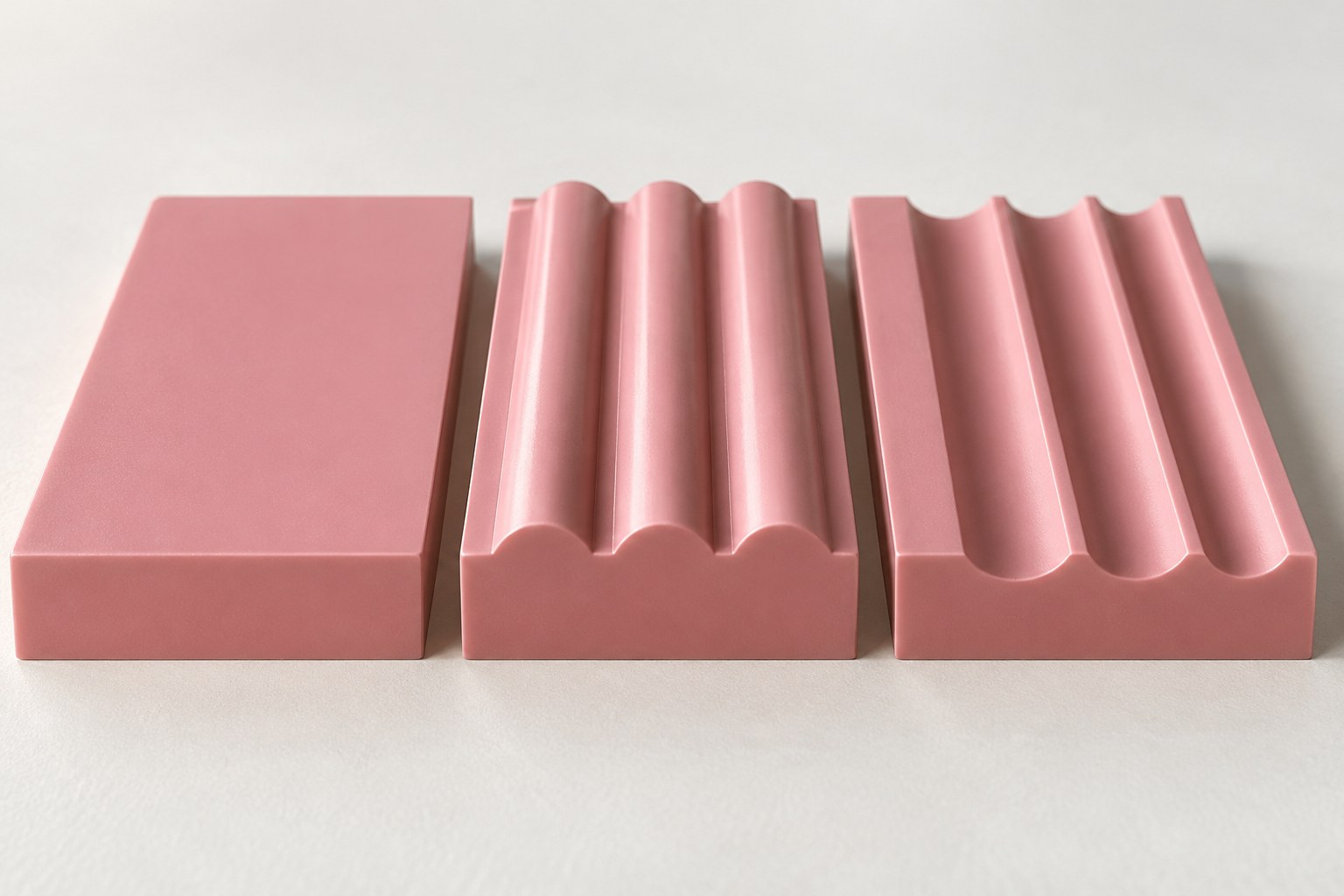
The sample blocks above separate two ideas that product copy often blends together. Their surfaces have a continuous finish, but their shapes differ. The middle block rises above its base surface; the right block has channels below its top surface. The visible front edges make that difference easier to understand than a straight overhead view would.
These are geometry examples, not toy materials or a demonstration of how a product feels. A photograph may show the location and shape of a ridge, but it cannot let you feel its firmness. Likewise, a glossy highlight or matte finish is not a material identification test.
For a product listing, look for a side or angled view as well as a front view. Follow the outline and see whether a feature changes it. A dark stripe in one picture could be a shadow, a groove or a color detail; another angle and the written description can help resolve that ambiguity. Do not estimate ridge height from an unscaled image.
Try the Distinction on a Real Product Photo
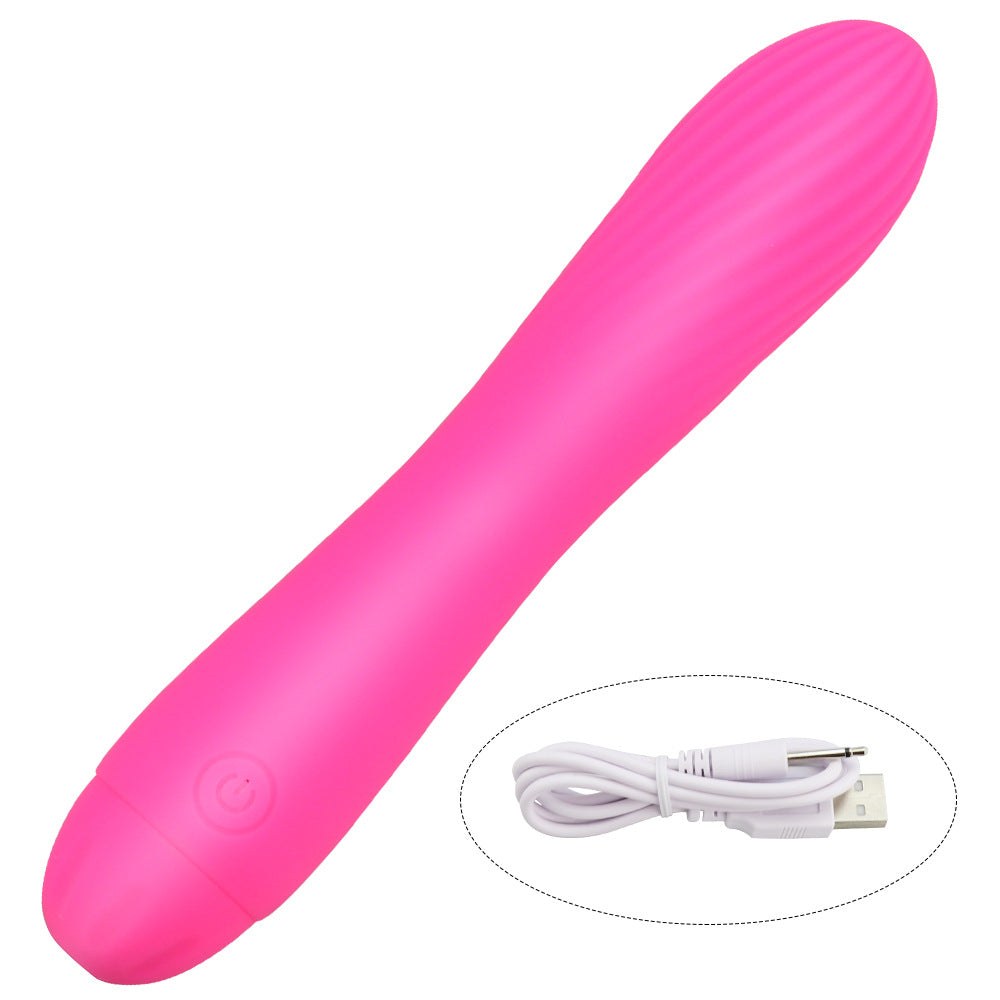
In this official image of the OMIREA Whisper WS4K82, the repeated lengthwise ridges are concentrated around the rounded head. They taper toward a comparatively untextured middle section. The button outline and the line near the base are different kinds of visible details; they should not all be grouped together as one uniform texture.
The current listing explicitly describes a ribbed head and names silicone and ABS construction. Together, the description and photo establish more than the loose label “textured”: they identify where the ridges are. They do not establish the ridge height, how much the head yields under pressure, or whether that profile will suit you. This is a reading example, not a hands-on review.
Apply the same approach to other shapes. Does the texture cover the entire relevant surface, just one face, or only the tip? Does the back view look different from the front? Check the option you are actually buying; an explanatory image of another color or version is not confirmation that all versions have identical details.
Turn a Preference Into a Specific Buying Question
If you want to avoid pronounced texture, “Is it smooth?” may not get you the answer you need. A more precise question is: “Does this model have any raised ribs or bumps on the intended contact surface, and can you show the side and back views?” If you are deliberately looking for texture, ask where it begins and ends rather than relying on a dramatic close-up.
Keep the size question separate: does the stated maximum width include the raised features, and where was it measured? Our guide to comparing product dimensions explains why width, circumference and overall length are not interchangeable. A photo walkthrough cannot replace those measurements.
Firmness also needs its own answer. Ask whether the relevant area is flexible or supported by a rigid housing, and whether the seller has a demonstration or model-specific description. “Soft-looking,” “silky” and “flexible” should not be treated as equivalent. You do not need to progress from a less textured design to a more textured one; a familiar preference is a valid reason to narrow your choices.
Care is one practical difference worth checking before purchase. FUN FACTORY’s cleaning guidance specifically calls attention to grooves and ridges on its products. That does not transfer its cleaning method to another brand. For the item you choose, check how its recessed areas should be cleaned and dried, using our product-specific care guide to organize the questions.
A useful comparison ends with a description you can picture: for example, “raised ribs at the head, an untextured middle, and firmness still to confirm.” That is a clearer basis for choosing than simply “smooth” or “textured”—and it makes the remaining question obvious before you order.