For a water-based lubricant, pH describes acidity or alkalinity; osmolality describes the concentration of dissolved particles. Ask for both values for the exact formula you are considering. “pH balanced” alone leaves the concentration question unanswered, and neither measurement tells you how thick the lubricant feels.
For adult women comparing lubricant for a toy or partner, these details can make a vague label easier to evaluate. They are part of a buying decision, not a home diagnosis or a guarantee that a formula will suit you.
Two Measurements, Two Different Questions
UNFPA’s technical brief defines osmolality as dissolved particles per kilogram of water, usually expressed in mOsm/kg. A higher value means more particles relative to the water. “Iso-osmotic” describes a concentration similar to the cells it contacts; it does not mean sterile, preservative-free or universally compatible.
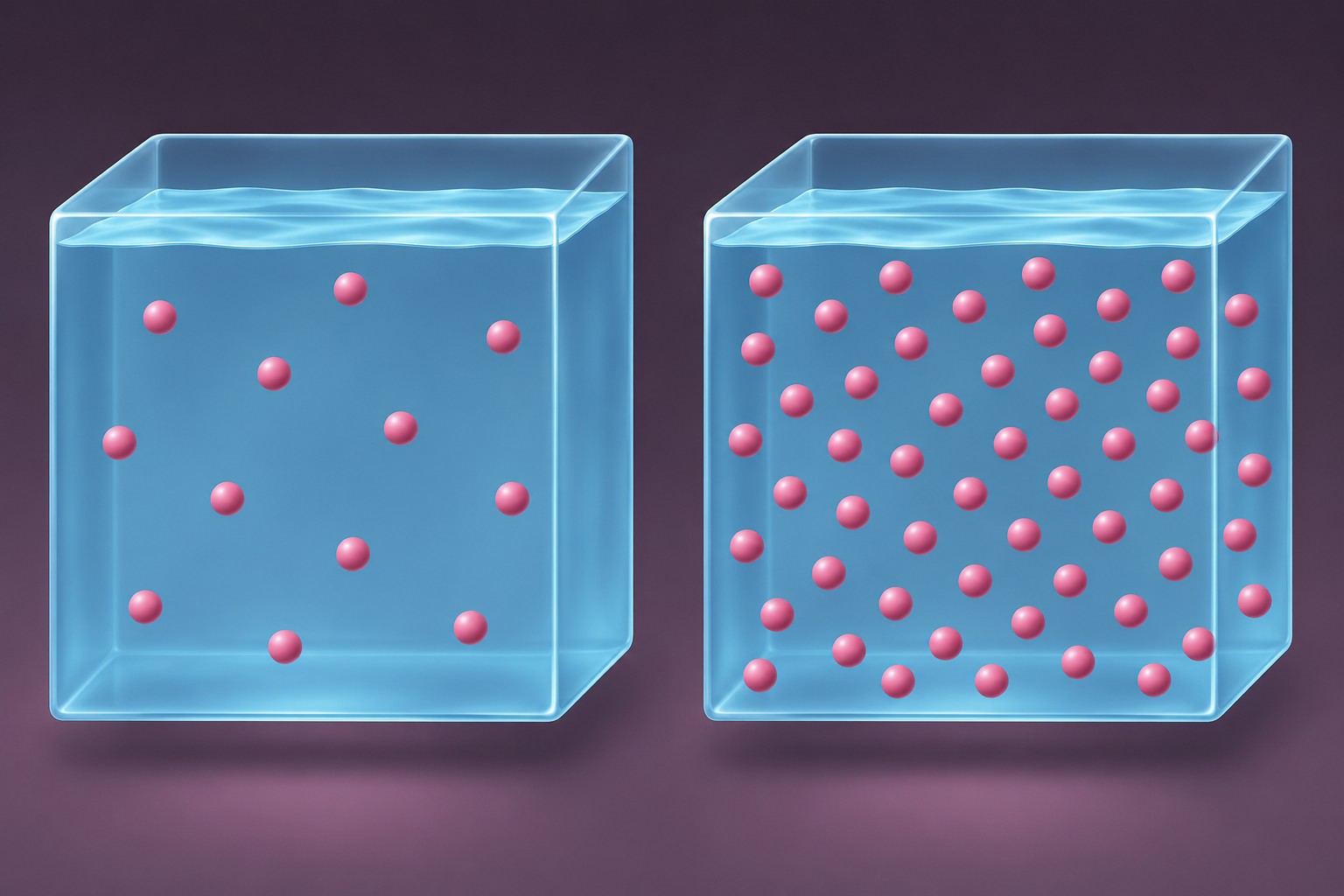
The schematic holds the represented amount of water constant so the difference in particle concentration is visible. The dots stand for dissolved particles, not visible grit or bubbles. You cannot obtain a lubricant’s osmolality by looking at its texture or counting names on its ingredient list.
pH answers a separate question: how acidic or alkaline a water-containing formulation is. A numerical pH statement is more specific than “balanced,” but still needs an intended application site. NHS Oxfordshire’s vaginal guidance discusses pH 3.8–4.5. Do not carry a vaginal-use target over to every rectal-use or conception-related product.
Keep water-free formulas out of the same numerical comparison. NHS Oxfordshire marks pH and osmolality as not applicable to oil- and silicone-based products because the measurements depend on water content. A water-and-silicone hybrid needs its own formulation information; the word “silicone” alone does not settle the question.
Why You May See Both 380 and 1,200
UNFPA’s 2022 explanation describes an ideal osmolality no higher than 380 mOsm/kg, while discussing a broader procurement limit below 1,200. These numbers serve different purposes. A statement that a formula falls below 1,200 does not establish that it meets the lower benchmark.
The final 2026 WHO/UNFPA specification retains the below-1,200 requirement for water-based lubricants. Its pH specification is 4.0–7.0 with a tolerance of ±1.0. This document covers lubricants used with condoms in reproductive-health programmes; its broad specification is not a personal vaginal-pH target or a recommendation for every product sold as lube.
The same specification prefers low buffering capacity: how strongly a formula resists a change in pH. It also requires separate biocompatibility evaluation. That is why two headline numbers cannot certify the complete formula or promise freedom from irritation. Avoid turning either benchmark into a simple “safe versus unsafe” score.
Read a Comparison Without Filling in the Blanks
Imagine two hypothetical water-based labels. One gives pH 4.2 and says nothing about osmolality. Another gives pH 4.2 and 320 mOsm/kg. The second supplies more information about particle concentration; the first remains unknown on that measure. Their matching pH does not make their formulas equivalent. These are invented label examples, not test results or product recommendations.
A useful question for the manufacturer is: “For this exact formulation, what are the pH and osmolality, which body use is it intended for, and where can I find the current specifications?” Include the full product name and version. If an old comparison chart disagrees with the current maker’s information, resolve the discrepancy before relying on either.
Then make the separate compatibility check. A suitable pH or osmolality does not approve contact with your toy or condom. Our lubricant compatibility guide explains how to read those instructions. When browsing the current product collection, use the exact model’s material and care information rather than assuming that a general lubricant claim covers it.
Do not add water or other ingredients to chase a target number. Choose a supplied formulation with clear information; our rewetting versus refilling guide explains why changing the bottle is a different issue.
Stop if a product causes discomfort. Persistent vaginal dryness, unusual discharge or bleeding deserve medical assessment rather than repeated label comparisons; see the NHS guidance. Clear specifications help you shop, but they cannot identify the cause of symptoms.