
A travel-friendly adult product should fit both your luggage and the practical arrangements of your trip. Before packing, check the rules for your route, identify the device’s battery and make sure you can clean, dry and store it as directed. Compact size is useful, but good preparation involves more than finding space in a suitcase.
Check Your Entire Route First
Review your departure point, every transit stop and your destination. Consult official customs or government information about bringing the particular item into each relevant country, as well as the security authority and carrier for your journey. Airline baggage acceptance and permission to import an item are separate questions.
For US airport screening, the TSA’s adult-toy listing is a place to check the category. It does not replace the separate battery rules or determine what another country permits. Recheck the applicable guidance close to departure, and ask the relevant authority if the answer for your item is unclear.
Do not rely on a product’s “travel-ready” description as approval for every route. If you cannot establish that an item is permitted, leave it out of your packing plan until you have a clear answer.
Identify the Battery Before Choosing a Bag
Check the manual or product label for the battery type, capacity and whether it is installed or removable. Keep the model information available. If a listing does not give enough detail for your carrier’s rules, ask the manufacturer rather than guessing from the device’s size.
The FAA advises carrying devices containing lithium batteries in carry-on baggage. Where such devices are allowed in checked baggage, they must be completely powered off and protected against accidental activation and damage. Check your carrier’s requirements for the exact device and route.
Spare lithium batteries and power banks need separate attention. FAA guidance requires them in carry-on baggage, with protection against short circuits. Remove them if the bag is checked at the gate. Capacity, quantity and airline-specific limits also apply, so review those details before packing.
If the device or battery is damaged, swollen, overheating or subject to a relevant recall, do not pack it while the concern is unresolved. Seek the manufacturer’s and carrier’s handling instructions. Do not open a sealed housing to remove a built-in battery.
Choose a Manageable Size and Setup
Use measurements rather than labels such as “mini.” Check the product’s length, width and weight, then allow room for the storage case, charging equipment and any remote. A smaller device may save space, but controls and grip still need to work for you.
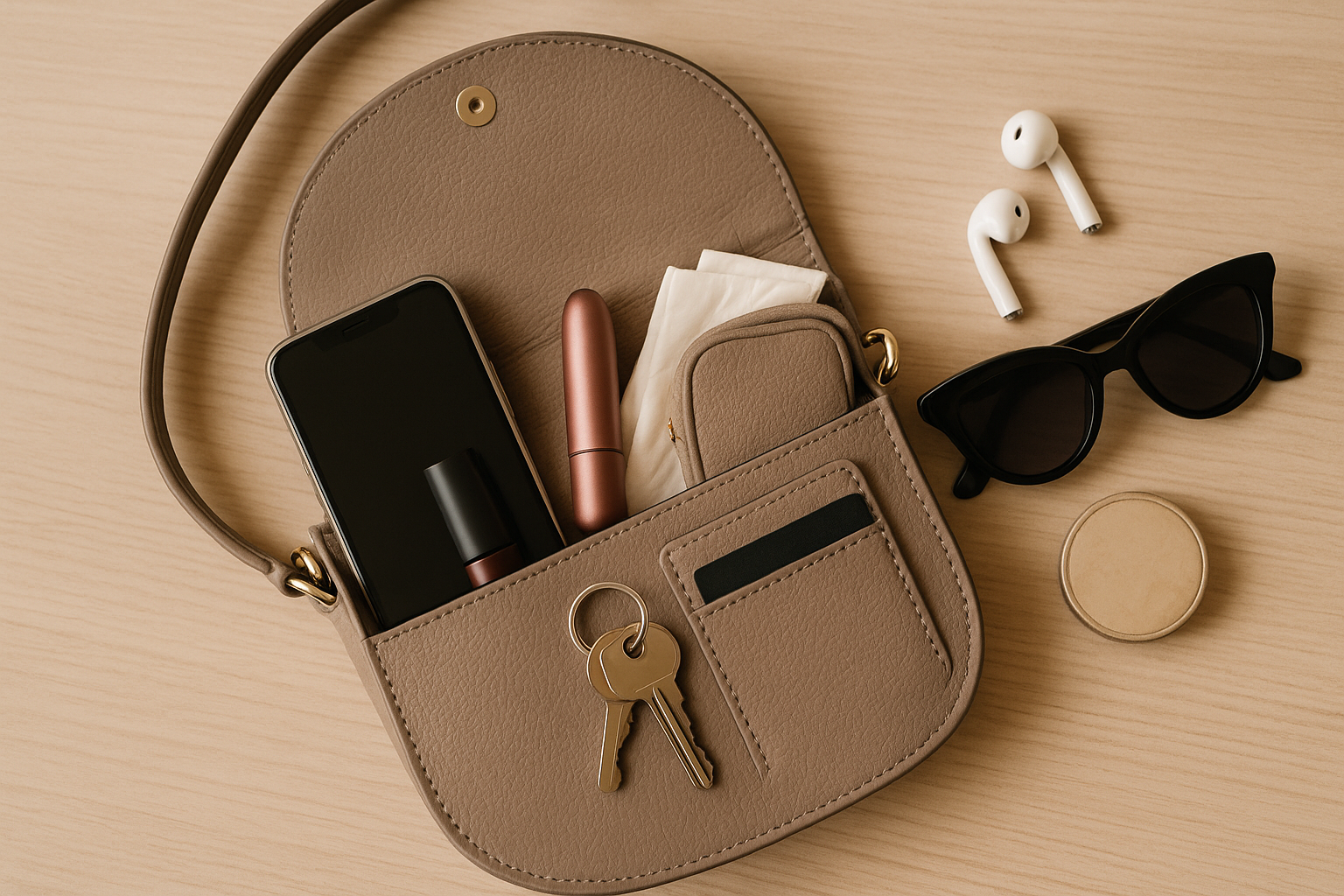
Bullet, compact wand and other shapes have different intended uses and care requirements. A non-powered product removes charging from the checklist, but still needs an appropriate case and a route-specific rules check. Our guide to product types can help you compare formats.
For app-connected or remote-controlled devices, check which functions require a phone, connection or separate remote. Make sure you know how to switch off the device directly. Extra functions are worth packing only if they fit the arrangements of your trip.
Prevent Accidental Activation
Read the exact shutdown and travel-lock instructions before departure. Turn the device fully off, activate the lock if supplied and confirm the expected indicator. Do not assume that holding a button has the same effect on every model.
Pack the item so that other belongings cannot press its controls or damage it. Follow the manual for a removable battery, then follow the appropriate transport rules for that battery. A nearly empty charge is not a reliable substitute for switching a device off and protecting its controls.
Keep charging cables and small accessories together without putting exposed battery terminals in contact with metal objects. If a case is supplied, check whether it provides the protection needed for travel; a soft pouch may serve only as storage.
Bring the Right Charging Equipment
Confirm which cable, charging base and power supply your product requires. Check the manufacturer’s input specifications and whether your destination requires an appropriate plug adapter. USB charging does not mean every available socket, cable or power source is suitable.
Charge according to the instructions, and keep the charging connections dry. Review the stated runtime for the setting you expect to use rather than assuming the maximum advertised figure applies to every mode. If you plan to bring a power bank, include it in your airline battery checks.
Plan Cleaning and Liquids Before Leaving
Pack only cleaners and accessories that the product’s instructions permit. Check whether the device may be wiped, rinsed or immersed, and allow time for full drying before it goes back into its case. Water-exposure limits may differ for the device, remote and charging equipment.
Do not assume a generic wipe or an unfamiliar hotel product can replace the approved cleaning method. Our care guide explains the details to review. Keep care instructions accessible during the trip.
For liquid cleaner or lubricant, check the container and bag requirements of each security checkpoint. The TSA liquids guidance is the US reference; other authorities may use different procedures. Confirm product compatibility and use appropriate, securely closed containers. Do not treat an unmarked bottle as an exemption from screening.
Keep Privacy Expectations Realistic
Organized storage can make packing simpler, but no case, shape or label guarantees that an item will avoid inspection. Follow screening instructions and describe the item accurately if asked. Do not depend on disguising an object to get it through a checkpoint.

At your accommodation, use the product only in an appropriate private setting. Consider where you can store it clean and dry and how you will complete the care routine. A quietness claim cannot guarantee inaudibility in an unfamiliar room.
A Final Packing Check
- Confirm the item is permitted for your route and destination
- Identify the battery and follow carrier packing requirements
- Switch off and use any supported travel lock
- Pack compatible charging and cleaning supplies
- Check liquid-container rules and protective storage
- Keep the model instructions available
If you are choosing a product before a trip, begin with the practical buying checklist and leave time to learn its controls. For a delivery before departure, review our shipping information and confirm the arrangements rather than assuming an estimated date is guaranteed.