Yes, personal lubricant has a usable life. Check the printed expiry date and any instruction to use it within a certain time after opening. Do not assume a bottle is still suitable just because the expiry date is months away, or give every opened lubricant the same one-year deadline.
For a bottle already in your drawer, the useful question is: does this exact formula, in this packaging, still meet its maker’s instructions? That check applies whether you use lubricant with a partner or with an adult product.
Check Two Dates, Not Just One
| What You Find | What to Check |
|---|---|
| Printed expiry or use-by date | Read the date on the actual container or carton. Buying it recently does not restart its shelf life. |
| Use-within instruction after opening | Count from when you first opened it, using the interval for that exact product. |
| Batch or lot code | Keep it for a manufacturer enquiry. Do not assume an unexplained number is a date. |
| Missing or contradictory information | Ask the maker to identify the batch and explain which deadline applies before using it. |
If both deadlines are given, plan around the earlier one unless the manufacturer explicitly explains a different rule for that exact product. An after-opening instruction is not automatic permission to ignore a printed expiry date.
For example, imagine a bottle whose instructions say to use it within three months of opening. If you opened it on January 10, mark April 10 as the opening-window reminder, even if the printed expiry is December. If its printed expiry comes first, do not extend it yourself. This is a worked example, not a three-month rule for all lubricants.
Why a Universal Shelf-Life Chart Can Mislead
Durex Canada’s FAQ recommends using lubricant within three months of opening and checking the packaging’s expiry date. Treat that as the guidance on that regional brand page, not as an industry-wide standard.
AH! YES’s expiry FAQ gives a four-month opening window for AH! YES WB water-based lubricant, OB plant-oil-based lubricant and VM vaginal moisturizer. It says its testing supports up to four months after opening even when these products are opened close to their printed expiry date. That is an explicit exception for those named products; do not transfer it to another brand or formula.
Überlube’s FAQ states an expiry three years from production, engraved with the lot number on the bottle or Good-to-Go insert. This silicone-based example also shows why “silicone lasts forever” is not a useful buying rule. Three years from production is not three years from purchase or first use.
These examples illustrate different instructions, not a ranking of formulas or a recommendation to buy those brands. Use the directions supplied with your own product, including its local-market packaging; ask the manufacturer when an online FAQ and your label disagree.
When the Date Is Missing or the Bottle Has Changed
- Check the base, label, carton and sealed end of a tube before deciding the date is absent. AH! YES, for example, places it on the carton base and tube crimp.
- Photograph the product name, batch code and any date markings. Ask the maker what the markings mean, the after-opening limit and the storage conditions for that batch.
- If you cannot establish when you opened it, avoid inventing a date. A replacement with a recorded opening date is the more cautious option.
- Set aside lubricant with an unexpected change in smell, color or consistency, or damaged packaging, and ask the maker rather than trying it on your body to find out.
Coconu’s expiry guide advises checking changes in odor, color and texture and avoiding products past expiry. Those observations can prompt you to discard a bottle; a normal appearance does not give you evidence to extend its deadline.
This is a product-checking guide, not a way to diagnose a reaction. If lubricant causes irritation, stop using it. Durex advises consulting a doctor if irritation continues.
Make the Next Bottle Easier to Keep Track Of
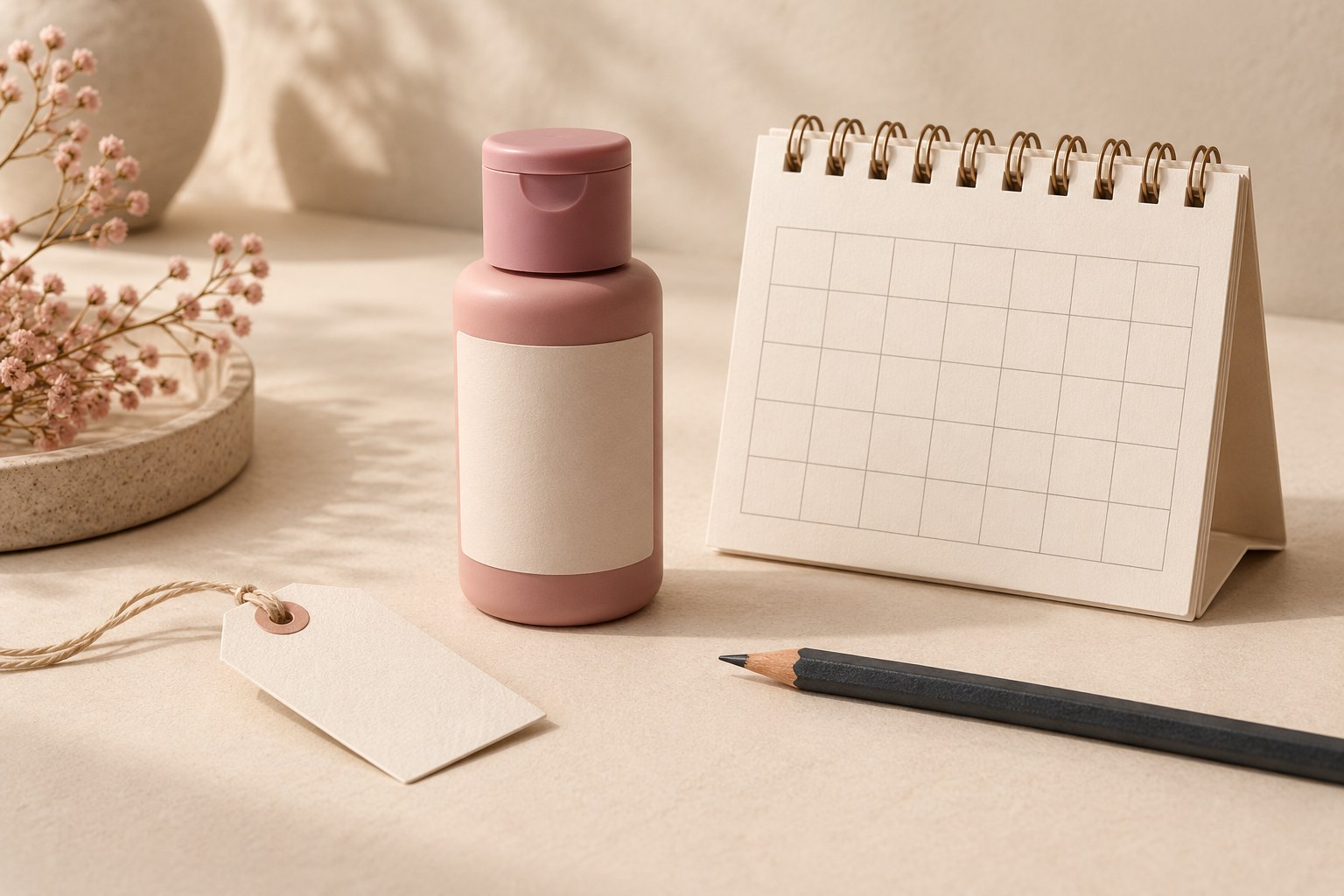
Write the opening date on a removable label without covering the batch code, expiry date or instructions. Keep a photograph of the carton if it carries details missing from the bottle. Add the applicable replacement date to your calendar rather than relying on memory.
Follow the stated storage conditions. Durex recommends keeping lubricant away from direct heat and sunlight and out of reach of children and pets. Do not transfer a product into another container unless its maker allows it: Überlube specifically discourages opening or decanting its sealed bottle because of contamination concerns.
When choosing between bottle sizes, consider how much you realistically use within the product’s opening window. A larger bottle may cost less per unit but be poor value if much of it remains when replacement is due. Ask about remaining shelf life before buying several bottles at once.
An In-Date Bottle Still Needs a Compatibility Check
Expiry answers only the timing question. For use with a toy, check the exact lubricant, finished device and any barrier separately. Our lubricant compatibility guide covers that decision without treating an in-date bottle as universal approval.
When comparing an adult product, look for its material and care information in the current product collection. Keep its instructions alongside the lubricant details, and use our cleaning and storage guide to plan the rest of the routine. The practical next step is simple: identify the bottle, record when it was opened, and resolve any missing deadline before using it.