The words clitoral, G-spot and dual stimulation appear frequently in sexual-health articles and product descriptions. They can be useful shorthand, but they do not describe a universal experience. Understanding the anatomy and the limits of those labels can make it easier to ask questions, compare products and decide what matters to you without feeling that there is a correct preference to discover.
The Clitoris Includes Internal Structures
The visible glans is only part of the clitoris. Its internal structures extend into the body, and the organ contains erectile tissue and nerves. Cleveland Clinic's clitoral anatomy guide explains the external and internal parts and their relationship to surrounding tissues.
The vulva is the name for the external genital area; the vagina is an internal canal. Keeping those words separate helps when reading instructions or describing a concern to a clinician. An external-use product and an insertable product are different categories, even if a retailer groups both under the same broad wellness label.
A simplified diagram can support learning, but it should come from a reliable medical source. Decorative illustrations and product silhouettes should not be treated as a precise map of an individual's body.
What Does “G-Spot” Mean?
The term usually refers to a region of the front vaginal wall associated with sensitivity for some people. It is not a promise that every person has an identical, separately identifiable structure in the same location. A 2021 systematic review of G-spot research found inconsistent evidence across studies and no agreement on its location, size or nature among studies reporting it.
Scientific uncertainty about the label does not invalidate someone's experience. It does mean that a claim about a universally correct point, angle or product fit should be treated cautiously. A product called a G-spot vibrator is using a category name; that name alone does not establish a clinical fact or guarantee a result.
Different Descriptions Are Not a Ranking
People use different words for sensation, preference and orgasm. Those words may help them explain an experience, but they do not create a hierarchy. A response associated with external contact is not less mature or less legitimate than one associated with internal contact. Combining categories is not an achievement everyone needs to pursue.
Be cautious with descriptions that assign a fixed feeling or intensity to a body area. Someone else's account may be sincere without predicting your own. You do not have to find a particular sensation enjoyable, search for an elusive result or continue something because it was described as important in a guide.
For a broader discussion of expectations, our orgasm facts and myths article separates personal experience from performance standards.
Read Product Categories as Practical Information
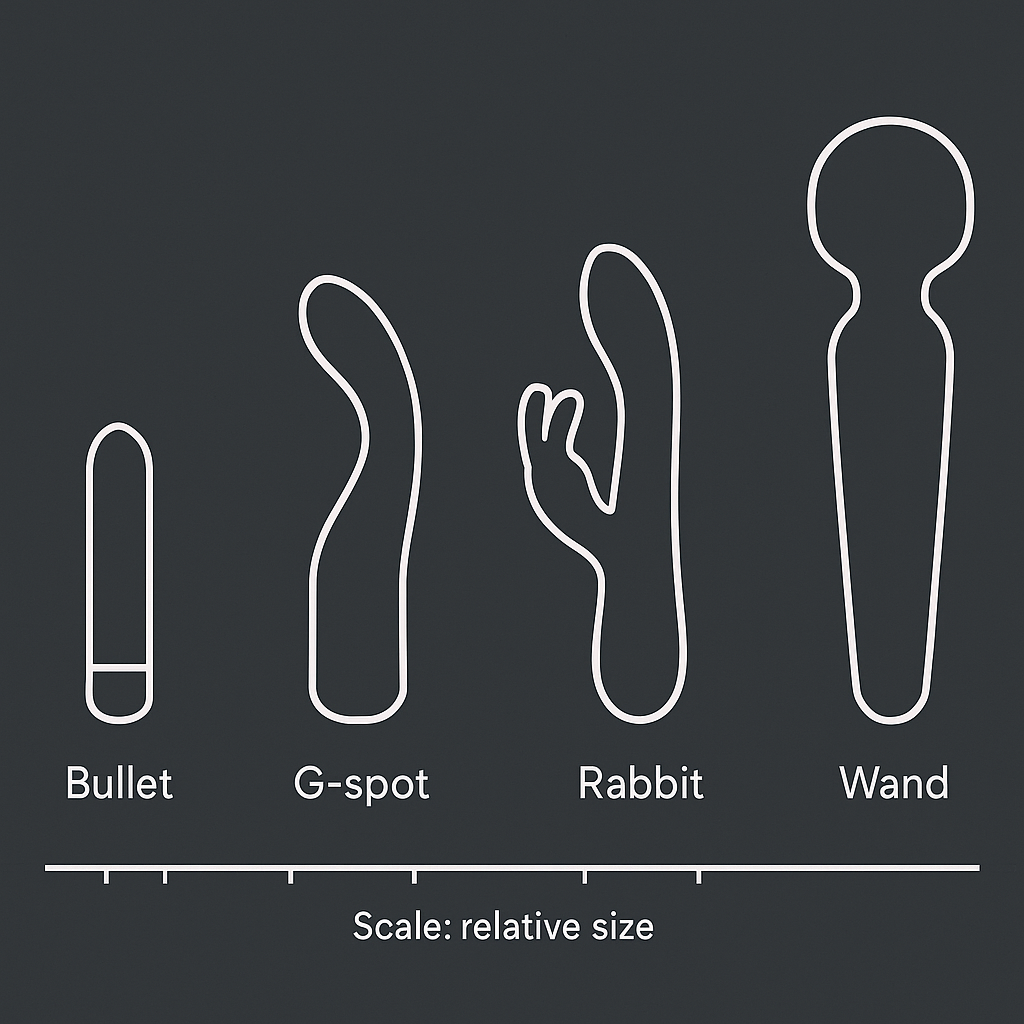
Retail categories usually describe a product's intended use and shape. Read the exact model instructions before drawing conclusions from a name or photograph.
- External devices: check the intended contact area, controls and care requirements. A small size does not establish intensity.
- Insertable devices: review intended use, actual dimensions and the manufacturer's instructions. A curved shape does not guarantee a comfortable fit.
- Dual-arm devices: consider the fixed or adjustable shape and whether the controls are understandable. A two-part design does not suit every body or preference.
- Wand-style devices: check the instructions for the exact model. The label does not establish medical use or suitability for every body area.
Our vibrator types guide explains these design categories in more detail. Keep verifiable features separate from claims such as universal fit, guaranteed orgasm or therapeutic benefit. It is reasonable to decide that none of the options matches what you want.
Let Communication Stay Specific
When discussing preferences with a partner, you do not need a technical label before your boundary counts. You can say that you prefer external-only options, are not interested in a certain product or would rather leave the subject for another time. A discussion is not permission to proceed, and an earlier yes can change.
Ask what the other person means rather than assume you share a definition. Someone might use a product category to describe a shape, an intended use or an experience they have heard about. Clarifying that difference can prevent a shopping conversation from becoming an expectation about their body.
Comfort Takes Priority Over a Label
Stop an activity or product use that causes pain. A sensation described as desirable in marketing is not a reason to ignore discomfort. ACOG advises seeking medical care for frequent or severe pain during sex. A clinician can help investigate causes rather than assuming they are a matter of preference or technique.
Keep a note of where the discomfort occurs, when it began and whether it happens in other circumstances. Bring product details if they are relevant. General cleaning and storage questions are covered in our product-care guide, but persistent symptoms need individual advice.

Anatomy education should make choices clearer. You can learn the terms, question a claim and still leave room for uncertainty. Your comfort and consent matter more than fitting any description on a product page.
This is general educational information, not a diagnosis or a guide to sexual techniques. Consult a qualified healthcare professional about pain or other sexual-health concerns.