When choosing a warming vibrator, check four separate things: which part warms, the stated temperature, how long warming takes, and how to stop the heat. “Warming” is a feature description—not a promise that the entire device heats evenly, that the temperature is adjustable, or that heat can always be switched off while vibration continues.
For adult women comparing products, those details make a more useful shortlist than searching for the hottest model. A higher advertised temperature is not evidence of a better match, and warmth is not a requirement for enjoying a vibrator.
Start With the Part That Actually Warms
Look for a labeled product view or an explicit statement naming the heated area. A head, a band and a whole contact surface are different designs. The silhouette of the device does not show where its heating element sits.
The SVAKOM Echo 2 manual identifies heating in the vibrator head and advises using it without its removable finger sleeve for the best heating results. That is a model-specific instruction: it shows why an accessory can matter to the heating setup, not why sleeves should be removed from other products.
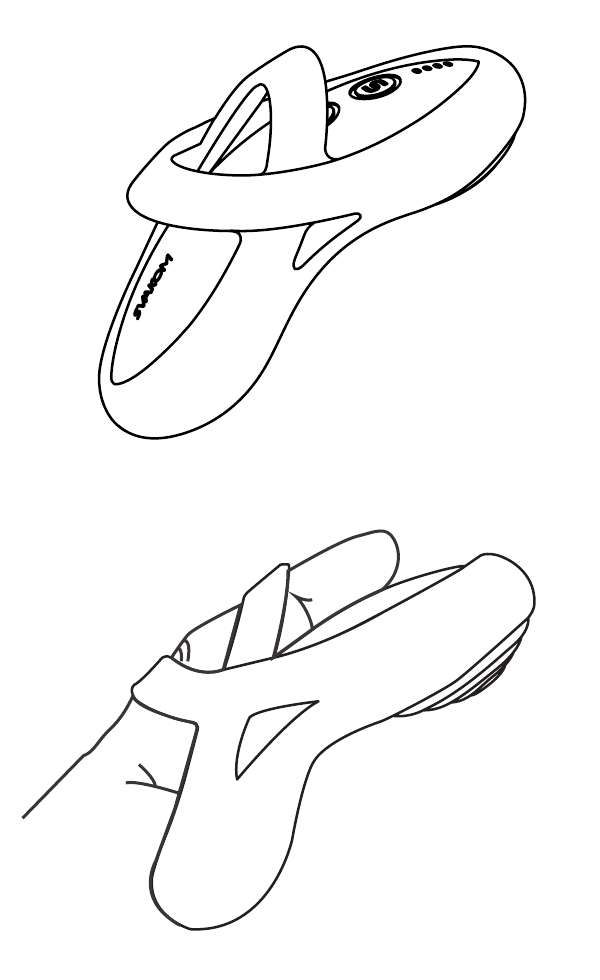
The manufacturer's drawings show the sleeve fitted around the device and held through its finger loops. The sleeve is part of the holding arrangement, not simply a change of color. Compare that configuration with the manual's heating instructions before assuming you will use the same setup with warmth switched on.
Ask whether the area you want warmed is the area the manufacturer describes. Keep the normal intended-use and handling instructions alongside that answer; adding heat does not change where a product is designed to be used.
Read the Temperature and the Waiting Time Separately
A temperature figure and a warm-up time answer different questions. A stated target tells you what the manufacturer claims the heating function reaches. It does not tell you how quickly it gets there, whether you can select lower temperatures, or how the surface was measured.
Echo 2's specifications list one heating mode at 38°C. One heating mode is not a menu of adjustable temperatures. Treat the figure as the maker's specification, not an independently measured result or a universal safety threshold.
Conversely, the CalExotics Connect Warming Wand page states that its warming function reaches maximum temperature in five minutes. That sentence supplies a time, but not the numerical temperature. Do not fill the gap with a temperature from another model.
For each shortlisted device, record the target or range and the warm-up time as separate fields. Write “not stated” where information is missing. If an exact temperature matters to your decision, ask which surface the figure describes and whether it is fixed or adjustable.
Find the Heat-Off Action Before the Heat-On Action
A dedicated heating feature does not necessarily give you independent control in every configuration. Check the procedure for the device by itself, any supported remote, and any app you intend to use. The most useful question is: can I stop heating without stopping the other function I want?
The DuoGlow manual makes this distinction unusually clear. When heat is activated on Part A alone, its instructions say that Part A must be switched off to fully stop heating. The manual separately describes a heating-button action on connected Part B that starts and stops heating. The control route changes the instructions; “has heating” does not capture that difference.
Do not transfer those button sequences to your own device. Read its exact manual and confirm the stop-all action too. Switching off the heating function is an electrical command, not a claim that the surface instantly returns to room temperature.
Do Not Turn Missing Specifications Into a Recommendation
In our own range, OMIREA Whisper WS7N46 is listed with a warming function alongside telescopic movement and a side suction opening. The published product details do not establish a target temperature, heated-area diagram, warm-up time or independent heat-off sequence. We would not infer those details from the feature name or borrow another manufacturer's figures.
If warmth is the reason you are considering a product, resolve those missing details before ordering. If you want vibration without heat some of the time, explicit heat-off control may matter more than a large number of modes.
If your concern is vibration intensity rather than temperature, our guide to checking the lowest setting addresses that different problem. A warming feature does not establish a gentler vibration range.
Keep Built-In Warming Within Its Instructions
The CalExotics manual warns against heating or cooling the product except where expressly recommended. Built-in warming is not permission to improvise with an external heater, microwave or boiling water. Our guide to boiling and electronic components explains why a silicone or water-resistance label does not authorize a heat treatment.
Follow the exact model's warnings and stop if use is uncomfortable or the device behaves abnormally. Do not treat a warming feature as treatment for pain or another health concern. Manufacturer temperature claims do not establish personal suitability.
Before buying, ask: “For this exact model, which surface warms, what temperature does it reach, how long does it take, and can I stop the heat independently using the controls I plan to use?” A clear answer helps you decide whether the feature fits your preferences. An unanswered specification is a reason to pause—not a reason to assume.