If you find suspected battery leakage inside a vibrator or its remote, stop using it. Do not put in fresh batteries simply to see whether it still works. First identify the battery type, follow its handling guidance, and ask the device maker whether the affected product can be cleaned and returned to use.
Two questions need separate answers: can the electrical contacts work again, and is the complete device still suitable for its intended body contact and cleaning routine? A running motor answers only the first. This guide concerns an unexpected battery-compartment problem, not ordinary toy cleaning.
Start with the Battery, Not a Cleaning Recipe
Look at the manual or original battery packaging before deciding what to do. AA and AAA describe size, not a complete chemical specification. A familiar cylindrical shape does not establish that a battery is alkaline or that a cleaning method found online applies.
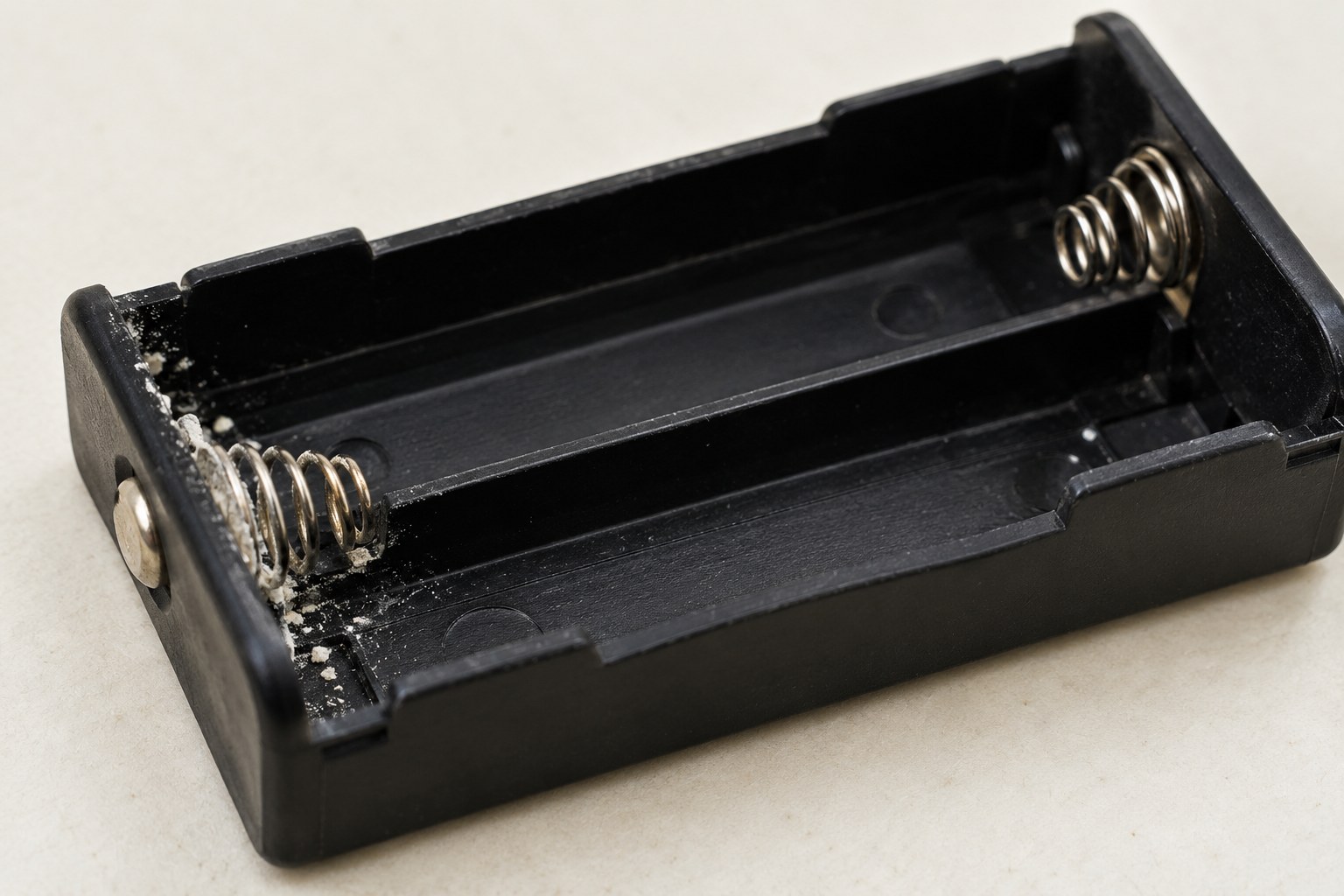
For a wet battery or one with white powder, Duracell's guidance says to minimize handling and treat exposed chemicals with care. Its leak-cleanup advice calls for ventilation, household gloves and eye protection. Avoid touching or spreading the residue while you find the instructions.
If residue contacts skin or clothing, Duracell advises washing the exposed area with soap and water. For eye contact, it advises flushing with running water for at least 15 minutes and getting immediate medical assistance. For contact with genital tissue, ongoing irritation or uncertainty about exposure, seek medical advice rather than testing another product.
Only approach removal through a compartment the manual identifies as user-accessible, following the battery maker's precautions. If cells are stuck, the case is distorted, or you cannot remove them as directed, leave the job to the manufacturer or an appropriate service. Do not pry open a sealed rechargeable device.
Why Cleaning the Contacts Is Not the Whole Decision
A battery maker may publish general contact-cleaning advice. That is not approval to use the same chemicals inside every vibrator. The product may have seals, a compartment liner, a coating or a contact surface with different care limits. Without model-specific confirmation, do not pour in vinegar, scrape the contacts, or rinse the open compartment.
For example, Rocks-Off's non-rechargeable product instructions say to leave a protective sheath in place if one is present and to keep oils and lubricants out of the battery compartment. Those directions belong to its products; they demonstrate why an internal sleeve is not automatically disposable packing material and why the whole construction matters.
Ask the device maker to assess more than whether power can be restored. Can the affected surfaces be cleaned by an approved method? Is the battery cover or seal damaged? Could residue have reached a body-contact area? Are any parts replaceable? If those questions remain unanswered, keep the item out of use. Do not assume that covering a damaged area makes it suitable again.
Send Support a Useful Description
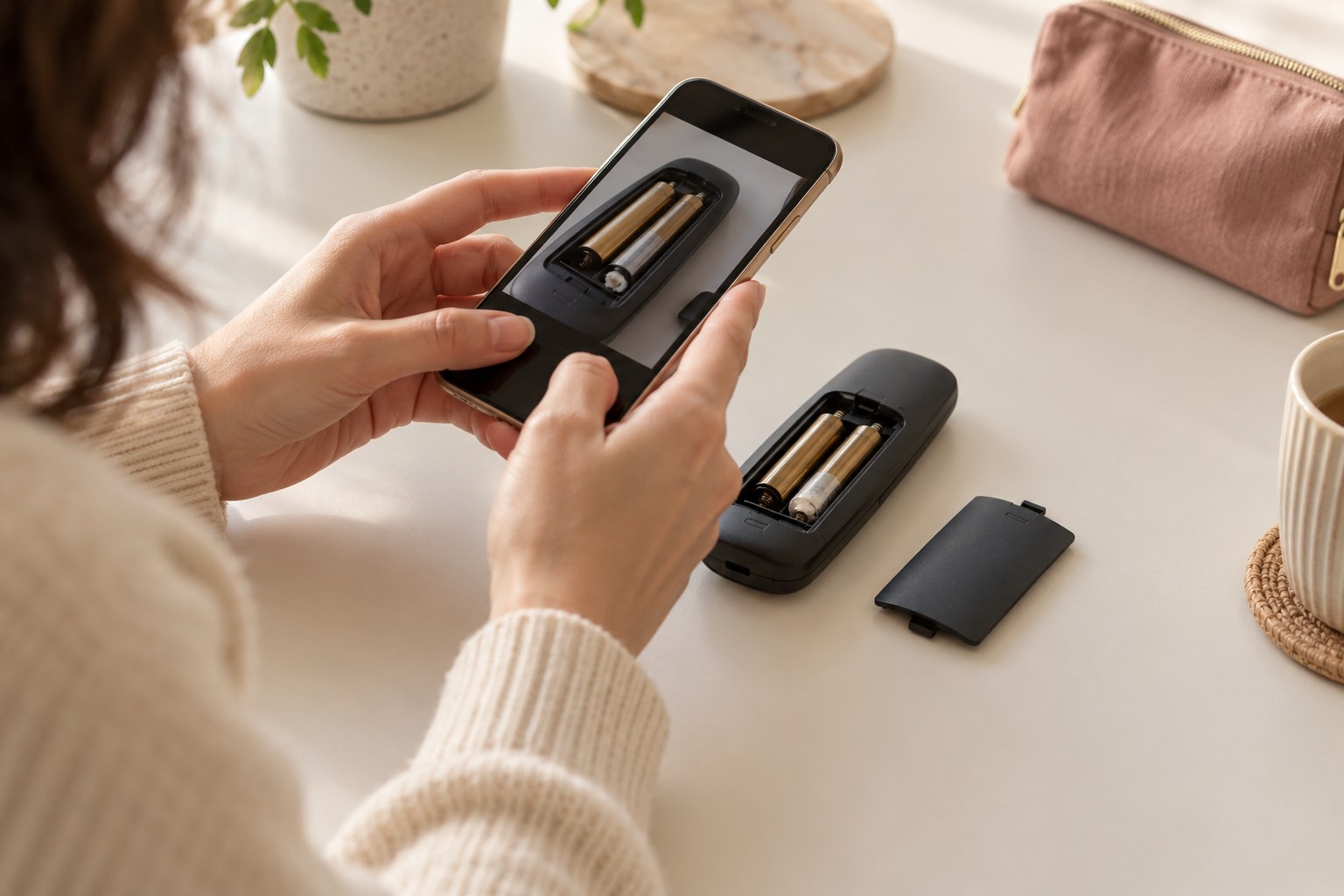
A short, specific report is more useful than “it stopped working.” Photograph the accessible compartment and the outside of the device without handling the residue. You do not need to include your body or any intimate-use image.
- Give the exact product model and identify whether the problem is in the main device or a separate remote.
- Name the battery size, type and brand from the label or packaging, if readable without extra handling.
- Describe where the residue is visible, whether the cover closes normally, and any known water exposure.
- Say whether you have already removed batteries or applied a cleaner. Include what you used rather than repeating the process for a photograph.
Ask for a clear outcome: an approved cleaning and inspection procedure, a service or replacement option, or disposal guidance. If support cannot establish a suitable return-to-use route, do not treat an electrical test as a substitute.
A Sealed Rechargeable Battery Is a Different Situation
Do not apply removable-cell cleanup instructions to a sealed rechargeable toy. The U.S. EPA's lithium-ion guidance notes that not all batteries are user-removable and directs people with damaged lithium-ion batteries to the battery or device manufacturer for handling instructions.
For a suspected damaged built-in battery, stop using or charging the device and seek that guidance rather than opening it. In the United States, EPA says lithium-ion batteries and devices containing them must not go in household garbage or municipal recycling bins. Elsewhere, check your local collection rules. Our vibrator disposal guide explains the separate handover decision, including telling the collection service about damage.
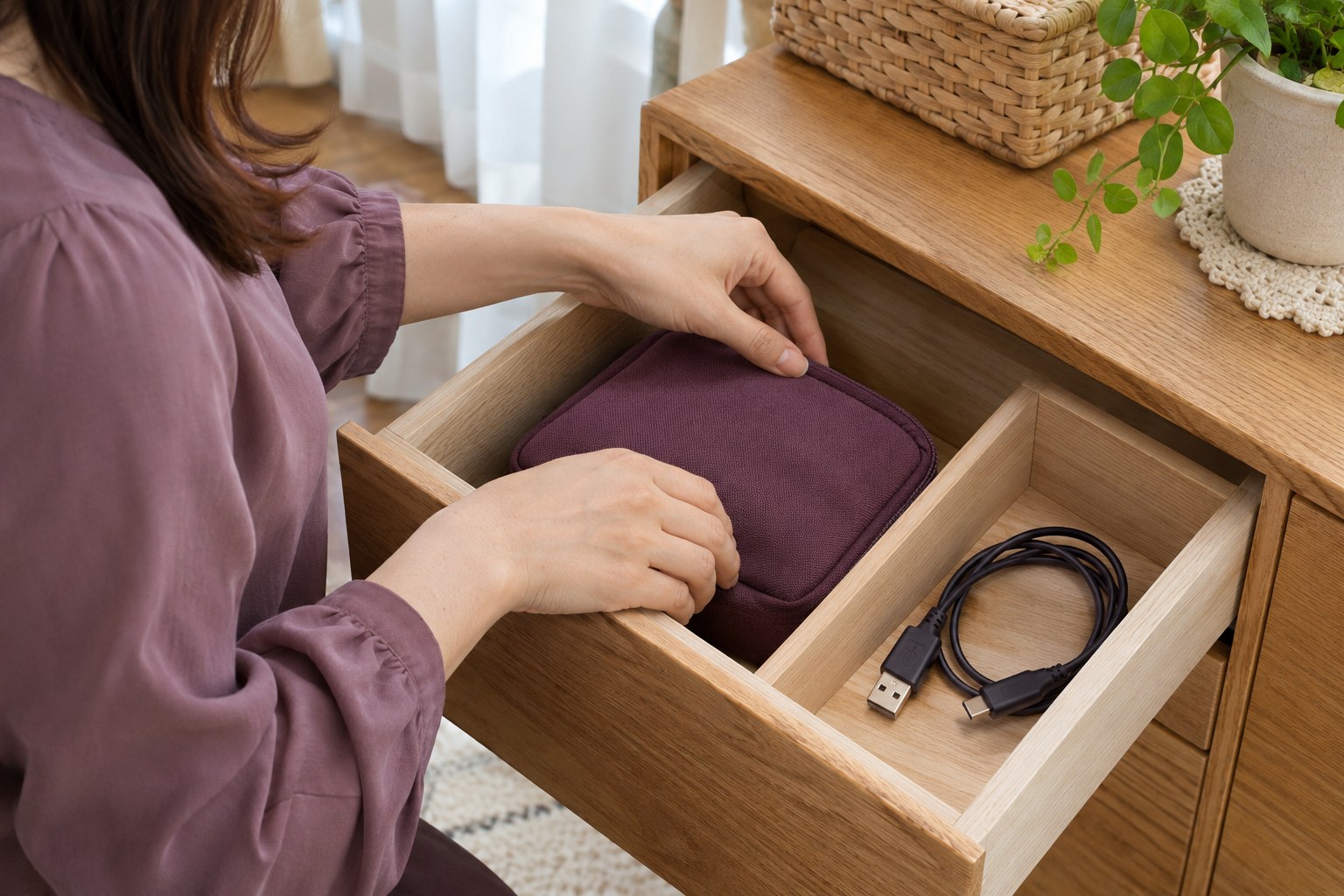
Change the Storage Routine for Intact Devices
Once the affected item has been dealt with, review the routine for other undamaged devices. Energizer's battery-care guidance recommends the specified cell size and type, correct polarity, prompt removal of exhausted batteries, and removing cells for extended periods of non-use. It also advises against mixing old and new cells or different types or makes.
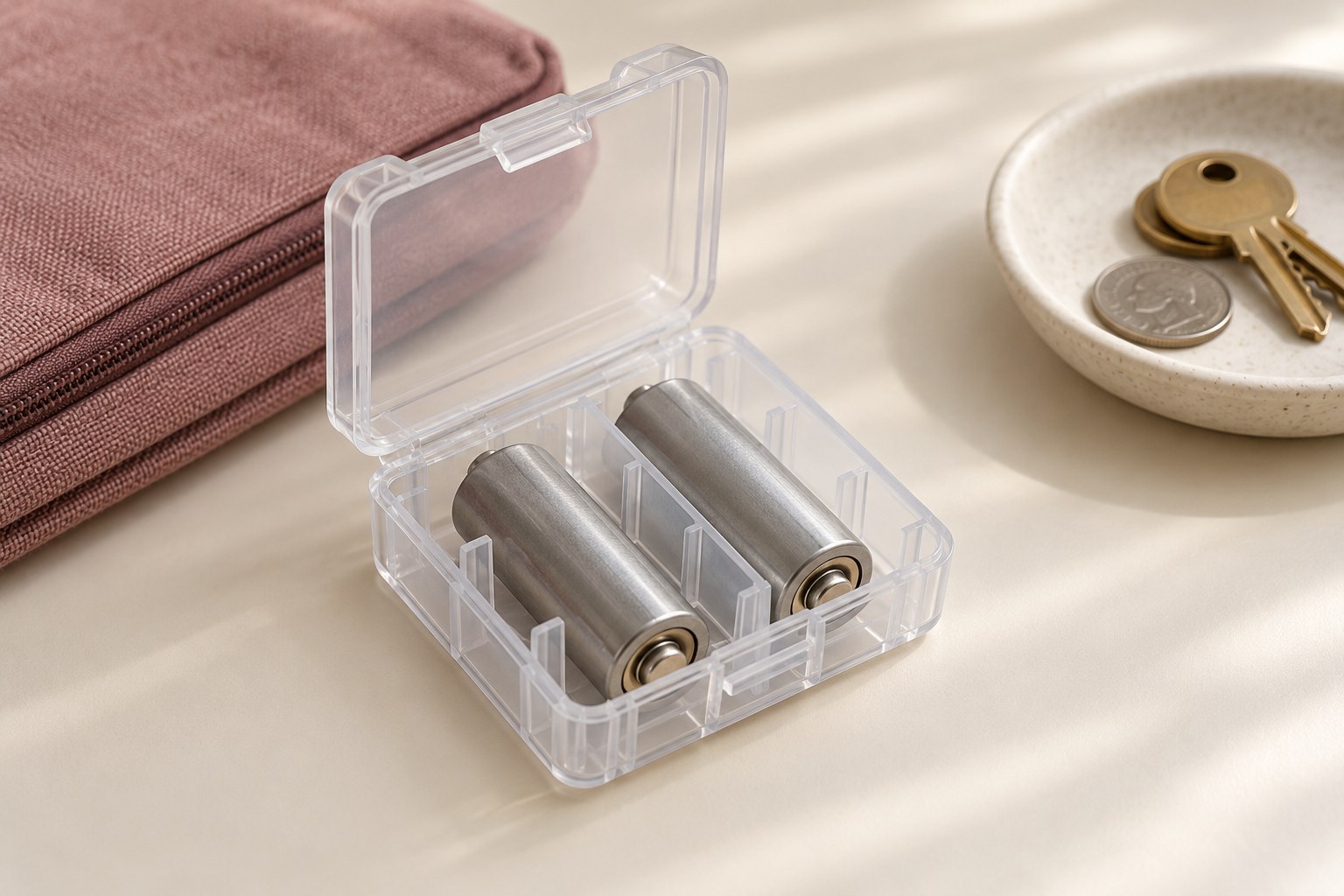
Keep unused cells at normal room temperature in a dry place. Protect their terminals from loose keys, coins and other metal objects; original packaging or suitable individual protective compartments help keep them separated. The storage example below concerns clean, unused cells, not packaging a leaking battery for transport.
Follow any stricter routine in the toy's own manual. Rocks-Off, for instance, specifies removing batteries after each use and before cleaning for the non-rechargeable products covered by its guidance. Do not transfer that exact schedule to a different device without checking its instructions.
If you are choosing a replacement, look for clear compartment access and battery-care instructions, not simply a rechargeable label. The OMIREA Whisper WS6H38 is one current example with a twist-open base and one AA battery requirement. That specification does not establish a leak-repair method or make it immune to damage. For the broader purchase decision, compare rechargeable and replaceable-battery routines separately.
The useful endpoint is a clear decision about the affected item, plus a routine you can follow for the next one. Fresh batteries, a clean-looking contact or a working motor should not be the only reason to resume use.