A UV cleaning pouch is not a replacement for the cleaning and drying your sex toy requires. Before buying one, ask a more specific question than “Will my toy fit?”: does the maker’s evidence cover the shape, placement and number of items you plan to put inside? A closed zipper and a finished cycle do not, by themselves, establish that every surface received effective treatment.
For adult women comparing care accessories, that distinction can prevent an unnecessary purchase. You need clear instructions for both the pouch and the toy, not just a promising percentage on the box.
Room Inside Is Not the Same as Light Coverage
The International Ultraviolet Association’s equipment guidance explains that UV treatment depends on light reaching the target surface. Texture can leave areas in shadow with much less exposure, or none. Its guidance was written for disinfection equipment, largely in a North American healthcare context; it does not certify any consumer toy pouch.
Imagine a curved object resting against another object. Some surfaces face the light, while others face inward or sit at a contact point. Adding space around the outside does not necessarily expose those sheltered surfaces. This is why the shape of the loaded contents matters, not only the bag’s advertised dimensions.
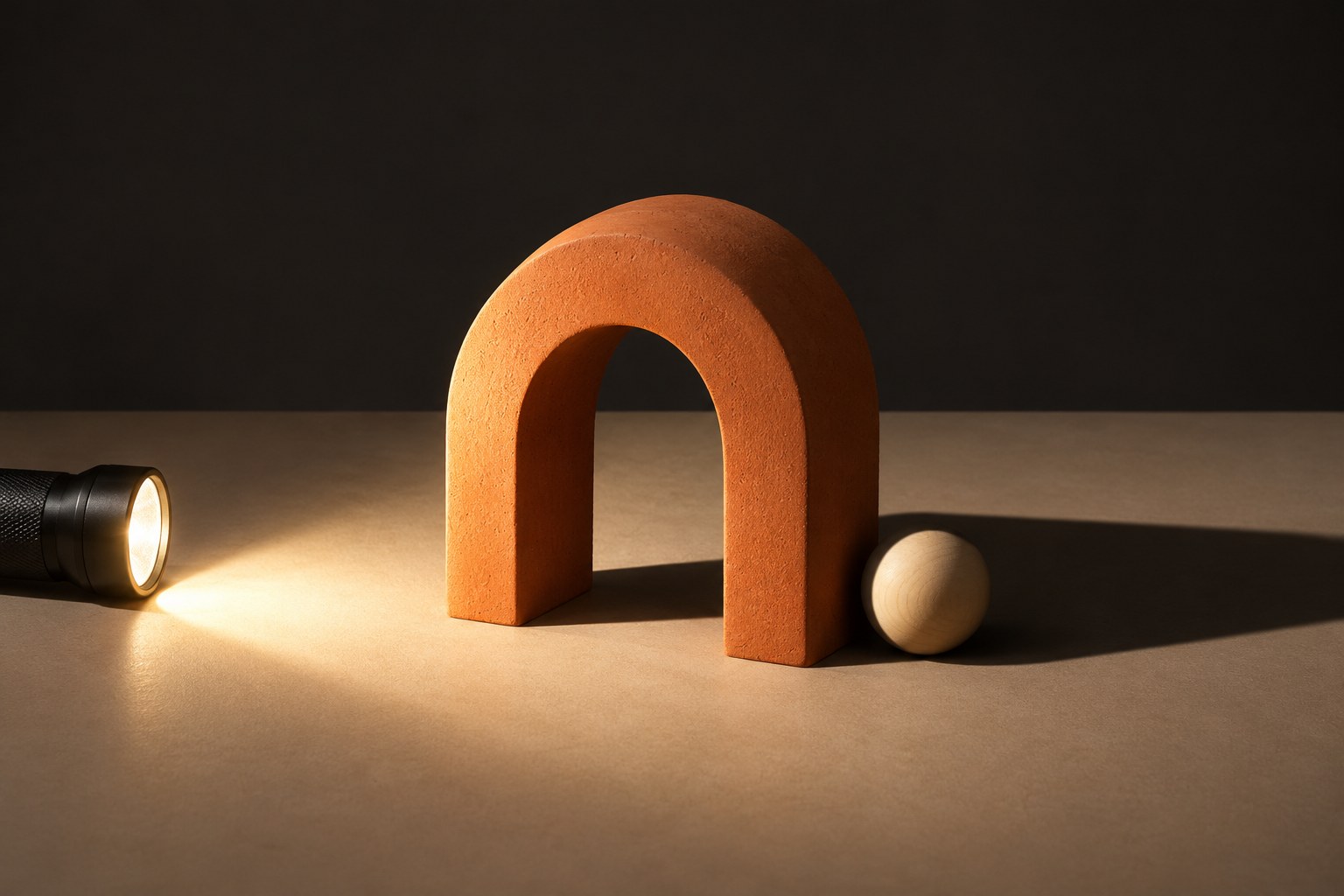
The ordinary-light scene makes the difference between an illuminated face and a sheltered area visible. It cannot measure UV exposure, reproduce a pouch’s internal reflections or tell you which microorganisms a device can reduce.
Read the Claim Alongside the Loading Instructions
Start with the usable interior dimensions and the allowed arrangement. Can your item lie as directed while the pouch closes completely? Does the maker permit several items at once, or show only one? Are separate parts treated together or separately? Do not turn a product photograph into an operating instruction.
Next, request evidence for the exact pouch version. IUVA advises buyers to seek documented reduction of test microorganisms in the environment where the equipment is meant to work. For a pouch, ask what objects and arrangement were tested. A result for a directly exposed test surface does not answer every question about a different load.
Keep the seller’s answers together: the tested organism, the surface tested, the loading arrangement and the prescribed cycle. If a headline percentage comes without that context, leave the missing details marked unknown. Do not convert it into a promise that the whole toy is sterile or that sharing is risk-free.
Check Both Products, Not Just the Pouch
A toy’s material label is not permission to use every cleaning accessory. For example, the Whisper WS9T64 listing describes a dual-arm design with silicone and ABS construction. That information helps identify questions about shape and care; it does not establish UV compatibility. Ask for instructions covering the finished device, including its components, rather than assuming the outer material settles the issue.
Even the UV-pouch section of Lovehoney’s cleaning guide starts with a clean, dry toy and a fully closed pouch, followed by the pouch’s specified cycle. Those steps are useful context, not independent verification of a particular accessory’s performance. Keep following your toy’s own permitted cleaning method.
If your main difficulty is choosing a cleaner, our soap versus toy-cleaner guide addresses that decision. A UV accessory does not resolve missing washing instructions or make a damaged surface suitable for use.
Do Not Improvise Around Missing Evidence
Follow the documented loading and cycle instructions. Do not invent extra cycles, rotate contents mid-cycle or change the light source to compensate for uncertainty. If repositioning is required, it should be explained by the manufacturer. Keep any closure protection intact and do not look at exposed UV lamps or expose your skin.
The FDA warns about certain open UV wands that can injure eyes or skin within seconds. That warning does not establish that every enclosed pouch is dangerous, or that a closed pouch is effective. It is a reason not to substitute a bare wand or bypass a device’s protective enclosure.
A practical question for the seller is: “Does your testing cover this exact toy’s shape and the arrangement shown in your instructions, and does the toy’s maker permit this treatment?” Include the model names. If those answers remain unavailable, you can choose not to buy the accessory.
Return to a care routine you can verify: the model’s approved cleaning method, complete drying and suitable storage. Our cleaning and storage guide brings those steps together. A simpler routine with clear instructions is more useful than an extra device whose claim you cannot apply to your own product.