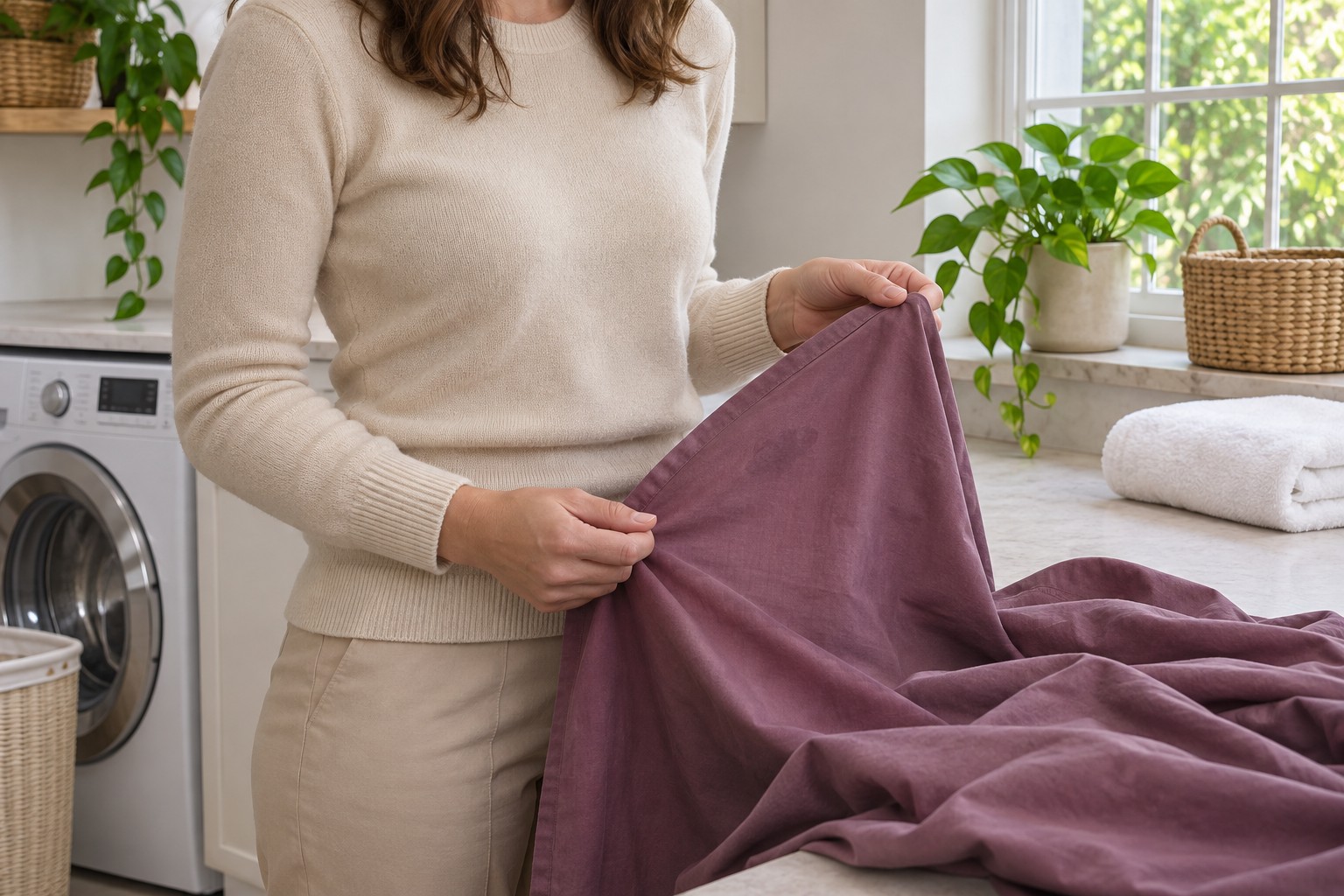
To tackle a lube stain on sheets, first check the lubricant formula and the bedding’s care label. Blot up excess, use a fabric-appropriate pretreatment, wash as directed and inspect the mark before tumble-drying. Silicone- or oil-containing formulas may take more work than water-based ones, but no method guarantees removal from every fabric.
The aim is to remove the residue without damaging the bedding. A hotter wash or a stronger cleaner is not automatically the next step, especially when you do not know the fabric or the exact formula.
Start With the Bottle and the Bedding
Keep the lubricant’s name or bottle nearby. Look for its stated base, ingredients and any fabric-cleanup advice. Do not identify it from the mark alone: a dark patch does not tell you which formula made it. If it is a hybrid, check the full description rather than treating “water-based” as the only relevant detail.
Then read the sheet’s washing, bleaching and drying instructions. If it is dry-clean-only, or you cannot establish a suitable treatment for a delicate fabric, ask a professional cleaner before experimenting. Give them the lubricant name and say whether the mark has already been washed or heated.
K-Y’s stain guide describes mild soap or laundry detergent and water as a starting point for water-based marks. Treat that as a method to check against your fabric’s label, not a promise that every water-based formula is stain-free.
For Washable Sheets, Work on the Mark Before the Whole Load
Tide’s oil-stain guidance begins with removing excess, checking the care label and pretreating. It also recommends testing a treatment in an inconspicuous area. Those checks are more useful than applying several household remedies at once.
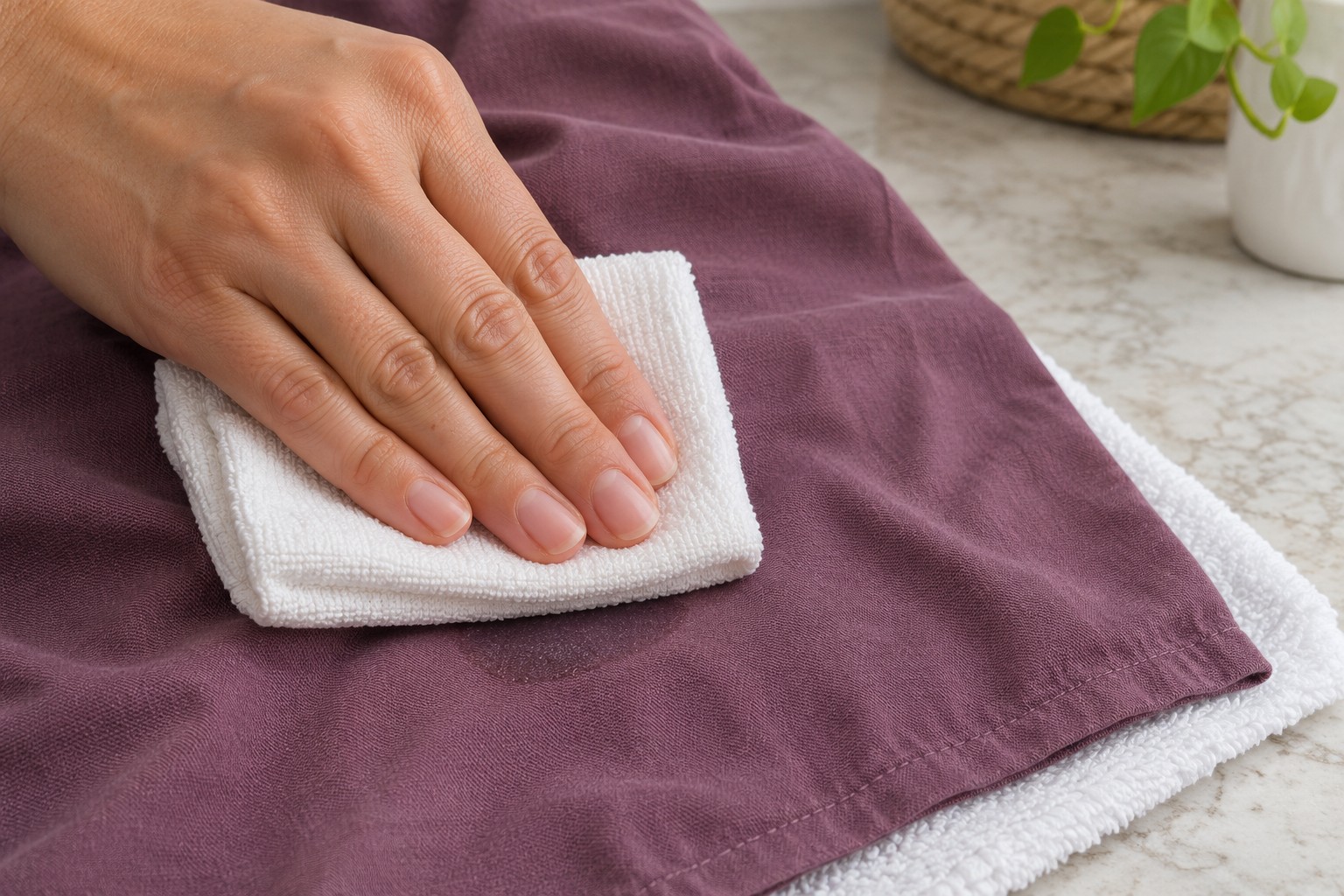
- Blot excess with a clean white cloth or paper towel. Press gently rather than spreading the mark with broad rubbing.
- Check that the detergent or stain treatment is suitable for the fabric. Test an unobtrusive area as directed and stop if color or texture changes.
- Pretreat the affected area according to that product’s instructions, including its contact time and rinsing directions. Do not improvise a longer soak.
- Launder using the sheet’s permitted cycle and temperature. A stain-removal article’s hot-water suggestion does not override a cooler care label.
Keep this laundry process separate from personal care. A cleaner suitable for bedding is not thereby suitable for your skin or a sex toy. For the device itself, use its own cleaning instructions.
Why Silicone Marks May Need Another Attempt
Clorox’s advice for silicone marks on cotton and denim emphasizes liquid-detergent pretreatment and checking the result before drying. Its answer concerns those fabrics and silicone stains generally; it is not a test of every personal lubricant or permission to hot-wash delicate sheets.
pjur’s FAQ reports that silicone marks may survive a single wash and can require several washes in its experience. That is a reason to set realistic expectations, not to promise a fixed number of cycles for your bedding.
If a mark remains, repeat only a treatment that both the fabric and cleaning-product instructions permit. For a valuable sheet or an uncertain result, ask a cleaner rather than escalating to solvents, improvised mixtures or repeated high heat.
Inspect Before You Tumble-Dry
Spread out the washed area and examine it in good light before transferring the sheet to the dryer. Look for a remaining dark outline or greasy-looking patch, rather than assuming a completed wash means a completed stain treatment.
Both the Tide oil guide and Clorox silicone guide warn that drying can make a remaining mark harder to remove. If you cannot judge the area while it is damp, let it air-dry as the fabric allows before deciding what to do next.
An old mark is not automatically permanent, but neither is another wash guaranteed to remove it. Be honest with a professional cleaner about previous treatments; that information matters more than hiding what caused the stain.
Plan for Cleanup Without Choosing Lube by Laundry Alone
ASTROGLIDE’s published comparison tested six of its formulas on pieces of a bedsheet. Some formulations were harder to remove than others, including its oil-containing silicone gel. This is useful product-specific evidence, not a universal ranking of all silicone and water-based lubes.
A washable towel laid over the area can reduce direct contact with your bedding. It can still absorb and pass liquid through, so do not treat an ordinary towel as a waterproof barrier. Keep the bottle upright on a stable surface and close it after dispensing.
Cleanup is one practical buying consideration. It should not override compatibility with the exact toy and any barrier or your individual needs. Compare the permitted formula first, then choose bedding protection and a laundry routine you can actually follow.