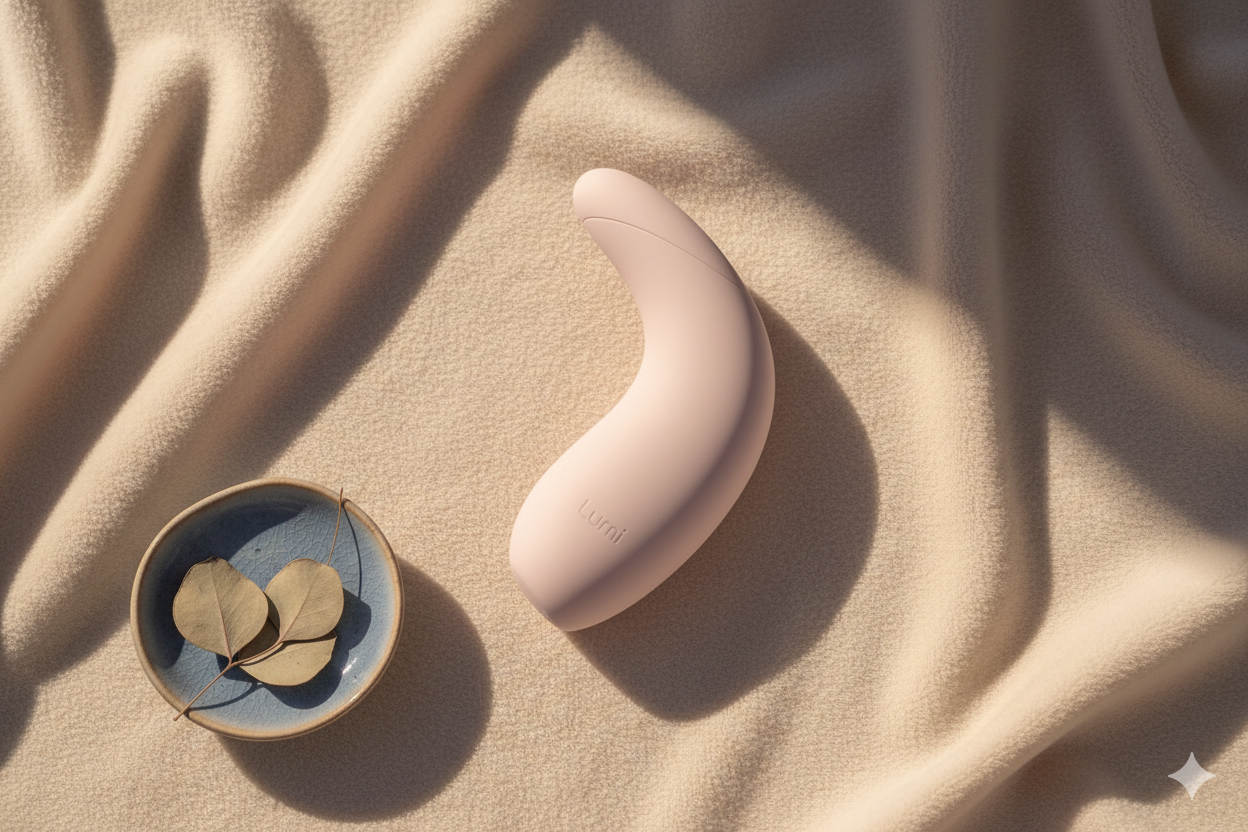
A couples vibrator is a product category, not a guarantee of fit or a particular shared experience. When comparing designs, start with the details you can check: dimensions, intended use, flexibility, controls and care requirements. A clear specification is more useful than a promise about how a product will change your relationship.
Start With What You Both Need
If both adults are interested in choosing a product together, make separate lists of what matters to each person. One may want a lightweight device with large buttons; another may prioritize simple cleaning or a modest budget. Comparing those lists can help narrow the search without assuming your preferences will be identical.
Consider whether the product is intended to be held, worn or used with a separate accessory. Think about grip, reach, storage space and how easy it will be to stop. Participation remains optional throughout shopping and after purchase. Buying a shared item is not a commitment to use it.
Compare the Shape, Then Read the Measurements
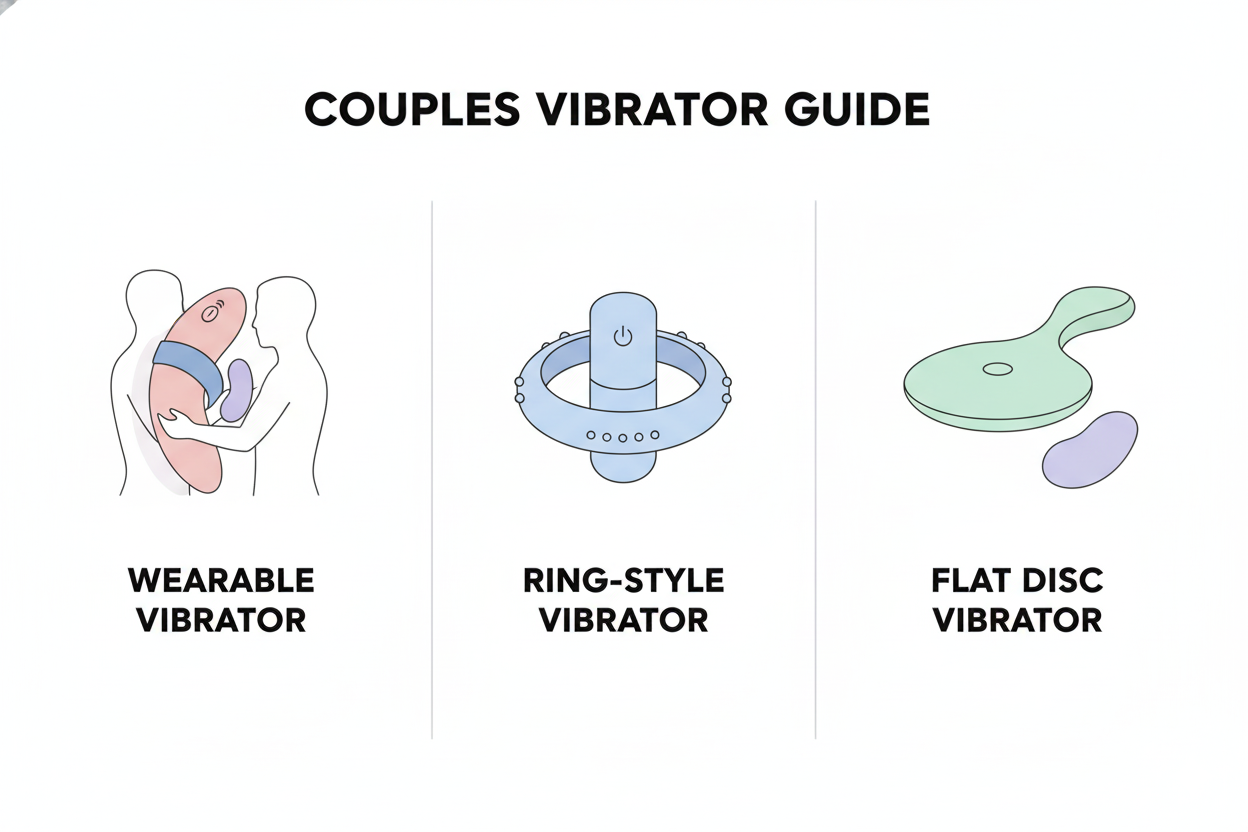
“Couples vibrator” can cover several designs. Look beyond the name to the exact product drawing, measurements and intended-use instructions. Images without a scale can make two very different products appear similar.
- Wearable or U-shaped designs: check the dimensions of each section, the manufacturer's intended use and whether adjustment is actually supported. A flexible-looking curve is not proof that it can be bent or reshaped.
- Flat or disc-shaped designs: compare thickness, edges and the way the manufacturer says the item is supported. “Hands-free” does not tell you whether a particular design will remain stable for you.
- Ring-style products: review the specified fit range, removal instructions and any time or use limits. A stretchy material does not make every size interchangeable.
- Handheld options: a product does not need a couples label to be considered together. Check weight, handle shape, button position and each person's ability to hold it comfortably.
Do not force a design to fit, modify it or improvise attachments. If measurements are missing, ask before ordering. Our overview of vibrator types provides more context for comparing form and construction.
Understand What “Dual” Describes
A listing may use “dual” to refer to two motors, two contact areas or a design intended for partner use. Those are different claims. Look for an explanation of what the word means for that model and whether separate motors can be controlled independently.
The number of motors or modes cannot tell you whether two people will find the same device comfortable. Nor does a product name promise simultaneous results. Choose features that are relevant to your requirements and leave room for the possibility that an item will not suit you both.
Give the Controls a Close Look
Check whether there are separate buttons for power, intensity and patterns. A single button can be compact, but may require repeated presses to move through settings. Ask whether a setting can be reduced directly or whether the device cycles through a sequence. Find out how the device turns off and whether it remembers the previous setting.
Control layout also affects accessibility. Can the buttons be located without looking? Are they distinct enough to identify? Is the display readable? If holding a small remote or using a touchscreen is difficult, a different control design may be more practical. Do not assume a smartphone interface is easier for everyone.
For any shared control arrangement, agree on who may change a setting. The person using the product needs a reliable way to stop it. Test the controls according to the manual before depending on them.
Separate Remote Control From App Compatibility
A wireless remote normally describes a local connection between a controller and device. It does not establish that the product connects to a phone. Bluetooth support, where documented, is also different from internet-enabled partner control.
If an app matters to your decision, confirm the exact supported model, current app name, phone requirements and any account or paid-feature requirements. Long-distance control needs explicit support for that function. Check privacy information and access-removal controls before choosing it. Do not infer app capabilities from an editorial photograph or a generic collection description.
Review Materials and Care as a Whole
Look for a clear description of the surfaces that contact the body and the construction of the finished item. Material names are useful, but they do not establish a universal cleaning method or prove the quality of a particular product. A coating, seam, attachment or battery compartment can change the care requirements.
Read the instructions for cleaning, drying, storage and compatible accessories or lubricants. A term such as “waterproof” should come with specific limits for the exact item. Permission to rinse a main device does not automatically apply to its remote or charger, and a water-resistance rating should not be stretched beyond the manufacturer's directions.
Our product-care guide explains the checks to make before washing or storing a device. If you cannot find usable instructions, resolve that uncertainty before buying.
Check Power, Sound and the Full Cost
For rechargeable models, compare stated charging time, the conditions behind any runtime claim and whether a replacement cable is available. For replaceable-battery products, check the required battery type. Include necessary accessories in your budget rather than comparing only the headline prices.
Noise descriptions need context. “Quiet” is not a promise of silence in every room or at every setting. Reviews can describe another person's experience, but their room and expectations may differ from yours. If sound is a deciding factor, ask for the conditions behind a published measurement.
Read the warranty and refund conditions, including restrictions that may apply after packaging is opened. For delivery questions, our privacy checklist covers packaging, notifications and receipt arrangements.

A Final Comparison Before Checkout
- Confirm the intended use and complete dimensions.
- Check fit, weight, adjustment limits and accessibility.
- Understand settings, local stop controls and any wireless features.
- Read the exact cleaning and water-exposure instructions.
- Compare the total cost, included accessories and return restrictions.
- Make sure both people remain comfortable with the decision.
If a product raises more questions than its listing answers, take time to ask them. The first-vibrator guide offers another practical checklist, and our collection lets you review individual specifications. Choosing nothing yet is a valid outcome too.