
Curious about bondage and BDSM? Start with a conversation, not a shopping list. This introductory guide explains common equipment categories, consent and practical questions to ask before considering them. It is written for adults and focuses on boundaries and risk awareness rather than techniques.
Words such as “light,” “soft” and “beginner-friendly” describe a product or an intended experience; they do not guarantee safety. You can be interested in the subject without wanting to take part, and you never need to progress to more restrictive equipment or more intense activities.
Communication and Consent Come First
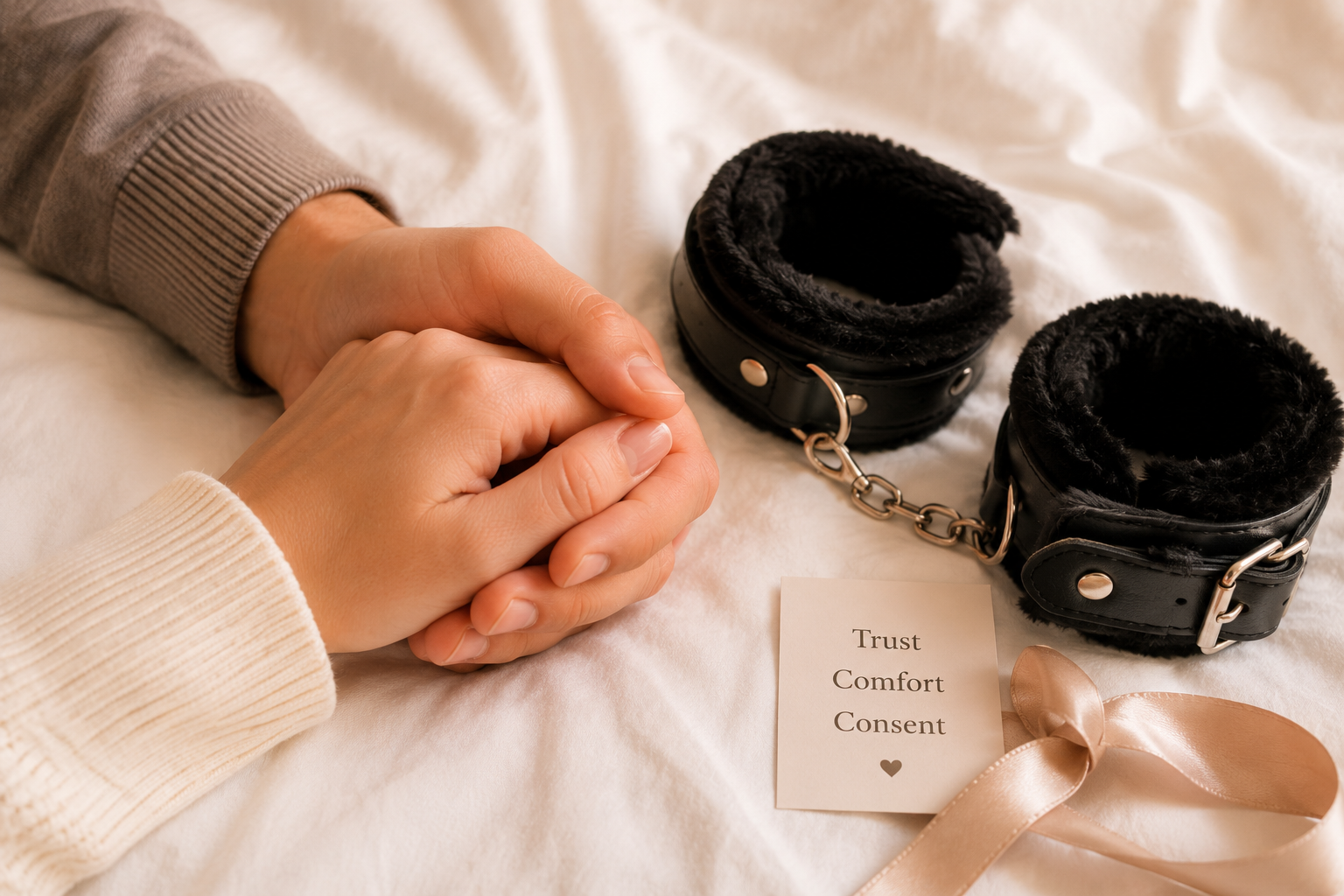
Talk before introducing equipment. Discuss what each person wants, what is off-limits, what feels uncertain and whether either person would prefer to leave the idea for another time. Agreement to one activity is not agreement to everything in a kit. A previous experience or an established relationship does not replace consent now.
Consent must be freely given, specific and ongoing. Anyone can change their mind at any point. “No,” “stop,” pulling away or another indication that someone wants to stop must be respected immediately. No one has to remember or use a special word to withdraw consent, and silence, freezing or an inability to respond is not permission to continue.
Safewords Supplement Ordinary Communication
Some people agree on additional words or signals to make communication clearer. In a traffic-light system, “red” means stop and “yellow” means pause and check in. Any such arrangement must be understood by everyone and remain usable throughout. It never overrides an ordinary request to stop or permits ignoring distress.
Check in rather than guessing from a smile, body language or an earlier “yes.” If communication becomes unclear, stop. Activities that prevent someone from speaking, signalling or withdrawing can undermine the very safeguards you have agreed on; gags and communication-restricting equipment are outside this beginner overview.
Do not rely on someone who is asleep, intoxicated or otherwise unable to understand and freely agree. For more on discussing preferences without pressure, see our guide to communication around couples' products.
Understanding Common Equipment
A product photograph cannot establish fit, comfort or suitability. Read the exact item's intended use, materials, size range, release mechanism and cleaning instructions. If important information is missing, ask the seller before buying. A complete kit is not a requirement, and you do not need to use every included item.
Handcuffs and Padded Cuffs
Cuffs differ in construction, adjustment and release. Rigid metal designs, padded designs and hook-and-loop closures are not interchangeable. Padding may change how a cuff feels, but it does not prevent every pressure, nerve or circulation injury. A “soft” label should not be treated as a safety certification.
Before considering a restraint, establish how it can be released promptly and whether the release is accessible. A key or quick-release feature is useful only if it actually works and can be reached. Do not leave a restrained person unattended. Do not treat a finger-width gap, comfortable appearance or lack of immediate marks as proof that a restraint is safe.
Silk Ties, Scarves and Tape
Household scarves, neckties and robe belts are not purpose-designed restraint equipment. Soft fabric can still tighten, bunch up or become difficult to remove. A familiar knot does not establish a reliable release method. This guide does not recommend improvised ties or provide knot instructions.
Products sold as bondage tape also vary. A claim that a material sticks to itself does not guarantee that it cannot constrict, irritate skin or become difficult to remove. Do not assume it is reusable or suitable for every contact area. Check the manufacturer's instructions and do not use household adhesive tape as a substitute.
Blindfolds
A blindfold changes what someone can see and may make them feel disoriented or anxious. It is optional, even when included in a kit. Discuss that separately rather than assuming agreement to other equipment includes covering the eyes.
Read the product's fit and care guidance, keep communication clear and remove it if the person wants it off or appears distressed. Do not obstruct breathing. An attractive image or a “gentle” description cannot establish how an individual will respond.

Feather Accessories, Paddles and Floggers
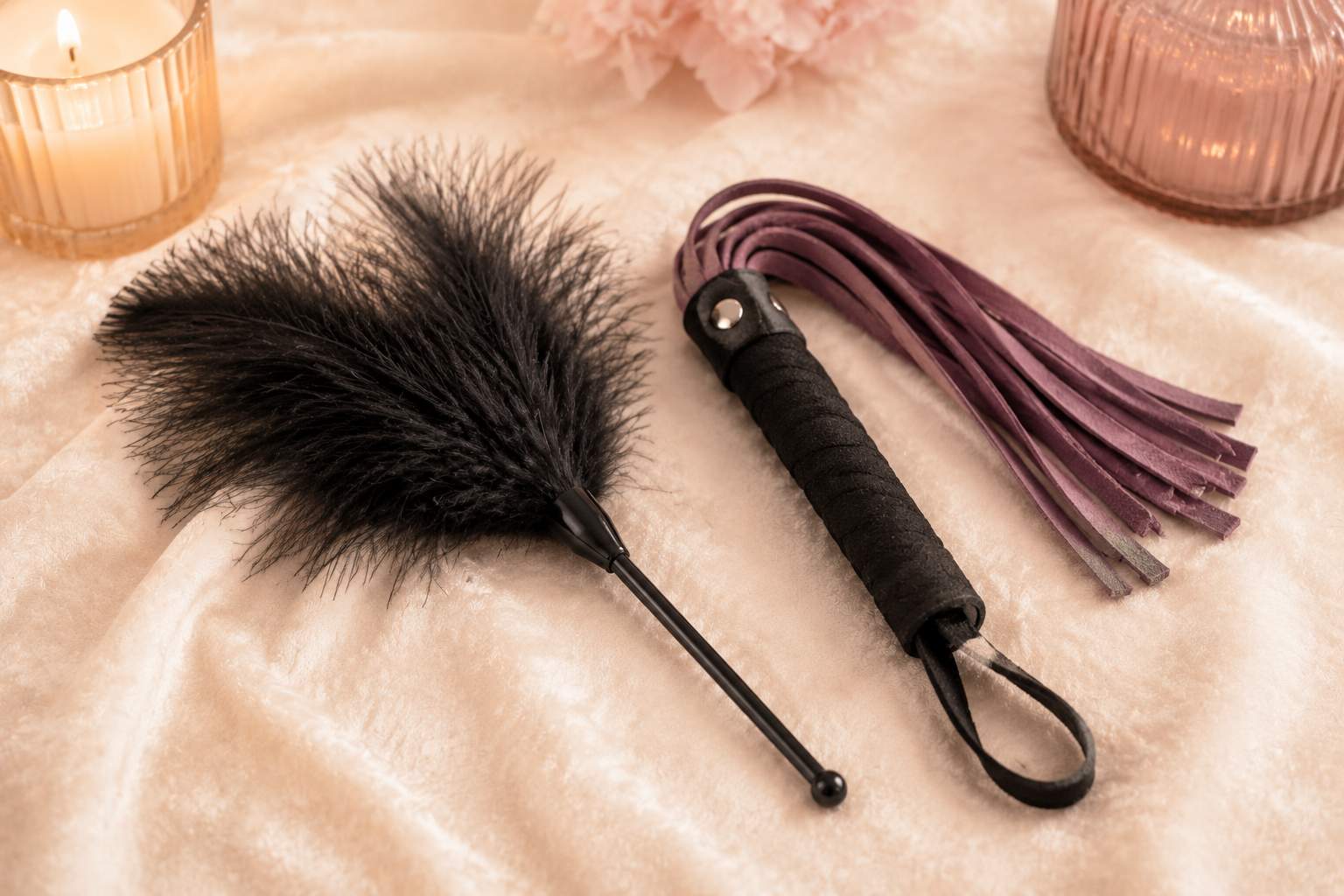
Feather accessories and impact implements are distinct categories, even when packaged together. The presence of a small paddle or soft-looking flogger in a starter set does not mean its use is without risk or that anyone is expected to try it. “Beginner” is a marketing description, not a standard of training.
This overview does not provide impact techniques or instructions for combining restraints with impact. If an activity is uncertain, unwanted or beyond your knowledge, leave it out. A partner's comfort is not a challenge to overcome, and pain is not something anyone needs to tolerate to demonstrate trust.
Risk Awareness and When to Stop
No checklist makes restraint risk-free. Preparation cannot remove every risk, and a general article cannot assess an individual's health, mobility or equipment. Seek qualified advice if a medical condition, injury, medication or recent procedure could affect the decision.
- Keep the right to stop unconditional. Stop immediately at a request or sign of distress. A forgotten safeword is never a reason to continue.
- Stay attentive. Never leave someone restrained or unable to see their surroundings unattended. Do not assume the absence of a complaint means everything is fine.
- Do not ignore symptoms. Stop and release restraints if there is pain, numbness, tingling, weakness, swelling or an unexpected change in skin colour or temperature. Seek medical advice for concerning or persistent symptoms.
- Know the release limitations. Check the exact item's release instructions before use. Do not rely on an improvised knot or on an assumption that scissors can cut every material.
- Leave breathing and the neck unrestricted. Do not use neck pressure, strangulation or breath restriction. These are not safe options reserved for more experienced people.
- Do not escalate to meet an expectation. There is no required session length or progression. Ending early, removing equipment or deciding against it are all valid choices.
Neck Pressure Requires Particular Caution
Gloucestershire Hospitals NHS guidance states that there is no safe way to strangle someone. Describing it as “choking” or agreeing to it does not remove the danger.
After neck pressure or a suspected throat injury, seek medical assessment even if there are no visible marks. Call local emergency services for breathing difficulty, loss of consciousness, confusion or difficulty swallowing. Gloucestershire Hospitals' throat-injury guidance explains that serious injury can be hidden and symptoms can develop later.
Aftercare and a Conversation Afterwards
Aftercare means checking what each person needs after an experience. That might be quiet time, a blanket, water, conversation or personal space. Touch and cuddling still require consent; there is no single correct routine.
Once everyone feels ready, discuss what felt comfortable, what did not and whether any boundaries should change. A difficult reaction is not a failure, and no one owes a repeat experience. Medical symptoms or injuries need appropriate assessment; affection, lotion or reassurance should not be used as substitutes.

A More Thoughtful Starting Point
Begin with shared understanding, clear limits and permission to choose nothing. If you later compare products, prioritise precise specifications, an accessible release, understandable instructions and appropriate care information over an ambitious kit or a persuasive photograph.
Our inclusive-product guide discusses fit and respectful product descriptions. The materials guide explains why a material label alone is not enough to assess a finished product. Return to the Journal for more practical information.
General information for adults aged 18 and over. This article is not a restraint-training manual or individual medical advice. Follow the exact equipment's instructions and seek qualified medical help for symptoms or injuries.